User-replaceable batteries make a major comeback
▼ Summary
– The EU has enacted two regulations mandating user-replaceable batteries in most portable tech, with the wider rules taking effect in February 2027, though smartphones and tablets are exempt if they meet strict durability and waterproofing standards.
– Some devices like wearables may be exempt from the rules due to size constraints, but wireless earbuds are included, forcing manufacturers to adapt miniature designs for easy battery replacement.
– Manufacturers like Fairphone, Sennheiser, and Fender are already launching products with user-replaceable batteries, while Amazon and Nintendo are rumored to be developing similar devices.
– Companies may create separate EU-only models or skip the European market entirely to avoid compliance, though global product designs are more common.
– The laws’ impact on global tech is uncertain, but US states with right-to-repair laws may adopt similar requirements, and key terms like “commercially available tools” and “reasonable” spare part prices remain undefined.
The European Union is fundamentally reshaping how consumer electronics are built, and the biggest shift is the return of the user-replaceable battery. Starting in February 2027, a sweeping regulation will require that nearly all portable tech products , from headphones to laptops , allow users to remove and swap out batteries using basic tools. This marks a dramatic pivot away from the glued-in, sealed designs that have dominated the industry for over a decade.
The groundwork was laid in 2023 with two major EU laws. One, already in force, targets smartphones and tablets, mandating long-term spare parts availability. The other, Regulation (EU) 2023/1542, applies to almost everything else with a battery. Its core requirement is straightforward: consumers must be able to replace the battery with tools that are either simple to obtain or provided free with the product. Manufacturers must also sell compatible spare batteries for at least five years. While this doesn’t mean a snap-on back cover, it does mean removing a few standard screws should be the limit of the difficulty.
Smartphones and tablets are notably exempt from this new rule because they are covered by the earlier legislation. That law has a crucial loophole: if a phone’s battery retains at least 83% capacity after 500 charge cycles and 80% after 1,000 cycles, and the device carries an IP67 water resistance rating, then manufacturers can restrict battery replacement to professional repairers. This means that for most modern waterproof phones, a user-replaceable battery is not required. The EU has confirmed that the smartphone-specific rules take precedence over the broader 2027 regulations.
Some devices are entirely exempt. This includes certain medical equipment and products designed for regular submersion, such as swimming gadgets or electric toothbrushes. The EU is also considering exemptions for wearables like smartwatches and fitness trackers, arguing that their tiny battery compartments make safe removal difficult. Advocacy group Right to Repair Europe is pushing back, citing the Pixel Watch 4 as proof that user-replaceable batteries are feasible even in compact wearables.
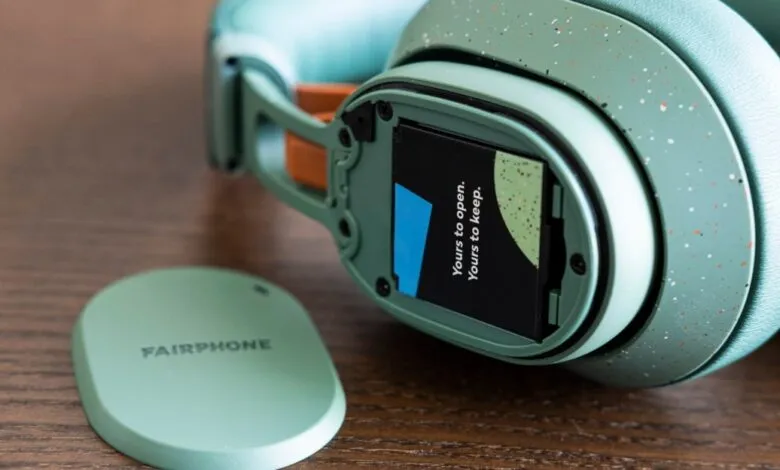
Despite these exemptions, the industry is already adapting. Over-ear headphones with accessible batteries, once a rarity, are becoming more common. Fender’s Mix headphones hide the battery under an ear cushion, and Sennheiser’s new Momentum 5 allows replacement with just a Phillips-head screwdriver. Fairphone has long championed this design philosophy, and its latest products, including the Fairphone 6 and the Fairbuds earbuds, already meet or exceed the upcoming standards. “Our current products already match and even exceed these upcoming requirements because we have focused entirely on repairability and longevity since day one,” said Fairphone’s Alon Brandt.
More products are on the horizon. Rumors and leaked code suggest Amazon is developing Kindles with user-replaceable batteries, and there are indications that both Microsoft’s Xbox Elite 3 controller and Nintendo’s Switch 2 may feature removable batteries, at least for the European market. This raises a key question for global buyers: will these features be universal, or will companies create separate EU and non-EU versions? Inés Alberico of Right to Repair Europe believes most manufacturers will prefer a single global design for cost efficiency.
However, the risk remains that some companies might skip the EU market altogether to avoid the redesign costs. Meta has reportedly delayed the launch of its Ray-Ban Display smart glasses in Europe due to these rules. Redesigning for battery accessibility is complex. Brandt explained that it requires “extra clearance around it and carefully plan for contact wear over time,” and that ditching glue for pop-out components “completely changes how the device handles everyday impacts and drops.”
For smartphones, the impact is more subtle. Since the rules don’t mandate user-replaceable batteries if longevity and water resistance are high, manufacturers are focusing on better battery chemistry. Realme and Oppo now tout batteries retaining 80% capacity after 1,600 cycles, and high IP ratings are becoming standard even on budget phones like the Moto G Power 2025 with its IP69 rating. Apple has introduced a new electrical-release adhesive for iPhone batteries, but the company declined to say if this was a direct response to EU rules.
With the law not taking effect until February 2027, there is still time for adaptation. The coming months will likely see a wave of products with replaceable batteries across audio, e-readers, and gaming devices. Whether these designs remain exclusive to Europe or become global standards will depend on market pressures. US states with right-to-repair laws may push for similar requirements.
Some product categories face bigger hurdles. Wireless earbuds, currently not exempt, present a significant engineering challenge due to their tiny size. A report from Futuresource warns that meeting the requirements will likely make earbuds larger and more expensive. There is also ambiguity in the law’s language. The term “commercially available tools” is broad, potentially allowing manufacturers to require specialized screwdrivers. And the definition of a “reasonable” price for spare parts remains unclear, which could hinder affordable repairs.
The biggest disappointment for advocates is the smartphone exemption. Alberico argues this “creates a false tradeoff between durability and repairability,” as waterproof devices shouldn’t preclude user-replaceable batteries. Right to Repair Europe will continue to push for change. For now, the device people most want to repair , their phone , may remain one of the hardest to fix.
(Source: The Verge)