Samsung’s 2026 Micro RGB TVs: The Future of Display
▼ Summary
– Samsung is expanding its Micro RGB TV lineup to include smaller sizes from 55 to 115 inches, making the technology more practical for typical living rooms.
– The new models will be available in sizes including 55, 65, 75, 85, 98, and 100 inches, with more details expected at CES in January.
– Samsung’s new 55-inch model is currently the smallest Micro RGB TV announced by any major manufacturer.
– Samsung defines its “Micro” technology by using individual RGB LEDs smaller than 100 micrometers, which are tinier than a human hair or dust particle.
– This RGB LED backlight system, combined with a color filter, is designed to provide superior color purity and brightness compared to standard LED TVs.
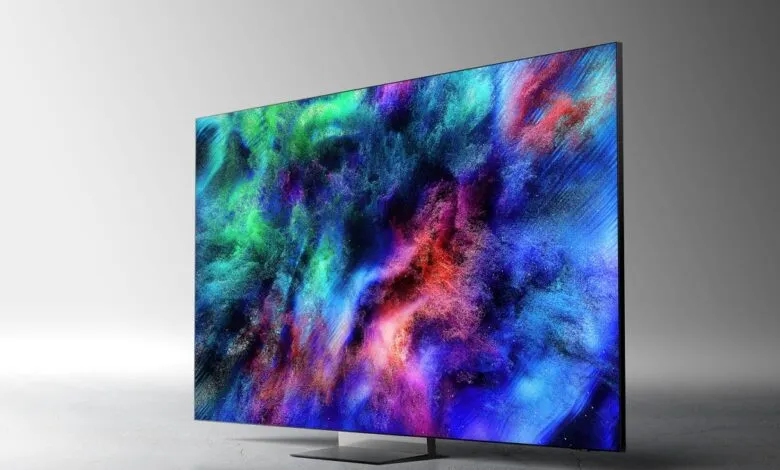
For many home theater enthusiasts, the dream of owning a cutting-edge Micro RGB television is moving closer to reality. Samsung has announced it will expand its Micro RGB TV lineup to include much more accessible screen sizes, starting at 55 inches and scaling up to 100 inches. This strategic move brings the company’s most advanced display technology, previously showcased in a massive 115-inch model, into the realm of practical living room installations. The new models will be available in 55, 65, 75, 85, 98, and 100-inch variants, with full pricing and availability details expected at the upcoming CES trade show in January.
This development positions Samsung’s offerings as the smallest Micro RGB televisions currently announced by any major manufacturer. Competitors are also entering the arena with their own interpretations of the technology. LG recently unveiled a Micro RGB TV in 75, 86, and 100-inch sizes. Hisense’s current RGB mini-LED model is a colossal 116-inch screen, while TCL has released a 65-inch Q9M RGB mini-LED television in the Chinese market, though its availability in the United States remains uncertain.
The terminology surrounding this new display category can be confusing, as there is no industry-wide standard differentiating “mini” from “micro.” Samsung clarifies that its technology utilizes individual red, green, and blue LEDs that measure less than 100 micrometers in size. To put that in perspective, each LED is smaller than the width of a human hair or a typical speck of dust. The fundamental innovation lies in using these tiny, dedicated RGB LEDs as the light source behind the screen, replacing the standard white or blue LEDs found in conventional televisions. This approach, combined with a specialized color filter, is engineered to deliver superior color purity and enhanced brightness for a more vibrant and accurate picture.
The industry and consumers alike will get a comprehensive firsthand look at these promising new displays when Samsung presents them at CES 2026 this coming January.
(Source: The Verge)