Vivo X300 Ultra tops smartphone camera rankings
▼ Summary
– Vivo’s X300 Ultra focuses on a significantly improved 35mm main camera rather than pushing telephoto hardware further, creating a more balanced camera system.
– The main camera uses a 200-megapixel Sony Lytia 901 sensor with a natural 35mm focal length, narrower than typical phone cameras.
– The ultrawide camera has a large sensor with optical image stabilization, offering main-camera specs in an ultrawide lens.
– The telephoto camera retains 200-megapixel resolution and 85mm focal length from the previous model, with improved stabilization and processing.
– The phone includes pro-level video features like 4K 120fps 10-bit Log recording across all rear lenses, but its design is bulky and drab, and software has preinstalled apps and ads.
A few months back, I made the case that the telephoto camera is the only lens that truly matters in the world of Ultra-class flagship phones. As smartphones have matured, camera systems became the primary battleground for differentiation. And as those systems improved, the telephoto lens emerged as the star attraction. The latest Ultra devices from Xiaomi, Oppo, and Huawei all lean heavily on their long-range optics as the headline feature. But the Vivo X300 Ultra is charting a different course.
Rather than pushing its telephoto hardware to new extremes, Vivo has largely left that lens untouched. Instead, the company has poured its energy into a dramatically upgraded 35mm main camera, a unique choice in a market dominated by wider focal lengths. This natural, narrower perspective, combined with what is arguably the best ultrawide camera in any smartphone and a suite of pro-level video features, creates a camera system that feels remarkably balanced across all three rear lenses. It’s a less sensational approach, but the result is a more versatile and genuinely useful tool that has quickly become my personal favorite.
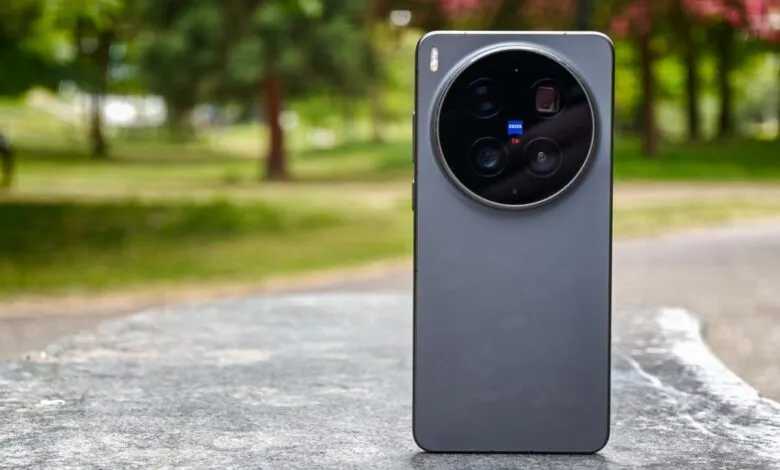
The main camera is clearly the standout performer here. It houses a 200-megapixel, 1/1.12-inch-type Sony Lytia 901 sensor,a substantial leap in both size and resolution over last year’s X200 Ultra. Crucially, it retains the best feature of its predecessor: a 35mm-equivalent focal length. This is noticeably narrower than the 23-26mm standard found on most rivals, but it’s closer to what photographers instinctively reach for. It feels natural, mirroring the scope of human vision. If you’ve ever wished your phone’s main camera wasn’t so wide, this device is built for you.
The telephoto camera also boasts 200-megapixel resolution, with an 85mm focal length and a 1/1.4-inch sensor,specs nearly identical to the X200 Ultra. While a slightly narrower f/2.7 aperture might appear as a downgrade, improved stabilization, sensor tuning, and processing give this iteration a clear edge in real-world use.
Beyond the three true rear lenses, there’s a color spectrum sensor, and the Street Photography mode houses the phone’s film simulations. Then there’s the ultrawide. While it hasn’t changed dramatically year over year, it remains unique for its sensor size. It’s actually larger than the sensor in the iPhone 17 Pro’s main camera and supports optical image stabilization. It’s essentially a main-camera-grade sensor with an ultrawide lens on top. No other ultrawide comes close.
The selfie camera is the only weak link: a 50-megapixel shooter with a relatively small 1/2.76-inch sensor. It’s adequate; the other cameras are exceptional.
Across all three rear lenses, photo quality is remarkably consistent in almost any lighting. The only real difference I noticed is that the telephoto and ultrawide are slightly more prone to motion blur with fast-moving subjects like cats or cars, and even then, only in low light. Otherwise, choosing between lenses feels like simply selecting the right focal length for your composition, without worrying about quality trade-offs. The images benefit from naturalistic color processing and a wide range of impressive film simulations. Vivo’s color science has long been my favorite in any phone, and this year is no exception.
Vivo has also doubled down on video capabilities, though the upgrades are clearly aimed at professionals. You can now record 4K, 120fps, 10-bit Log video across all three rear lenses, import custom 3D LUTs, and use a dedicated Pro Video shooting mode for full manual control. If that sounds like jargon, you’re not alone. It’s beyond the needs of most users, myself included.
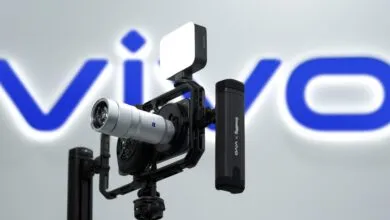
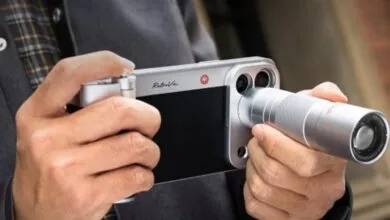
Like its rivals, the X300 Ultra supports a range of camera add-ons. My colleague Allison Johnson has tested Vivo’s camera grip and separate 200mm and 400mm telephoto extender lenses, which can capture extraordinary shots at range that no other phone can manage. At MWC Barcelona 2026, I briefly tried the custom SmallRig camera cage, which integrates stabilization, cooling, and a fill light into a compact package. All sold separately, these accessories support Vivo’s claim that the X300 Ultra can serve as the foundation for a semi-professional camera system.
This might be the tallest camera island I’ve ever tested. The photography kit is expensive, but that chunky 400mm lens is extraordinary.
But this is still a phone, not just a camera. The biggest letdown for me is its drab design. My black review unit is a pretty dull-looking device. While the two-tone effects on the green and white versions are better, neither matches the camera-inspired aesthetics of the latest Xiaomi and Oppo phones. The camera island is also exceptionally raised,almost as thick as the phone itself,and Vivo has ditched the physical shutter button, which I miss.
Other specs are on par with rival Ultra phones, but impressive compared to Apple and Samsung: a combined IP68 and IP69 protection rating, a massive 6,600mAh silicon-carbon battery, and a 144Hz refresh rate for its 6.8-inch OLED display. Standard flagship features include the Qualcomm Snapdragon 8 Elite Gen 5 chipset, up to 1TB storage and 16GB RAM, and a promise of five years of Android OS updates and seven years of security patches. The phone runs on Vivo’s OriginOS, which is much improved but remains the weakest of the major players, with a bland design and too many preinstalled apps and ads.
OriginOS is still one of the weaker Android skins. That “Games” icon is really an ad for Vivo’s app store,fortunately, it can be deleted. A promise of five years of OS updates is good, but others offer seven.
Ultra flagships are as much tech demos as consumer products. They let phone companies show off technical prowess and lay out a vision for what makes the “best” phone right now. With processors, displays, and water-resistance ratings now largely standardized, it’s the cameras where manufacturers can truly differentiate. Vivo’s pitch is clear: The best camera is one that’s great across every lens, not just one or two.
As tech demos go, this feels like a practical one, price aside. The X300 Ultra isn’t launching in the US or UK, but is available across Asia and in a handful of European countries including Spain, Italy, and Austria. Its €1,999 (about $2,340) price tag is steep, and the photography accessories add hundreds more, though it costs about the same as a 1TB iPhone 17 Pro Max in those markets. It’s expensive, but for what you’re getting, it probably should be.
I don’t think this is the best phone you could get for that money. It’s a very good phone with an excellent display, big battery, and flagship performance throughout. But the design is bulky, boring, and maybe just a bit ugly. Vivo’s software often annoys me, too. Xiaomi’s 17 Ultra is a slightly better all-round package, with a striking design and more polished OS. But the X300 Ultra’s three extraordinary lenses are so consistent, and so consistently excellent, that when I use the camera, all those other worries fall away.
If I were spending my own money right now, I’d buy the Xiaomi. But if I had to pick who’s winning this year’s Ultra camera contest, Vivo gets my vote.
(Source: The Verge)