Claroty uses AI agent to tackle cyber-physical system risks

▼ Summary
– Claroty has launched Claire, a CPS-native AI security agent trained on over a decade of industry data to defend mission-critical infrastructure.
– AI is expanding the CPS attack surface and accelerating threats, requiring proactive, accurate solutions over speed-focused ones.
– Claire is powered by a comprehensive CPS language model from 6,500+ OEMs, 20,000+ sites, and Team82 threat research.
– The agent enables risk reduction by proactively prioritizing remediation of exposures that could impact business continuity.
– It improves operational resilience and compliance by using device understanding to maintain safety, uptime, and automate audit mapping.
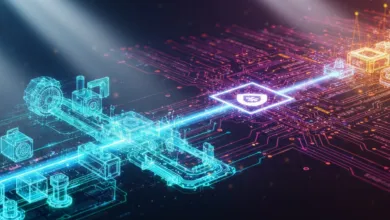
Claroty has officially unveiled Claroty Claire, a CPS-native AI security agent engineered to safeguard mission-critical infrastructure from emerging threats. Powered by a specialized CPS language model built on over a decade of domain expertise and extensive CPS data, Claire equips organizations with enhanced capabilities to ensure the safety, uptime, and availability of their cyber-physical systems.
The rapid expansion of the CPS attack surface driven by AI demands immediate, proactive action. In the robotics sector alone, Goldman Sachs projects the total addressable market for humanoid robots will soar to $38 billion by 2035, a sixfold increase from earlier estimates, with over 250,000 humanoid robot shipments expected by 2030,most for industrial use. AI has also hyper-accelerated the threat lifecycle, unleashing attacks that outpace traditional response times. While many AI-powered cybersecurity tools prioritize speed over accuracy, this tradeoff is dangerous when defending critical infrastructure. Organizations require intelligent, contextual, and prescriptive solutions that deliver trustworthy insights and enable swift, deterministic, and scalable actions.
As Gartner notes, “AI is reshaping CPS security. Cybersecurity leaders must balance deterministic safety with AI-driven prediction, enrichment, and investigation to reduce real risk, automate complexity, and strengthen resilience without disrupting operations.”
Claroty built Claire with a focus on precision and operational integrity. The tool is trained on the company’s deep domain expertise across industrial, healthcare, commercial, and public sectors, orchestrating the entire journey from discovery to defense. Leveraging the world’s most comprehensive CPS language model, which includes data from over 6,500 unique OEMs and medical device manufacturers, deployed across 20,000+ sites in 50+ sectors and 60+ countries, and backed by award-winning research from Claroty’s Team82, Claire enables organizations to achieve three core outcomes.
First, reduce risk by minimizing the attack surface and preventing downtime. An always-on team of agents proactively prioritizes and orchestrates remediation of exposures that could impact business continuity if exploited. Second, improve operational resilience by using deep, research-backed device understanding to inform every security action, maintaining the safety and uptime of mission-critical environments. Third, achieve continuous compliance by reducing the manual burden of audit preparation through automated asset mapping to regulatory frameworks and OEM-approved patch levels.
“Organizations face pressure to embrace digital transformation and AI for efficiency and cost reduction, all while ensuring these tools safely improve resilience and preserve uptime,” said Yaniv Vardi, CEO of Claroty. “This Herculean task is achievable when leveraging an AI tool that intrinsically understands the unique complexities of CPS environments and can balance security controls with operational needs. That’s why we built Claire,to empower human operators to make decisions with confidence, based on tailored insights and agentic actions you can trust.”
(Source: Help Net Security)