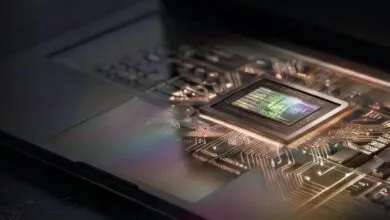
Framework Laptop 16 Review: The Upgradeable GPU Revolution
▼ Summary
– The Framework Laptop 16 aims to deliver a powerful, portable workstation with upgradeable graphics cards like a desktop PC.
– It features a 2025 model with an AMD Ryzen AI 7 350 CPU, up to 32GB RAM, and options for integrated or dedicated GPUs including the Nvidia GeForce RTX 5070 Mobile.
– Upgradeable GPUs allow for cost-effective component replacements and flexibility in choosing GPUs based on performance, efficiency, or software needs.
– The laptop now supports two interchangeable motherboards with different CPU generations and compatibility with both AMD and Nvidia dedicated GPUs.
– Framework treats its laptops as a platform for ongoing updates and modifications rather than complete redesigns with each new version.
The Framework Laptop 16 tackles a longstanding challenge in portable computing: delivering a powerful workstation and gaming machine with a truly upgradeable graphics card, much like a traditional desktop PC. This approach could dramatically extend the lifespan of high-performance laptops, offering a compelling alternative to complete system replacements.
Here’s a look at the specifications for the tested model:
- Operating System: Windows 11 25H2
- Processor: AMD Ryzen AI 7 350 (featuring 4 Zen 5 cores and 4 Zen 5c cores)
- Memory: 32GB DDR5-5600 (user-upgradeable)
- Graphics: AMD Radeon 860M (integrated) / Nvidia GeForce RTX 5070 Mobile (dedicated)
- Storage: 1TB Western Digital Black SN770 SSD
- Battery: 85 WHr
- Display: 16-inch 2560×1600 resolution, 165 Hz refresh rate, matte non-touchscreen
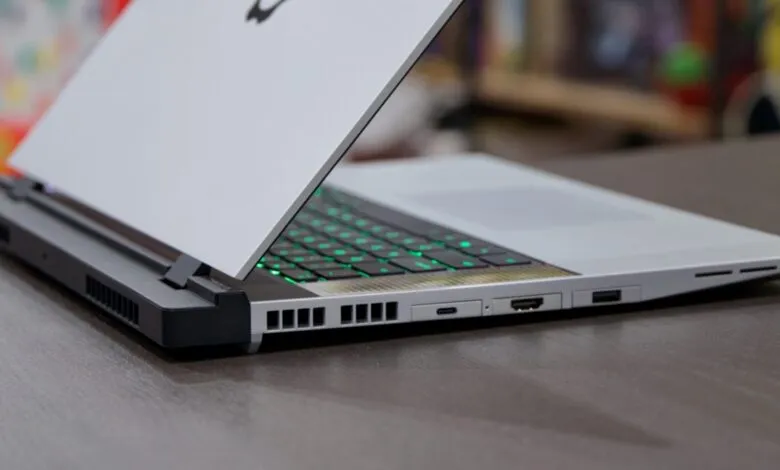
- Connectivity: 6 recessed USB-C ports (2x USB 4, 4x USB 3.2) utilizing customizable Expansion Card dongles
- Weight: 4.63 pounds (2.1 kg) without GPU; 5.29 pounds (2.4 kg) with GPU installed
- Pricing: Approximately $2,649 for a pre-built configuration; $2,517 for the DIY edition without an operating system
In an era where GPU advancements often feel incremental, the graphics card remains the component that ages most noticeably in a gaming PC or graphics-focused workstation. The ability to upgrade just the GPU for a few hundred dollars, rather than committing thousands to a whole new machine, presents a very attractive value proposition for power users.
Swappable GPUs also introduce a new level of flexibility. Users can select from a range of graphics modules from different manufacturers, tailoring their system for specific needs. Whether the priority is maximum raw performance, superior power efficiency, robust Linux driver support, or access to Nvidia’s CUDA technology, the choice is in the user’s hands.
Framework’s latest update for the Laptop 16 marks a significant step toward making this modular vision a practical reality. This represents the company’s first major upgrade for any product beyond the original Laptop 13. The system now supports two distinct, interchangeable motherboards: one built around an older AMD Ryzen 7040-series processor and another featuring the new Ryzen AI 300-series CPU. Crucially, both of these motherboards are compatible with operation using just the integrated graphics or with dedicated GPUs sourced from both AMD and Nvidia.
While the new Nvidia GeForce 5070 graphics module is the headline upgrade in this release, numerous other refinements have been applied to both the internal components and external chassis. These improvements don’t resolve every issue identified in the initial version of the laptop, but they do address several key areas. A consistent cadence of such meaningful updates could firmly establish the Laptop 16 as a platform with long-term investment potential.
Revisiting the Framework Laptop 16 Design
Framework’s philosophy treats its laptops as evolving platforms rather than products destined for a complete redesign with each new iteration. Consequently, reviewing an updated model involves revisiting much of the same foundational design. For instance, many of the external photos remain relevant because, in most visual and structural aspects, this is fundamentally the same machine. For a deep dive into the assembly process and a detailed look at the laptop’s construction, the original review provides comprehensive coverage.
(Source: Ars Technica)