Honda reveals hybrid future with new Accord, RDX prototypes
▼ Summary
– Honda revealed prototypes of two new hybrid models, an Accord sedan and an Acura RDX SUV, built on a platform launching next year.
– Honda dropped its goal for EVs and fuel cell vehicles to make up 100% of sales by 2040, instead reallocating resources to hybrid models.
– Honda plans to launch 15 next-generation hybrid models globally by March 2030, primarily in North America, with large models arriving in 2029.
– Honda aims to cut the cost of its next-gen hybrid system by over 30% and improve fuel economy by more than 10% compared to its 2023 system.
– Honda is reallocating Ohio plant capacity to gas and hybrid vehicles and will convert part of its joint venture EV battery lines to hybrid battery production.
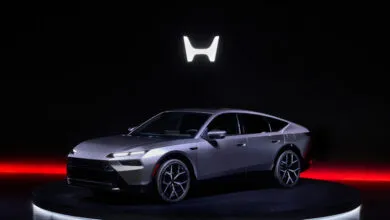
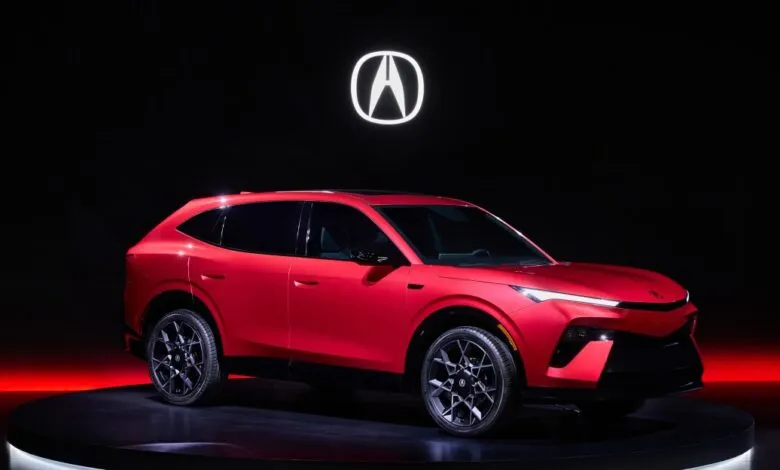
Honda has unveiled prototypes of two new hybrid vehicles,an Accord sedan and an Acura RDX SUV,during its annual business briefing this week. These models are built on a new platform that the automaker says will begin rolling out next year. The RDX, previously announced earlier this year, marks Honda’s first SUV to feature the next-generation version of its two-motor hybrid system.
In a significant strategic shift, Honda announced it is abandoning its previous target for electric vehicles to make up one-fifth of its sales by 2030, as well as the goal of having 100 percent of sales come from EVs and fuel cell vehicles by 2040. Instead, the company plans to “reallocate more development and production resources into hybrid models.”
Honda aims to launch 15 next-generation hybrid models globally by the end of the fiscal year ending March 31, 2030, with a strong focus on North America. Large-size models are slated for release in the region in 2029. To support this push, Honda expects to cut the cost of its next-gen hybrid system by more than 30 percent. Combined with a new platform and an electric all-wheel-drive setup, this should improve fuel economy by over 10 percent compared to the system introduced in 2023.
The automaker also outlined plans for its advanced driver assistance system (ADAS). The next-gen version is scheduled for launch in 2028 and will appear in more than 15 models over five years.
On the production side, Honda is reallocating capacity at its Ohio plants to build both gas and hybrid vehicles. It also said it will work with partner LG to convert part of the EV battery production lines at their joint venture to hybrid battery production.
In Japan, Honda plans to expand its EV lineup primarily within the mini-vehicle (kei car) category, starting with an electric version of its N-BOX minicar in 2028.
Earlier in March, Honda announced it would take a writedown of up to 2.5 trillion yen ($15.7 billion) on its EV investments. Now, the company says those EV-related losses will be “resolved” by 2029, and it plans to reevaluate its EV strategy in 2030.
(Source: The Verge)