NASA’s Lost Moon Lander: New Report Reveals What Went Wrong
▼ Summary
– NASA’s $72 million Lunar Trailblazer mission failed in 2025 due to a software error that pointed its solar panels away from the sun, causing a power loss.
– An independent review found the failure resulted from multiple cascading software faults, compounded by inadequate pre-launch testing by the spacecraft builder, Lockheed Martin.
– The mission was a lower-cost, higher-risk “Class D” project, where NASA accepts greater risk but not the expectation of total mission failure.
– Scientists involved expressed deep disappointment, but both NASA and Lockheed Martin stated they have learned powerful lessons to apply to future missions.
– The failure directly influenced increased pre-launch scrutiny for subsequent missions, like the Escapade mission to Mars, which experienced its own tense communication delay after launch.
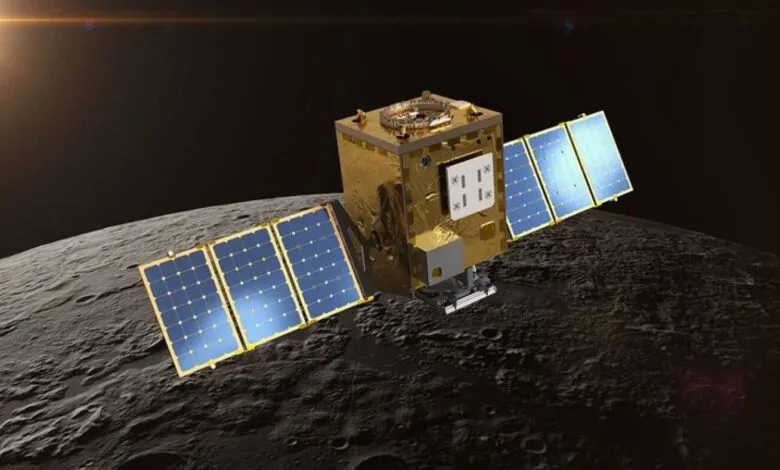
A new report details the critical software and management failures that led to the loss of NASA’s Lunar Trailblazer spacecraft just one day after its 2025 launch. The mission, designed to map lunar water, ended abruptly when ground control lost contact, resulting in the failure of a $72 million scientific endeavor. An independent review panel convened by the agency has now pinpointed the exact cascade of errors that doomed the probe.
The root cause was a critical software flaw that incorrectly oriented the spacecraft’s solar panels 180 degrees away from the sun, preventing the craft from generating power. This single error triggered a series of onboard fault management actions that further sealed the mission’s fate. The panel’s report, obtained through a Freedom of Information Act request, concluded that “many erroneous on-board fault management actions” combined with the pointing error caused the complete failure.
Industry experts note that mission failures rarely stem from a single issue. “When a complicated system fails, it’s usually more than one thing that takes it down,” explains Timothy Cook, a professor at the University of Massachusetts, Lowell, who managed a failed satellite mission in 1999. He describes a typical pattern where a cascading series of different failures ultimately leads to the bad outcome under investigation.
The spacecraft was built by Lockheed Martin under NASA’s lower-cost, higher-risk “Class D” mission framework. The review found the company did not adequately test the solar panel pointing software before launch. While mission managers might have corrected this initial problem, subsequent software issues made recovery first difficult and then impossible. Neither NASA nor Lockheed Martin provided spokespeople for comment, but both issued statements acknowledging the lessons learned. NASA stated that while the loss was disappointing, it “provides powerful lessons that can be applied to future lower-cost missions.”
This incident highlights the inherent tension in modern space exploration between ambitious science goals and constrained budgets. Scott Hubbard, a former NASA official now at Stanford, clarifies the intent behind Class D missions. “What class D was supposed to mean is that you were taking a big risk of not getting the science that was as high precision as you were planning on,” he says. “It didn’t mean the whole darn thing wouldn’t work.” He emphasizes the need for calculated risk, stating plainly that “cheap failure is no good for anybody.”
For the scientists who dedicated years to the project, the loss was profoundly personal. Bethany Ehlmann, Lunar Trailblazer’s principal investigator, called it “gutting” that the spacecraft failed to reach the Moon. She expressed gratitude for recovery efforts and noted the report underscores the vital need “to align institutional objectives, contracting, and technical approaches to focus tightly on mission success.” She supports NASA’s decision to share the findings so other projects can avoid similar pitfalls.
The legacy of Trailblazer’s failure is already influencing other missions. Robert Lillis, principal investigator for the upcoming ESCAPADE mission to Mars, says the event prompted NASA to subject his twin-spacecraft project to extra scrutiny before its November launch. The anxiety was palpable when, after launch, the ESCAPADE team experienced a tense communications blackout. “My mind immediately went to Trailblazer. I had this sinking dread in the pit of my stomach,” Lillis recalls. The issue was traced to a minor ground antenna pointing error. Six hours later, contact was established, bringing immense relief. While ESCAPADE won’t reach Mars until next September, its early journey demonstrates how the hard lessons from one lost mission can help safeguard the next.
(Source: npr)