Organic Search Is Broken: How to Adapt Now
▼ Summary
– A structural shift in search behavior, driven by AI tools and Google’s features, is causing significant, permanent declines in organic website traffic, not normal fluctuations.
– Marketers must now measure AI visibility using new metrics like citations in AI responses, brand mentions, share of voice, sentiment, and AI-influenced traffic, not traditional site-centric KPIs.
– To be cited by AI, content must be built on E-E-A-T principles, be clearly structured for machine retrieval, be human-led in tone, be recent, and avoid overly promotional language.
– Building a consistent brand presence across credible external sources like reviews, forums, and third-party articles is crucial, as AI systems look for multi-source consensus.
– With fewer, more valuable visitors, conversion-focused landing pages must be simple with a single offer and clear message, distinct from detailed content optimized for AI retrieval.
If your website’s organic traffic has fallen while search impressions have increased, it’s a strong sign that artificial intelligence is referencing your material without directing users to your site. Should both metrics be declining, your content is simply not being noticed. These trends signal a fundamental change in how people search for information online, rendering old strategies that relied on predictable website traffic obsolete. The data confirms this isn’t a minor dip. A significant majority of B2B websites experienced major traffic losses recently, with average declines exceeding thirty percent year-over-year. Informational content and news publishers have been particularly affected, with some sectors seeing organic visits plummet by more than half. This represents a structural shift, not normal market fluctuation.
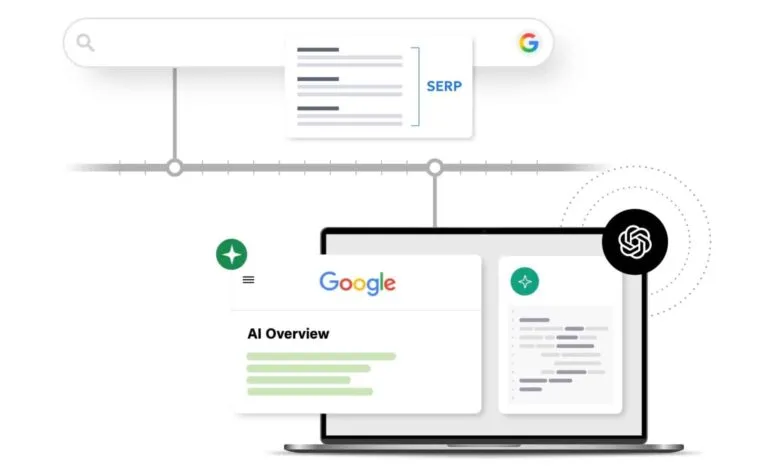
Two primary forces are driving this decline in traditional organic discovery. First, search engines have been moving toward zero-click results for years through features like featured snippets. Where once about a quarter of searches ended without a click, today that figure exceeds sixty-five percent. The introduction of AI Overviews has drastically accelerated this trend. Second, a growing segment of users is skipping traditional search altogether. Over half of U.S. adults now use AI tools regularly, and when they ask a large language model a question, they receive an answer without ever visiting a source website. Your content might inform that answer, but you receive no traffic or clear attribution in return.
Given this new landscape, the old key performance indicators like clicks and bounce rate are no longer sufficient. They measure activity on your property, not your performance within the AI answers that now intercept users. To gauge AI visibility, five new metrics are critical.
Citations in AI responses are paramount. When an LLM directly cites your owned content, it signals three things: your material is relevant, it’s structured for easy machine parsing, and your domain carries enough authority to be trusted. Brand mentions are different; an LLM might mention your company name while pulling information from a review site or forum, meaning the broader web is discussing you but your content isn’t the source. Understanding this distinction guides where to invest effort.
Share of voice allows you to compare your citation and mention frequency against competitors for a set of industry-relevant queries. Brand sentiment tracks whether AI responses frame your brand positively, neutrally, or negatively. Finally, AI-influenced traffic, though often low in volume initially, is worth monitoring as early data suggests it can convert three to five times higher than other sources. Specialized tools can track these at scale, but even a simple manual audit, prompting major LLMs with your key queries, provides valuable insight.
Adapting your content strategy for this environment doesn’t require starting from scratch, but it does demand a shift in focus. The principles of Experience, Expertise, Authoritativeness, and Trustworthiness (E-E-A-T) are more important than ever. LLMs prioritize sources that demonstrate real expertise and are trusted by other authorities. Content written by clear subject matter experts that covers topics with depth will consistently outperform generic material.
Structure and clarity are now non-negotiable. Large language models retrieve content by finding passages that directly answer questions. Organizing information around clear questions and answers, using bulleted summaries, and avoiding dense paragraphs makes your content far more retrievable. Adding a dedicated Q&A section to existing posts is one of the most effective updates you can implement.
There is a measurable advantage to human-written, human-led content. After recent algorithm updates, mass-produced AI content and heavily keyword-optimized material saw dramatic drops in rankings and citations. LLMs are improving at detecting synthetic writing patterns. The strongest strategy prioritizes quality over quantity. If you use AI, employ it as a drafting or editing aid, not as the final content creator, and always include a human review step to ensure a natural, authoritative tone.
Recency also influences AI citations. Answer engines consider publication dates, often favoring a recently updated article over an older, albeit authoritative, piece. Regularly auditing and refreshing your high-traffic pages with current data is a quick win. Furthermore, overly promotional language tends to be deprioritized. Content that reads like a sales pitch will lose out to more objective sources. This doesn’t mean avoiding your product; it means discussing it as a neutral third party would, acknowledging trade-offs and letting facts build the case. Comparison articles and listicles often perform well here.
Your efforts cannot be confined to owned channels. LLMs look for consensus across multiple sources. A brand with strong third-party coverage will often outperform one that only appears on its own blog. This makes your external content ecosystem a strategic priority. Reviews on platforms like G2 and Google, user-generated content on forums like Reddit, and mentions in third-party articles, tutorials, and YouTube videos all build the multi-source consensus that leads to citations. Content partnerships, such as sponsored articles in relevant publications, can drive referral traffic and earn trusted external citations simultaneously.
With organic traffic down significantly, the visitors who do reach your site are more valuable and intentional. This makes conversion optimization on key landing pages essential. The principle is straightforward: one offer, one message, minimal copy. Each page should have a single call to action and a clear value proposition stated in the header. This is distinct from blog content meant for AI retrieval; conversion pages are for action, not nuance.
The central takeaway is that this traffic decline is not a temporary setback. User behavior has permanently shifted toward getting answers directly from AI. A strategy built solely on ranking for clicks is no longer viable. Replacing it is a dual mandate: optimize to be cited by answer engines and build the external brand presence that gives LLMs reason to mention you. This aligns with the fundamentals of good marketing, publishing clear, authoritative, well-structured content grounded in real expertise. The brands that will succeed are those that build genuine credibility, earn trusted external mentions, and write for their audience first. That was always the right approach; the rise of AI search has simply made it an imperative.
(Source: Search Engine Land)