Ancient Microbes Frozen with Ötzi the Iceman Still Alive and Growing
▼ Summary
– Ötzi the Iceman, a 5,300-year-old mummy, still harbors microbes including long-dead ones, surviving cold-adapted yeasts, and modern contaminants.
– Scientists have extensively studied Ötzi since his 1991 discovery, analyzing his DNA, last meal, gut microbes, and tools.
– Researchers sampled Ötzi’s stomach, meltwater, skin, storage room air, and nearby alpine soil to distinguish ancient microbes from modern contaminants.
– The study used culturing and shotgun metagenomics to identify ancient gut bacteria typical of pre-modern microbiomes.
– The team found both ancient DNA from dead bacteria and living microbes on and inside Ötzi’s body.
Deep within the icy tomb of Ötzi the Iceman, something is still very much alive. Europe’s most famous mummy, preserved for over five millennia in the Ötztal Alps, carries a surprising cargo: living microbes that have survived in the deep freeze since his death, alongside ancient bacteria long turned to dust and modern contaminants that hitched a ride more recently.
When a pair of hikers stumbled upon Ötzi’s freeze-dried remains in 1991, they uncovered a Copper Age time capsule. Since then, scientists have meticulously sequenced his genome, dissected his last meal, analyzed the remnants of his gut bacteria, and studied his clothing and damaged tools. Today, the Iceman rests in a climate-controlled chamber at the South Tyrol Museum of Archaeology in Italy. But according to a new study, his body is still a functioning habitat for a select group of cold-adapted yeast species that likely colonized him shortly after his death, making him something of a living ecosystem even now.
Microbiologist Mohamed S. Sarhan from the Institute of Mummy Studies at Eurac Research led a team that took a more hands-on approach than previous investigations. They sampled material from Ötzi’s stomach, collected meltwater from inside his body, swabbed his skin, and even tested the air in his frozen storage room and the adjacent lab. For comparison, they also examined a block of alpine soil recovered from beside the mummy in 1991.
Earlier research, including a 2019 study, had already mapped Ötzi’s gut microbiome. But Sarhan’s team wanted to go further. Rather than simply sequencing all the microbial DNA present, they aimed to distinguish which microbes were truly part of the mummy’s ancient, one-man ecosystem and which were modern invaders.
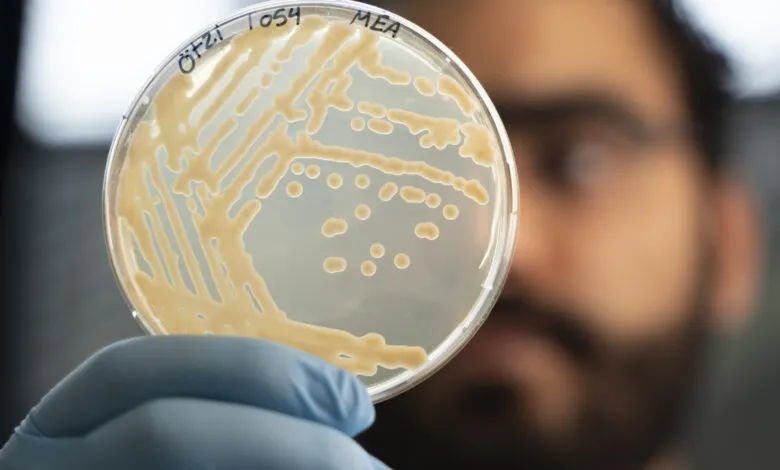
The team used two methods: they cultured some samples directly and applied shotgun metagenomics to others, a technique that sequences every fragment of DNA in a sample. Inside Ötzi’s gut, they found the expected ancient DNA from bacteria that resemble the non-Westernized gut microbiomes of prehistoric humans. But elsewhere on and inside the mummy, they discovered something more startling: microbes that were not dead at all. These living organisms, adapted to the cold, have apparently been growing slowly on Ötzi’s body for thousands of years, turning the Iceman into a unique biological archive that is still, in a quiet and microscopic way, alive.
(Source: Ars Technica)