Frustrated by Google AI, Users Flock to DuckDuckGo
▼ Summary
– DuckDuckGo’s U.S. mobile app installs rose 18.1% week-over-week on average after Google I/O, peaking at 33% growth on May 25.
– DuckDuckGo’s iOS installs saw 33% week-over-week growth, peaking at 69.9% on May 25.
– Traffic to DuckDuckGo’s AI-free search page, noai.duckduckgo.com, grew 22.7% week-over-week on average, peaking at 27.7% on May 24.
– The growth was primarily U.S.-based following Google’s U.S.-centric announcement and held through the Memorial Day weekend.
– DuckDuckGo CEO Gabriel Weinberg attributed the spike to Google “force-feeding AI” with no opt-out, contrasting DuckDuckGo’s optional AI features and privacy focus.
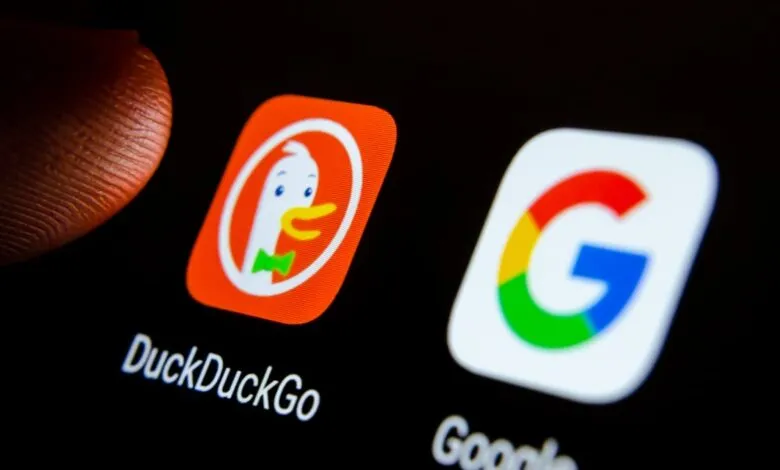
Google users are increasingly turning to DuckDuckGo as frustration mounts over the search giant’s aggressive push of AI features. Data shared exclusively with Mashable reveals that U.S. installs of the privacy-focused search engine’s mobile app surged 18.1 percent week-over-week on average immediately following Google’s I/O event, where the company unveiled a wave of new AI integrations into its core search product. The peak came on May 25, when DuckDuckGo app installs hit a remarkable 33 percent growth.
The spike is even more dramatic on iOS: DuckDuckGo saw a 33 percent week-over-week increase in iPhone installs, with a staggering 69.9 percent jump on May 25 alone.
Traffic also soared to DuckDuckGo’s AI-free search page, noai.duckduckgo.com, where every AI feature is disabled by default. That page experienced an average weekly growth of 22.7 percent after Google I/O, peaking at 27.7 percent on May 24.
The timing is no coincidence. DuckDuckGo noted that the growth was concentrated in the U. S., aligning with Google’s “U. S. centric announcement,” and not part of a broader global trend. The alternative search engine also reported that this momentum held through the Memorial Day weekend, a period when traffic typically dips.
“Google is force-feeding AI with no way to opt out,” said DuckDuckGo Founder and CEO Gabriel Weinberg in a statement. “As a result, their results are getting worse, not better. We want to be the place that puts users in charge and allows them to decide how much or how little AI they want. That’s why we’re seeing a spike in people coming to DuckDuckGo this week, it’s as simple as that.”
For years, DuckDuckGo has attracted privacy-conscious users with its commitment to not tracking search history or collecting personal data. Now, it appears to be gaining traction among those weary of AI saturating online experiences. “Not only do we respect user choice, but also user privacy: everything you do in DuckDuckGo is private, we don’t collect search histories or chats and nothing is used for AI training,” Weinberg added.
DuckDuckGo has not shunned AI entirely. Its Search Assist feature mirrors Google’s AI Overviews, and the Duck. AI product is comparable to Google’s AI Mode. However, the company stresses that these tools are entirely optional and never imposed on users. DuckDuckGo has also introduced features like the AI Image Filter, which removes AI-generated images from search results, giving users more control over their experience.
(Source: Mashable)