Gemini Automates Multi-Step Tasks on Android
▼ Summary
– Google announced new Gemini AI automations for Android that can handle multi-step tasks like ordering food or rides, but the feature’s capabilities are currently limited.
– The automation feature is in beta, initially supports select apps like DoorDash and Uber in the U.S. and Korea, and is only available on specific devices like the Pixel 10 and Samsung Galaxy S26 series.
– Google has built-in protections for the automations, requiring an explicit user command, allowing real-time monitoring, and running tasks in a secure, virtual window with limited data access.
– Other Gemini updates include an expansion of scam detection for phone calls on select devices and an enhanced Circle to Search feature that can now identify all items on a screen.
– These updates are part of Google’s steady release of Gemini features, contrasting with Apple’s reported delays in launching a more comprehensive AI feature set for Siri.
Google has introduced a significant upgrade to its Gemini AI on Android, enabling the assistant to manage complex, multi-step tasks for users. This new automation capability allows Gemini to handle actions like ordering a ride or food delivery directly from your phone. Alongside this, Google is rolling out enhanced scam detection for calls and expanding the functionality of its Circle to Search feature. These updates represent a focused push to make Android devices more proactive and intelligent through on-device AI.
The automation feature essentially lets you delegate parts of your to-do list to Gemini. However, its scope is currently quite limited. It’s launching in beta and will only work with a select group of apps in the food, grocery, and rideshare categories. Initially, availability is restricted to users in the United States and South Korea. Supported apps include DoorDash, Grubhub, Instacart, Lyft, McDonald’s, Starbucks, Uber, and Uber Eats in the U.S., with Kaemin and Kakao T added for the Korean market. At launch, the feature will only be accessible through the Gemini app on specific devices, namely the Pixel 10, Pixel 10 Pro, and Samsung Galaxy S26 series.
Recognizing the potential for errors in AI-driven automation, Google has built in several safeguards. An automation cannot start without a clear command from the device owner. Users can monitor the task’s progress in real-time and have the option to stop it immediately if something goes wrong. Furthermore, these automated actions run in a secure, isolated virtual window on the phone. This design limits access to only the necessary apps, protecting the rest of the personal data on the device.
This move aligns with a broader industry trend where AI is increasingly used to automate everyday personal tasks. For example, ChatGPT allows users to create scheduled tasks and offers an agent for computer-based work. Anthropic’s Cowork brings Claude AI’s capabilities to non-coding file and task management. Another tool, OpenClaw, recently gained attention for automating routine activities like email management and calendar coordination.
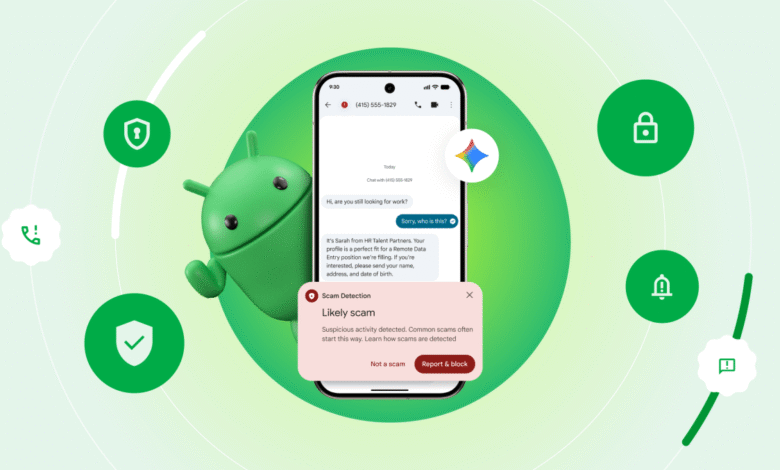
In addition to task automation, Google is expanding its Scam Detection feature for phone calls. This is now arriving on the Samsung Galaxy S26 series in the U.S., having already been available on Pixel phones in several countries including the U.S., Australia, and the U.K. Google is also leveraging its on-device Gemini model to identify scam texts in the U.S., Canada, and the U.K. on Pixel 10 series devices, with plans to extend this to the Galaxy S26 series soon.
Finally, the Circle to Search feature is receiving a notable upgrade. Previously focused on identifying single objects, it can now process and search for everything visible on the screen simultaneously. This means you can circle an entire outfit in a photo to get information on each clothing item and accessory, or learn about a group of related topics presented together.
Google has been consistently enhancing its Android ecosystem with Gemini through regular OS updates and targeted Pixel Drops. This steady stream of AI improvements contrasts with the challenges faced by competitors. Apple, for instance, has reportedly delayed the launch of its more comprehensive AI feature set, which includes a revamped, AI-powered Siri, pushing its release further into the year.
(Source: TechCrunch)