Luigi Mangione supporters return to court with press credentials
▼ Summary
– A judge in the New York state case regarding the UnitedHealthcare CEO’s killing ruled that some police-collected evidence cannot be shown to a jury.
– Outside the courthouse, attendees with press credentials made incendiary remarks, including that the victim’s children were “better off without him” and cursing the victim.
– The incident sparked debate over New York City’s press credentialing process, as the three attendees, known as “The Mangionistas,” were issued passes despite being supporters of the accused.
– Mayor Zohran Mamdani’s administration is reviewing the credentialing process, with Mamdani stating the three should not have received press passes.
– The situation highlights the difficulty of distinguishing between journalists, influencers, and activists, raising questions about who qualifies as press and how to maintain credentialing standards.
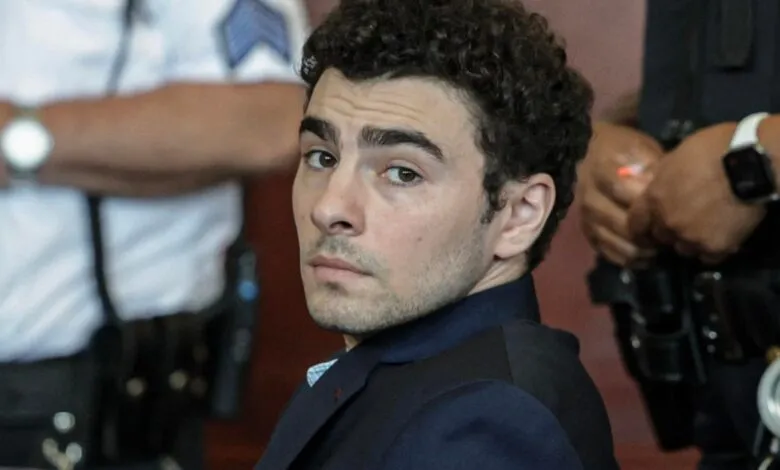
On Monday morning, a judge presiding over the New York state case involving the killing of the UnitedHealthcare CEO ruled that certain police-collected evidence cannot be presented to a jury. But that wasn’t the only development from the hearing.
Outside the courthouse, New York Daily News reporter Molly Crane-Newman captured footage of several attendees making inflammatory remarks to the press. One attendee, Lena Weissbrot, stated that the children of Brian Thompson,who was fatally shot in December 2024,were “better off without him” and needed to “learn to not be like their dad.” Another attendee, who identified herself only as Ashley, added, “I’m standing on business. Fuck Brian Thompson. I don’t give a flying fuck he died.” The group then pivoted to criticizing the US for-profit healthcare system and individuals who have died without receiving necessary medical care.
Ordinarily, this would be a minor tabloid story, similar to earlier coverage of Luigi Mangione, the man accused of murdering Thompson. I had seen and interviewed these attendees at previous hearings while covering the case. They, along with other Mangione supporters, have become regular fixtures at the lower Manhattan courthouse. But this time, the comments sparked a different kind of controversy: these attendees were wearing press credentials around their necks.
Local reporters criticized the city for apparently issuing press passes to the three supporters, who run social media accounts under the name “The Mangionistas.” Former New York City Mayor Eric Adams referred to them as “reporters” and accused the current administration of being “reckless” in its credentialing process.
The city-issued press passes require applicants to submit six examples of on-the-ground reporting, which can include traditional formats like written stories or broadcasts,but the application also allows for more nontraditional formats. The city defines a member of the press as someone who “gathers and reports the news, by publishing, broadcasting, or cablecasting articles, commentaries, books, photographs, video, film, or audio by electronic, print, or digital media.” This raises difficult questions: What separates a reporter from someone who simply witnessed an event and posted about it? Is a Substack essay equivalent to a reported story? How do you demand that a reporter separate personal opinions from the story they cover? These are nearly impossible distinctions, and the definitional quagmire could affect newsgathering beyond the Mangione case, potentially shutting out smaller outlets or independent journalists.
At the same time, there are practical reasons for the city to tighten its credentialing rules. A press pass is required to cross police and fire lines and attend city-sponsored press events. Even before the Mangionistas, local reporters had raised concerns about the city’s practices. A right-wing anti-vaccine political candidate known as the “Sperminator” managed to obtain a press pass during the Adams administration. The New York Post reported that the city blocked him from renewing his credentials in 2025 after he was accused of impersonating a reporter. If virtually anyone can become “media,” the credentialing system becomes meaningless.
Who gets to decide what constitutes reporting?
By the end of the day, The New York Times reported that Mayor Zohran Mamdani’s administration was reviewing the press credentialing process. On Tuesday, Mamdani stated that the three Mangionistas should never have been issued press passes. City Hall directed The Verge to Mamdani’s earlier comments, in which he said the three fans “don’t fall within [the] debate” of who should qualify for a press pass. Weissbrot appears to have started publishing dispatches from Mangione’s court hearings in September on a blog called The Bicoastal Beat, though there is no disclosure of her direct involvement in organizing for Mangione. A message to the author’s Bicoastal Beat email address went unanswered.
“These individuals do not represent the views of Luigi, nor the tens of thousands who have shown their support from around the world,” said Karen Friedman Agnifilo, Mangione’s lawyer, in an email. “The only people who speak for Luigi are his attorneys. We condemn these vile and irresponsible statements that have no place in the discourse around these cases.”
The incident is strange on multiple levels. For one, it has become increasingly difficult to draw clear lines between a journalist, an influencer, a gadfly, a fan, and an activist. Who decides what qualifies as reporting, and who might be blocked from access if stricter rules are enforced? The situation also exposes fault lines within the larger Luigi Mangione universe and the inherent messiness of turning someone on trial for murder into a celebrity.
This may be an edge case, but the questions it raises reflect broader shifts in our information ecosystem and media consumption habits. People are consuming news through vertical video, clips, and “news influencers” who summarize or react to stories rather than doing original reporting. Institutions and those in power have also embraced personalities who deliver news to their audiences, even without journalistic standards. Donald Trump and his administration have used content from MAGA-aligned influencers to justify immigration raids. Influencers are receiving exclusive White House briefings. Mamdani himself has hosted influencer-only events and press conferences where creators can interact with him and make content. It’s reasonable to expect a baseline level of decorum from everyone, press pass holders or not. But if the Mangionistas had not made those statements, would it still be a problem that they, as a kind of Mangione influencer group, had been credentialed? Suddenly, the mayor’s office finds itself having to referee what opinions are acceptable for members of this loosely defined press.
Revoking a press pass is also not straightforward,it requires a hearing with the Office of Administrative Trials and Hearings.
It’s fitting that we are arguing about whether Mangione fans should get press credentials. His case is all about narrative control. From the beginning, Thompson’s killing was less about the individuals involved than what they represented: the US health insurance industry versus everyone else. Mangione supporters have long expressed frustration with how “the media” covers them, typically referring to sensationalist stories that label them as ghoulish or loony. Many supporters insist they do not condone violence and instead use the case to advocate for healthcare reform and a fair trial for the accused.
But tensions also exist within the broader community following the case. When I spoke with supporters outside the courthouse in December, some complained about other attendees who show up dressed “like they’re going to Comic-Con” or those who seem more interested in the spotlight. The frustration stems from a belief that such behavior makes all supporters look bad and distracts from the man on trial. (I also spoke with Weissbrot that day; she has attended many of the pretrial hearings in the New York case against Mangione.)
Indeed, some of the strongest condemnations of the Mangionistas’ statements have come from within the Mangione support network. People Over Profit NYC, a healthcare reform group that has become a courthouse mainstay, issued a statement denouncing the remarks. Some Mangione supporters wondered whether his legal team could bar the Mangionistas from court or whether Mangione could seek restraining orders against them. Others accused the three women of deliberately sabotaging Mangione by making maximally controversial statements to sway public opinion. This speaks to the wider challenge of how to discuss the case: supporters see Mangione as some combination of a folk hero, a symbol of US healthcare failures, an innocent man, and someone who is legally guilty but morally justified.
Threading that needle is impossible in a case where public participation has been a hallmark of its notoriety. Supporters have sent more than $1.5 million to Mangione’s legal defense fund, and he is reportedly inundated with letters in jail. The upcoming jury selection process will be a spectacle, with prospective jurors likely asked if they have shared a Luigi meme in the past year and a half. This is the problem with being the internet’s favorite defendant, of having support so fervent it becomes a recurring Fox News or Daily Mail cliché. Eventually, someone will put their foot in their mouth, and you will have to answer for it.
(Source: The Verge)