Google’s Fitbit Air makes a major push into AI health
▼ Summary
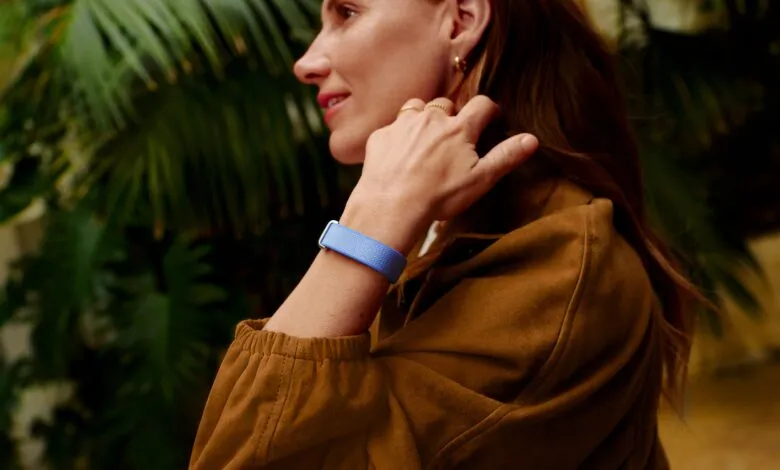
– The Google Fitbit Air is a $99 screenless fitness tracker with a metallic fabric clasp, resembling the Whoop MG band.
– The author initially dismissed it as a “Whoop dupe” but changed their view after learning more.
– The Fitbit Air is compared to original Fitbit devices like the 2012 Fitbit One, which were modular and screenless before Fitbit shifted to smartwatches.
– The Fitbit One was primarily a pedometer, while the Air functions as a modern, modular sensor.
– The Fitbit Air can be preordered now and will be available starting May 26th.
At first glance, the new $99 Google Fitbit Air looks like a dead ringer for a Whoop band. Screenless, with a metallic fabric clasp, it practically begs for the comparison. My eyes darted between the Fitbit Air and the Whoop MG on my own wrist, and for a moment, I honestly wondered if I was seeing double.
But then the press briefing unfolded, and my perspective began to shift. The Fitbit Air actually feels like a throwback to the original Fitbits, the ones that Whoop itself essentially copied once Fitbit pivoted hard into smartwatches. Think back to 2012, when the Fitbit One could clip to your pants, hang as a pendant, or even dangle from a keychain. That device was mostly a simple pedometer. The Air, however, is something far more sophisticated. It is a modern, modular sensor designed to be worn continuously without the distraction of a screen.
This is where Google’s major push into AI health coaching comes into play. Without a display to steal your attention, the Fitbit Air relies entirely on its software to deliver insights. The real value isn’t in the hardware itself, but in the personalized AI coaching that analyzes your sleep, recovery, and activity data. It learns your patterns and offers actionable nudges, moving beyond simple step counting to a more holistic, AI-driven wellness experience.
Preorders for the Fitbit Air start today, with a full retail launch set for May 26th. The lavender model, pictured, is one of several color options. While it may share a visual DNA with Whoop, Google is betting that a lower price point and a deep integration with its AI health ecosystem will set it apart. The question is whether consumers are ready to embrace a screenless tracker that prioritizes AI guidance over glanceable stats.
(Source: The Verge)