Fitbit Air review: near-perfect fitness tracker, flawed AI coach
▼ Summary
– The Fitbit Air is a $100 display-less fitness band that competes with Whoop, offering baseline health data and a simple design for those overwhelmed by screens.
– The Air serves as the launchpad for Google’s Health Coach, a $10/month AI-powered feature that provides personalized fitness advice, but it suffers from inaccuracies like hallucinated workouts and forgotten data.
– The tracker module is small, lightweight, and easily swappable between bands, though it lacks a physical barrier to prevent incorrect insertion, relying only on a battery indicator light.
– The default Performance band is the most comfortable and practical for sleep and workouts, while the Active and Elevated bands are less breathable, uncomfortable, or finicky.
– The Fitbit Air delivers accurate auto-workout detection and excellent battery life (over a week), but lacks GPS and NFC; its “readiness” metric is unreliable, and the Health Coach subscription is not yet worth the cost.
Google’s reputation might suggest it struggles with first-generation hardware, but the Fitbit Air proves that narrative wrong. For just $100, this display-less fitness band positions itself as a Whoop competitor for the masses, delivering essential baseline health data without the screen fatigue so many of us feel. If you’re craving a break from constant notifications and glowing displays, the Air offers a refreshingly simple escape.
Unsurprisingly for a 2026 product, an AI hook is baked in. The Fitbit Air serves as the launchpad for Google’s new Health Coach, a $10-per-month feature replacing the old Fitbit Premium. Health Coach aims to be your personalized trainer, analyzing overall fitness levels to suggest better ways to eat, sleep, rest, and exercise. It’s an intriguing concept, integrated into a redesigned Google Health app. But unlike the band itself, this AI feature can’t shake its digital tether.
Hardware, bands, and battery life
A display-less tracker seems simple, but there are many ways to get it wrong. Making the core module too heavy or uncomfortable for all-day wear, complicating band swaps, or stripping out too many features to keep costs low are all pitfalls. Google mostly sidestepped these traps with the Fitbit Air.
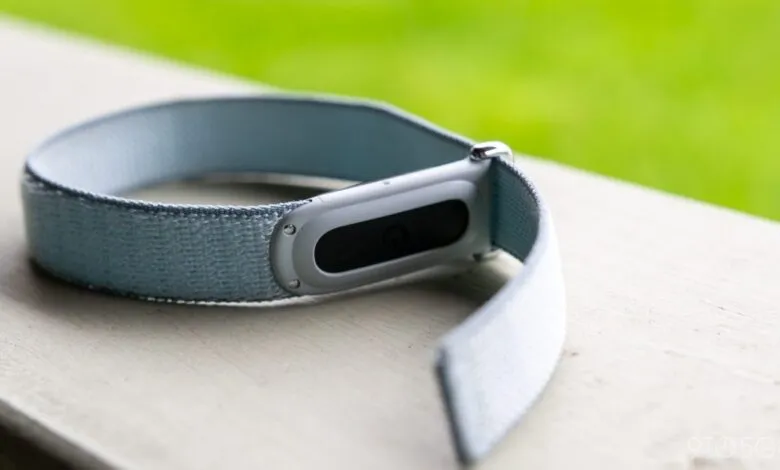
The tracker’s pebble is small, lightweight, and rounded with no sharp edges. It pops in and out of bands with a single press, a stark contrast to the finicky metal mechanisms on older Whoop bands. Swapping bands is effortless, and I don’t worry about damaging them in my bag.
My only hardware gripe? There’s no physical barrier to prevent inserting the tracker upside down. The only clue is the missing battery indicator light, which only shines through a cutout on one side. A simple tab, like those on old game cartridges, would have been a welcome addition.
That battery light is the sole status indicator. A double-tap reveals a basic battery readout, though the gesture occasionally fails on the first try. Fortunately, the battery life is stellar, so this is only a minor annoyance during the first few days of band-swapping. You’ll quickly learn the rhythm, and the app always shows your battery percentage.
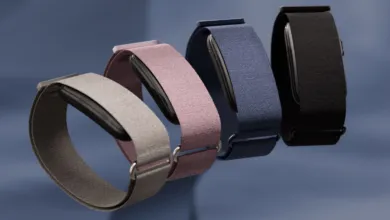
The Fitbit Air ships with a default polyester Performance band in four colors, plus a sporty “Rye” shade inspired by Steph Curry. Google also sent me “Active” and “Elevated” bands. For most people, the stock Performance band is all you need.
- Performance: The clear winner. Extremely lightweight and comfortable, even for sleep. Easy to clean and quick to dry, making it suitable for all workouts. The velcro’s long-term durability is uncertain, and the Fog colorway occasionally feels like a hospital band, but it’s easily the best option.I spent most of my time with the Performance band, swapping to Active for runs and forcing myself to wear the Elevated band for an afternoon of errands. Paired with the Performance band, the Fitbit Air is the first wearable I’ve worn to bed without frustration. I’m not a sleep tracker, but this device comes close to converting me. Swapping wrists requires no settings adjustments, which is a nice bonus.Battery life is exceptional. Google promises “up to” a week, but I think that’s conservative. After a full week, I still had 16% remaining, enough to get through the night. A quick 30-minute shower charge brought it back to nearly 80%. The proprietary charger plugs into any USB-C brick, minimizing travel annoyances.The only thing missing is a basic LED clock, something that would elevate the device without changing its core design. But for $100, this fitness-first tracker delivers everything you need.Sensors and fitness trackingThe Air packs an optical heart rate monitor, accelerometer, gyroscope, SpO2 sensors, a skin temperature sensor, and a vibration motor for silent alarms. Compared to the $160 Fitbit Charge 6, you lose ECG, EDA, built-in GPS, NFC, and an ambient light sensor. I wish Google had squeezed in GPS or NFC, but without a display or music playback, the budget-focused approach makes sense.Despite lacking GPS, the tracking experience is excellent. Comparing auto-tracked runs to data from a cellular Apple Watch, I was surprised by the accuracy. Time and distance were within the margin of error, and the Fitbit usually detected when my run ended and my cooldown walk began. Heart rate detection was spot on, and auto-workout detection was night and day better than the Apple Watch.Cardio-based workouts are detected more accurately than strength training, but the Air handles strength metrics (time, heart rate, effort) as well as any competitor. The one metric I question is “readiness,” which combines heart rate variability with sleep scores. It never felt accurate; high-readiness days left me sluggish, and low-readiness days produced great workouts. A simple morning check-in could improve this tool significantly.For a first-generation display-less tracker, Google knocked it out of the park. The Fitbit Air has everything you need and nothing you don’t. If Google adds offline music playback to the next model, I might finally switch to YouTube Music.Google Health and Health CoachAlongside the Air, Google launched a revamped Google Health app. Non-Premium users interact with customizable tiles, while Premium subscribers see Health Coach front and center. The app is bold and colorful, but it’s an information overload. The Fitness tab acts as a hub for workout logs and metrics, while sleep gets its own section. It’s a lot, but time and experience should help. Long-time Fitbit fans may find the relaunch frustrating, so prepare for a learning curve.Now, about Health Coach. My initial impressions were negative, thanks to a hallucinated six-mile run. In two weeks, I encountered several issues that make me hesitant to recommend the $10 monthly or $100 yearly subscription:
- Forgetting workouts, including weightlifting exercises it had previously commented on. It only recalled them when I shared a screenshot.It’s not all bad. Health Coach can build a fitness plan around your sleep schedule, and it prioritizes overall health goals. But the memory capabilities need work. Even if it were free, I’m uncomfortable needing to fact-check every AI response about my own health. When a chatbot makes up data about your body, it can feed into dangerous trends. Google likely has guardrails, but that just makes the mistakes more puzzling.At $10 per month, Health Coach doesn’t justify the cost. Use the three-month trial to gauge your own experience, but don’t expect a flawless product.Final thoughtsIn a world of rising gadget prices, the Fitbit Air is a breath of fresh air. For $100, it’s the perfect entry-level tracker, far more capable than basic pedometers. Auto-exercise tracking is excellent, and the lack of GPS doesn’t stop you from hitting the trail without a phone. If you’re avoiding traditional smartwatches, this is the best option available.As a showcase for Health Coach, however, the Air leaves something to be desired. Google will likely improve its fitness chatbot over time, but I’m tired of excusing broken AI features on the promise of future updates. Enjoy the three-month trial, but for now, I’ll stick with drawing my own conclusions from the raw data. At least then, any mistakes are mine alone.