OpenAI’s Greg Brockman Says He Feared Elon Musk Would Hit Him

▼ Summary
– In August 2017, Greg Brockman and Ilya Sutskever met at Elon Musk’s mansion to discuss OpenAI’s future, where Musk gifted them Tesla Model 3 cars, which Brockman felt was an attempt to make them feel indebted.
– Musk wanted to establish a for-profit arm for OpenAI and sought control, but Sutskever and Brockman objected, proposing shared control instead of a “dictatorship.”
– Musk rejected the offer, stormed out, and threatened to cut funding until they quit, but later his chief of staff called to continue negotiations.
– Brockman testified that Musk’s dismissal of an early AI chatbot prototype, calling it “stupid,” demoralized researcher Alec Radford, showing Musk lacked the vision to control AI development.
– Brockman, Sutskever, and Sam Altman considered voting Musk off the nonprofit board, but decided against it; Musk eventually left on his own in early 2018, deeming OpenAI a “certain failure.”
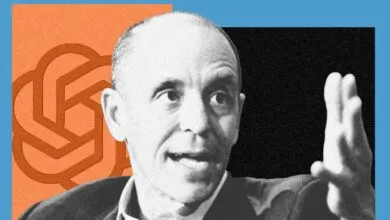
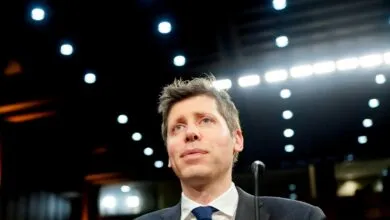
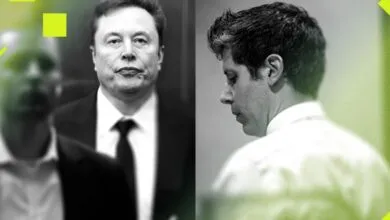
In August 2017, OpenAI cofounder and president Greg Brockman testified that he genuinely feared Elon Musk might physically attack him during a tense meeting at Musk’s Hillsborough mansion. The dramatic testimony unfolded Tuesday in federal court as part of the Musk v. Altman trial, shedding new light on the fractured relationship between the billionaire entrepreneur and the AI research lab he once helped fund.
Brockman and Ilya Sutskever, OpenAI’s cofounder and former chief scientist, had arrived at Musk’s self-described “haunted mansion” , a sprawling 47-acre, $23 million estate south of San Francisco , to discuss the organization’s future. Actor Amber Heard, then Musk’s girlfriend, served whiskey before departing with a friend, according to Brockman’s testimony. Before the meeting, Musk had given both men new Tesla Model 3 cars. “It felt like he was buttering us up,” Brockman recalled. “He wanted us to feel indebted to him in some way.” Sutskever, an amateur artist, tried to reciprocate by presenting Musk with a painting of a Tesla.
The core dispute revolved around OpenAI’s structure. Musk and other cofounders wanted to establish a for-profit arm to attract billions in investment for computing power. But Musk also demanded control, which Sutskever and Brockman opposed, fearing what they called a “dictatorship” over AI development. They proposed shared governance instead.
Musk rejected their offer after several minutes. “He stood up and stormed around the table,” Brockman testified. “I actually thought he was going to hit me, physically attack me.” Musk grabbed the painting, threatened to cut off his funding unless Brockman and Sutskever quit, and stormed out. Yet later that night, Musk’s chief of staff Shivon Zilis called to say “it’s not over,” Brockman said. “There were discussions of futures that included us.”
The testimony capped Brockman’s time on the stand and underscored OpenAI’s argument that Musk’s erratic behavior undermines his claims that the company abused his roughly $38 million in donations. Musk contends his contributions were misused as OpenAI built a now-$852 billion for-profit venture behind ChatGPT and Codex. Brockman, CEO Sam Altman, and OpenAI deny any wrongdoing. The jury could begin deliberating an advisory ruling next week.
After Tuesday’s session, OpenAI attorney William Savitt told reporters that Brockman learned how tough it can be to meet one’s heroes. Brockman admired Musk’s business acumen, Savitt said, but his desire for control was absolute and concerning. Musk’s attorney Marc Toberoff countered that the real issue was Brockman’s own motivations, with his desire for wealth facing scrutiny in court a day earlier.
Brockman also recounted an incident that, in his view, showed Musk was unfit to lead an AI company. Researcher Alec Radford had demonstrated an early chatbot prototype to Musk, who dismissed it as “so stupid” that “a kid on the internet could do better.” Radford was “absolutely crushed” and “demoralized,” nearly quitting AI research entirely. Brockman and Sutskever spent considerable time rebuilding his confidence. The technology later became the basis for ChatGPT. “You needed to dream a little bit,” Brockman said. Musk hadn’t shown that he could.
As negotiations dragged on for months, Brockman, Sutskever, and Altman considered voting Musk off the OpenAI nonprofit board. They met again over whiskey at Musk’s mansion to explore alternative funding, finding agreement only on what not to do. Removing Musk felt “wrong,” Brockman testified. Eventually, Musk left on his own in early 2018, declaring in an email that OpenAI was on a path of “certain failure.”
Zilis, who served as an adviser to both OpenAI and Musk, kept Musk informed about the venture’s progress in subsequent years. “She was proxy Elon in some ways,” Brockman said, calling her “a friend” he had first met in 2012 or 2013.
(Source: Wired)