Charming gadget writes AI poetry
▼ Summary
– The Poetry Camera is a physical device that uses AI to generate and print poems on receipt paper based on photos, rather than taking pictures.
– The reviewer finds the camera’s design charming and its Wi-Fi connection mechanics clever, but overall finds the experience frustrating and the AI-generated poems soulless.
– The product was created by two tech industry veterans, with its second production batch selling for $349 and a third batch promised for May.
– Users can customize the AI’s output through a web portal, creating modes like movie quotes or weather reports, but the process is finicky and often fails.
– The camera has technical reliability issues, such as frequent sleep cycles, network connection problems, and unhelpful error messages styled as poems.
As a senior tech reviewer with more than ten years of experience, I’ve tested countless devices, but few have elicited such a contradictory mix of delight and exasperation as the Poetry Camera. This unique gadget, which uses artificial intelligence to generate poems from images instead of taking photos, presents a fascinating yet ultimately frustrating user experience.
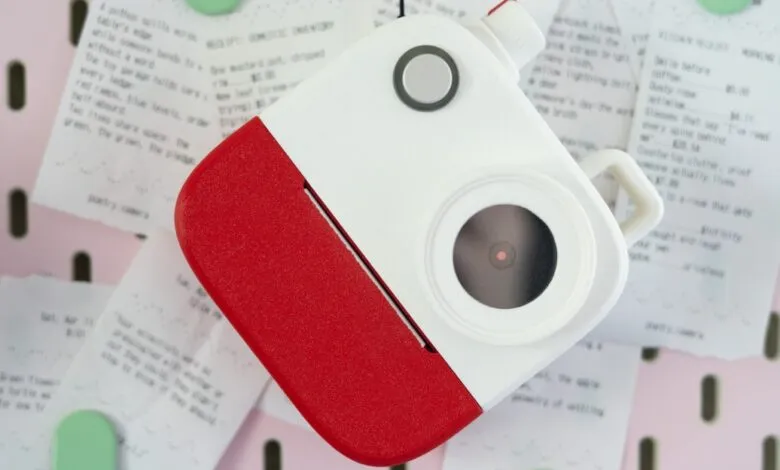
The device itself is undeniably charming. Its playful, lo-fi aesthetic, featuring a white and cherry red body with a matching woven strap, makes it an object you’d instantly want to pick up. The core function is simple: point, press the shutter, and about thirty seconds later, a thermal printer produces a poem inspired by the scene. With no screen, interaction is limited to a shutter button and a dial for selecting different poetic styles. Yet, after generating dozens of these AI verses, my initial curiosity gave way to a persistent sense of disappointment.
The project is the brainchild of former Twitter designer Kelin Carolyn Zhang and ex-Googler Ryan Mather. They meticulously developed the concept from a quirky idea to a functional product, famously detailing their collaborative journey at a Figma conference last year. Following their professional parting later in 2025, Zhang oversaw the production of the device’s second batch in a Shenzhen factory, which sold for $349, half the original price. That batch is now sold out, with a third promised for May.
From a technical standpoint, the Poetry Camera employs some clever solutions. Connecting it to Wi-Fi involves using a simple web app to generate a QR code for the camera to scan. An LED ring around the shutter and printed status messages from the printer itself provide feedback, a surprisingly endearing method of gadget communication.
However, the fundamental output, the poetry, consistently falls flat. The generated verses, often haikus or sonnets, possess a superficial lyrical quality but feel hollow and devoid of genuine meaning. While the ability to customize the AI prompts for each camera mode initially sparked excitement, allowing for creative twists like printing Jurassic Park quotes or weather forecasts, the process was marred by inconsistency. Figuring out why some prompts failed became a tedious exercise in trial and error.
Practical frustrations compounded the issue. The camera frequently enters a sleep mode, requiring a restart and reconnection to the network. Connection failures trigger error messages written as poems, a novelty that quickly wears thin. This unreliability, including an inability to connect to a phone hotspot, severely limited where I could use the device.
Ultimately, the Poetry Camera feels like a relic from an earlier phase of AI enthusiasm, when an LLM producing verse-form text was a novelty in itself. The core problem is that poetry derives its value from human experience and emotion. Despite my efforts to approach it without bias, the output consistently felt like empty calories, technically assembled words lacking a soul. While AI is a powerful tool for many applications, crafting meaningful art requires a humanity that machines simply do not possess. For all its clever engineering and charming design, I’ve concluded this particular gadget is not for me.
(Source: The Verge)