Google Launches Core Update During Major I/O AI Search Changes

▼ Summary
– Google began rolling out the May 2026 core update on May 21, its second core update of the year, which may take up to two weeks to complete.
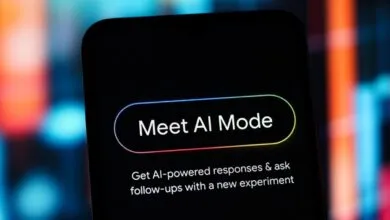
– Google redesigned the Search box with AI capabilities, upgraded AI Mode to use Gemini 3.5 Flash, and previewed always-on information agents for summer.
– Google reported that AI Mode has over 1 billion monthly users, with queries doubling each quarter and being three times longer than traditional searches.
– Google’s Search team says llms.txt isn’t needed for AI Search, but its Lighthouse team flags sites missing this file, creating conflicting guidance.
– Google’s product roadmap is shifting toward AI-driven search and agents faster than its public SEO guidance, creating a widening gap between the two.
Google has officially launched its latest May 2026 Core Update, coinciding with a week of sweeping changes unveiled at Google I/O. The update, announced on the Search Status Dashboard on May 21, marks the second core update of the year and the fourth confirmed ranking adjustment overall. While Google has not shared a blog post or specific goals, the rollout could take up to two weeks, overlapping with major interface and AI feature announcements.
Because the timing places this update squarely in the middle of I/O, ranking fluctuations may be difficult to isolate from other changes. SEO professionals should establish a baseline using performance data from the weeks prior to May 21 and wait at least one full week after the rollout concludes before drawing conclusions. Marie Haynes, founder of Marie Haynes Consulting Inc., linked the update to the new Gemini 3.5 Flash model powering AI Search features, while Harpreet Singh Chatha, an SEO and AI Search Consultant, warned that sites over-optimizing for AI citations could face penalties.
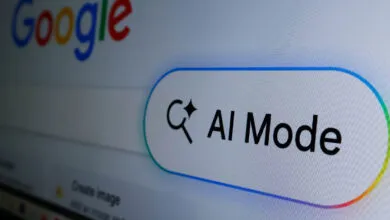
Alongside the core update, Google redesigned the Search box for the first time in over 25 years. The new interface expands dynamically, supports multimodal inputs like images and files, and offers AI-powered suggestions beyond traditional autocomplete. AI Mode now defaults to Gemini 3.5 Flash, delivering responses primarily from AI rather than organic pages. Google also previewed information agents that will continuously monitor the web and deliver updates, raising questions about how content will be cited or overlooked in these summaries.
Jake Ward, an SEO and content entrepreneur, noted that the shift toward AI-first, agentic experiences is predictable, and that visibility is becoming more important than clicks. “Clicks were already dying,” he wrote, “but search is very much alive, just different.”
In a separate report, Google released its first AI Mode usage data one year after launch. The feature now has over 1 billion monthly users, with queries doubling each quarter. Searches are three times longer than traditional queries, and follow-up queries increase 40% monthly in the U. S. More than 16% of searches are multimodal, using voice, images, or video. Planning queries are growing at 80% the rate of overall usage, signaling that users are treating AI as a research partner before making purchasing decisions.
Jeffrey Cohen of Skai highlighted that shoppers are no longer typing short keywords like “running shoes” but instead asking detailed, conversational questions. “That’s not a keyword,” he said. “That’s a brief.” Alisa Scharf, CAIO at Seer, criticized Google for not making these metrics available in free Webmaster Tools, calling the gap “obscene” and praising Bing for investing in a real control center for information.
Meanwhile, Google’s llms.txt guidance remains split between its Search and Lighthouse teams. The Search team says llms.txt isn’t needed for AI Search, while Lighthouse 13.3 checks for it by default. John Mueller clarified that markdown pages are useful for documentation but not for most websites, advising teams to prioritize current needs over future possibilities. Chris Long of Nectiv noted that Chrome’s new Agentic Browsing audits now check for the llms.txt file, creating confusion given Google’s inconsistent messaging.
The theme of the week is a quiet rebuild. Google is restructuring Search around AI while telling SEOs that fundamentals still apply. The optimization guide says AEO and GEO are “still SEO.” Mueller advises focusing on current needs. Yet the same week, Google announced the biggest Search box upgrade in 25 years, reported over 1 billion AI Mode users, previewed always-on information agents, and released data showing user behavior is already shifting toward longer, multimodal, follow-up-heavy queries. The gap between Google’s guidance and its product roadmap continues to widen.
(Source: Search Engine Journal)