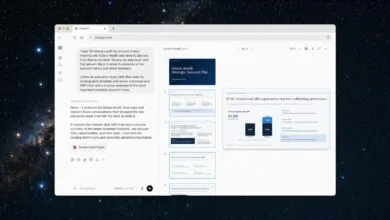
ChatGPT Ads Now Appear for Logged-Out Users

▼ Summary
– OpenAI is beginning to show ads within ChatGPT conversations for users who are not logged in, though the change has not been formally announced.
– The ads are integrated into chat responses rather than displayed as traditional banner ads.
– Expanding ads to logged-out users increases available inventory, helping advertisers spend budgets and reach more high-intent users.
– Advertisers in the pilot have struggled to spend due to low frequency and limited inventory, despite a reduced minimum buy-in of around $50,000.
– Early feedback indicates the ads are relatively unobtrusive and clearly labeled, though minor user experience quirks remain.
OpenAI has quietly begun displaying advertisements inside ChatGPT for users who are not logged into an account, a strategic shift that could dramatically expand the platform’s ad inventory as advertiser demand continues to climb.
What is happening. Early indications show that ads are now appearing organically within conversation threads for unauthenticated users, even though OpenAI has yet to make a formal announcement about the rollout. Instead of using conventional banner placements, these advertisements are embedded directly into the chat responses, making them feel more like part of the interaction.
Why this matters. By opening ad placements to logged-out users, OpenAI is effectively boosting the total available inventory. This move makes it easier for advertisers to allocate their budgets efficiently and connect with a larger pool of high-intent users. If this trend continues, ChatGPT could quickly evolve into a more practical and competitive performance marketing channel.
A closer look. Advertisers involved in the pilot program have faced challenges spending their budgets due to low ad frequency and limited inventory, even after OpenAI lowered the minimum buy-in to roughly $50,000, down from an initial $200,000. Expanding the eligible audience is a direct response to that capacity constraint.
User experience. Early user feedback suggests the advertisements are relatively unobtrusive. They are clearly labeled and blend naturally into the conversational flow, though some minor user interface quirks still remain.
Reading between the lines. This is fundamentally a supply problem, not a demand problem. Advertisers are eager to participate. OpenAI is now racing to scale its inventory to meet that interest.
What to watch next. The key question is whether OpenAI will formalize this rollout and continue broadening access. That decision will determine how quickly ChatGPT can establish itself as a scalable, viable advertising channel.
The bottom line. By opening ads to logged-out users, OpenAI may have found the necessary catalyst to convert strong advertiser interest into substantial, real-world ad spend.
(Source: Search Engine Land)