Why a Doom Port to Neo Geo Remains Impossible
▼ Summary
– The Neo Geo, despite its powerful 1990s hardware, is uniquely unable to run Doom due to its architecture.
– The console’s Motorola 68000 CPU is the same as the Amiga’s, which can run Doom, but the Neo Geo lacks the memory and bitmap graphics modes needed.
– The Neo Geo was designed exclusively for sprite-based 2D graphics, using a system where the CPU writes tile data to VRAM and the video processor handles display.
– The Neo Geo’s character ROM is not addressable by the CPU’s bus, preventing texture sampling or pixel post-processing required for Doom.
– Without frame buffers or Amiga-style bitplanes, the Neo Geo cannot draw arbitrary pixels to the screen, making even a software renderer impossible.
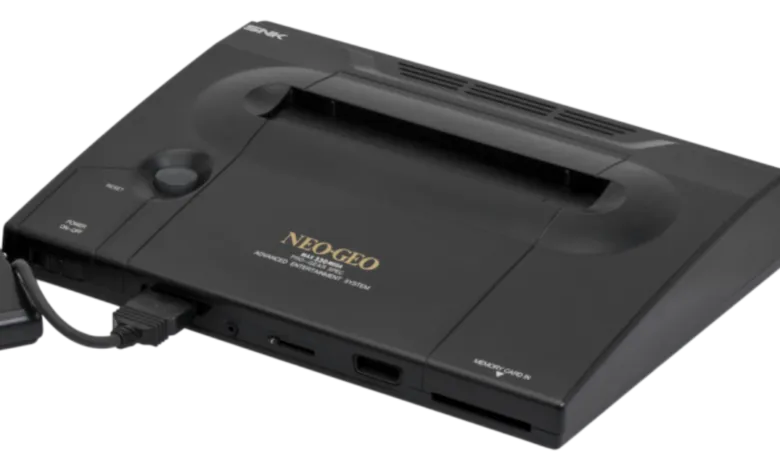
When a game has been ported to everything from a printer to a pregnancy test, you start to assume nothing is off-limits. That’s why the Neo Geo,a legendary 1990s console known for its jaw-dropping launch price and surprisingly robust 2D graphics,stands out as a rare exception. A deep dive from Modern Vintage Gamer explains exactly why Doom on Neo Geo remains an impossibility, despite the console’s relative power for its era.
On paper, the hardware looks promising. The Neo Geo runs on a Motorola 68000 CPU, the same chip found in the Commodore Amiga, a machine that has seen multiple homebrew Doom ports over the years. If the Amiga can handle it, why can’t the Neo Geo?
The answer lies in how the system was built. The Neo Geo wasn’t designed for flexible, software-driven rendering. It was engineered purely for sprite-based 2D graphics stored on cartridges. The CPU writes tile numbers, positions, and scaling values into VRAM, and the video processor then fetches the appropriate sprites from a character ROM that the CPU can’t even address directly. That means the system cannot sample textures, read individual sprite pixels, or perform any kind of post-processing on the displayed graphics.
More critically, the Neo Geo lacks a bitmap graphics mode,the kind of frame buffer or Amiga-style bitplane system that allows unrestricted pixel drawing anywhere on the screen. Without that, even a fully software-based Doom renderer would have no way to output its results. The engine can crunch all the numbers it wants, but there’s simply no path for those pixels to reach the display. That architectural limitation, combined with a severe shortage of memory, keeps Doom permanently locked out of one of the most iconic consoles of the 1990s.
(Source: Ars Technica)