Fitbit Air revives the golden age of fitness trackers
▼ Summary
– The Fitbit Air is a screenless fitness tracker priced at $100, offering a minimalist, affordable alternative to expensive smartwatches like the Samsung Galaxy Watch 8.
– Google Health Premium, with its AI Health Coach, is available via a $10-per-month subscription, but it can be unlocked more cost-effectively through the $20-per-month Google AI Pro subscription.
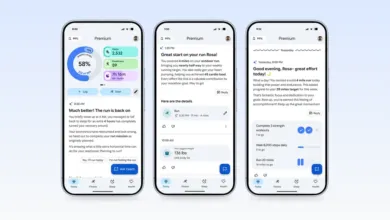
– The AI Health Coach personalizes fitness plans by considering user goals, current exercise, and external factors like weather, and it allows users to log activities via natural language or voice.
– The Fitbit Air’s hardware is lightweight and unobtrusive, with a replaceable band and no screen or notifications, emphasizing simplicity and comfort for all-day wear.
– Fitbit’s experience and Google’s resources give confidence in the product, which combines classic fitness tracker design with modern AI features for an accessible, exciting wearable experience.
Back in the early 2010s, the world of wearable tech felt electric. Fitness trackers were simple, affordable, and accessible, with the Nike+ FuelBand, Jawbone Up3, and early Fitbit Charge models all competing at a sweet spot of around $150. Adjusted for inflation, that’s roughly $210 today, which is still far more palatable than the $350-plus price tag of a Samsung Galaxy Watch 8. Those devices weren’t trying to be smartphones on your wrist; they were focused, minimalist companions that made tracking your health feel exciting and attainable.
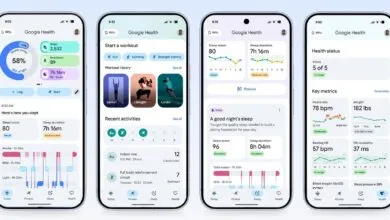
Now, Fitbit is back with the Fitbit Air, a screenless fitness tracker that revives that golden era. Priced at $100 (or £85 in the UK), it feels like a genuine bargain compared to today’s feature-packed wearables. The Google Health app, which consolidates Google Fit and the old Fitbit app, offers a $10-per-month Google Health Premium subscription for an optional AI Health Coach. But there’s a smarter way to unlock it: the $20-per-month Google AI Pro subscription bundles Health Premium with 5TB of storage, YouTube Premium Lite, and a host of other AI features.
The AI Health Coach is the standout feature. During setup, it guides you through your personal goals, current exercise habits, and health data, making the process feel interactive and tailored. It “listens” to your preferences without pushing you beyond your limits, and it accounts for real-world factors like weather and work stress when crafting your custom plan. What I appreciate most is the ability to log exercises,like a quick morning circuit of press-ups, squats, and planks,simply by telling the AI what I did. It cross-references sensor data to adjust my daily activity, all in seconds, using either voice or keyboard input. The AI understands natural language as fluidly as Gemini Live, and while long-term effectiveness remains to be seen, it’s an impressive start.
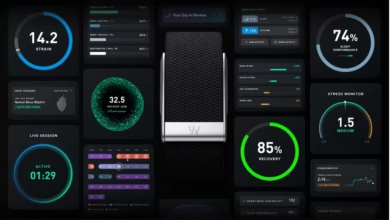
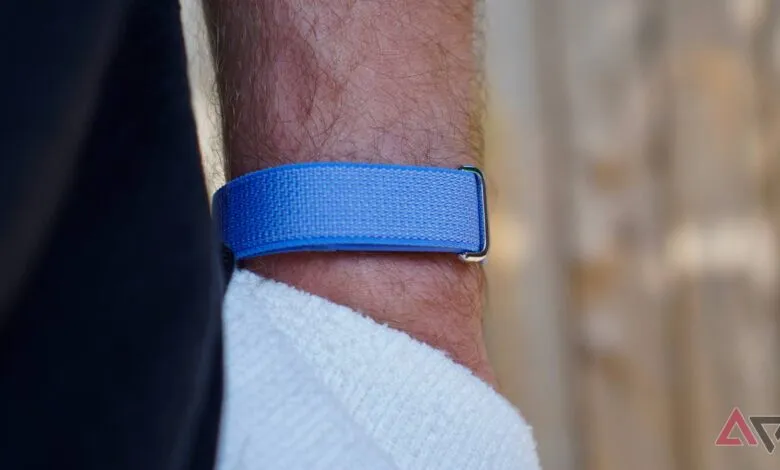
Hardware-wise, the Fitbit Air is a deliberate return to simplicity. A central module snaps into a replaceable, hook-and-loop band that’s incredibly light and unobtrusive. At two-thirds the width of the Whoop MG band, you barely notice it on your wrist. The Performance Loop band comes in vibrant colors like Lavender (a perfect match for my Google Pixel 10a) and Berry, alongside subtler Obsidian and Fog options. If you want to dress it up, Google sells premium strap alternatives. Without a screen or notifications, the Fitbit Air is delightfully uncomplicated,sporty, stylish, and refreshingly free of pretense.
Fitbit knows fitness tracking. It’s not a startup ironing out bugs or refining algorithms; it has years of expertise and Google’s AI muscle behind it. That inspires confidence. The Fitbit Air isn’t just a nostalgic throwback; it’s a smart evolution,taking what worked in the early days and enhancing it with modern AI. My first 24 hours have been overwhelmingly positive. It deserves the attention it’s getting, and it deserves yours. A full review from Android Police is on the way.
(Source: Android Police)