From AI Theory to Everyday Tools: Google’s Product Vision
▼ Summary
– Koray Kavukcuoglu is DeepMind’s CTO and Google’s chief AI architect, leading the development of the Gemini 3 AI model, which can create interactive apps from user queries.
– Gemini 3 represents a significant advance in multimodal understanding, processing various content like videos and PDFs, and in coding, enabling educational widgets and simulations.
– Google’s competitive advantage lies in its ownership of the full AI stack, hardware, data centers, and chips, and its ability to directly integrate frontier AI into products used by billions.
– The development of Gemini 3 involved key technical investments in both pre-training for architectural efficiency and post-training for high-level, agentic behavior that decides how to answer queries.
– Kavukcuoglu states that while building AGI is the mission, there is no set recipe; progress is guided by user feedback to ensure the technology is useful, truthful, and secure.
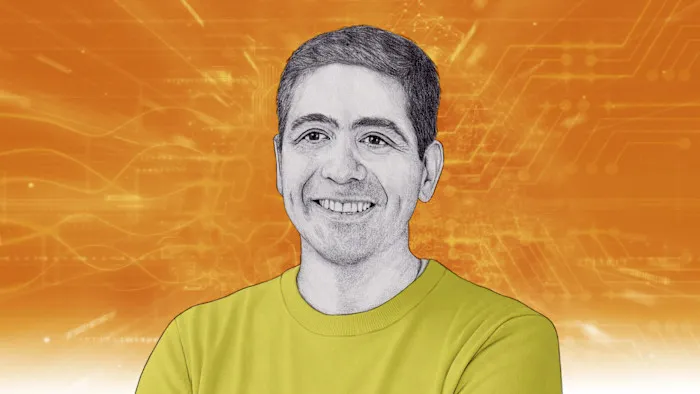
The development of advanced artificial intelligence is rapidly transitioning from theoretical research to practical, everyday applications. At the forefront of this shift is Google, leveraging its unique position to integrate cutting-edge AI directly into the products used by billions. A key figure in this effort is Koray Kavukcuoglu, who serves as both the chief technology officer of DeepMind and Google’s chief AI architect. His work centers on ensuring that the company’s ambitious AI research, including the latest Gemini model, translates seamlessly into tangible user benefits.
Kavukcuoglu describes his role as fundamentally about connection. The goal is to build a foundational technology, specifically, artificial general intelligence (AGI), while ensuring every product across Google can utilize the best AI available. This requires creating entirely new infrastructure to operate at a global scale. The strategy hinges on a “full stack” approach, where Google controls the entire pipeline from hardware and data centers to the end-user application, allowing for rapid deployment and direct user feedback.
When discussing Gemini 3, Kavukcuoglu highlights two major advancements. The first is a significant leap in multimodal understanding. The model can now interpret and reason across various formats like text, video, images, and PDFs, making tools like NotebookLM more powerful. The second is enhanced coding capability, which extends beyond software development to become a tool for learning. The model can generate interactive simulations and widgets in response to queries, providing intuitive, teachable moments.
This progress stems from technical investments in both pre-training and post-training. Pre-training involves architectural improvements for better data comprehension and efficiency. Post-training focuses on teaching the model how to interact with users for specific products, leading to what Kavukcuoglu calls “high-level agentic behaviour.” The model can autonomously decide whether to display search results, write a program, or create a simulation based on the user’s question.
Financially, the model is grounded in Google’s product ecosystem. The company’s ability to integrate frontier AI research directly into widely-used products provides a unique advantage. This creates a feedback loop where technological development is guided by real-world user signals, ensuring the work remains grounded in practical needs. This user-centric approach is also central to Google’s vision for AGI, which it sees as an ultimately useful tool shaped by responsible interaction.
A notable focus for the Gemini 3 team was refining the model’s “persona” to avoid the sycophancy and flattery common in other AI. Through research, they worked on making the model more steerable and truthful, prioritizing plain language and factual information over unnecessary embellishment. Kavukcuoglu notes they did not encode a specific persona but focused on core capabilities.
Looking ahead, the field’s accelerating pace excites Kavukcuoglu, particularly the impact of AI on learning and the development of more capable agents. The immediate next step for the Gemini team is to gather extensive feedback from consumers, developers, and enterprises. This feedback will identify gaps and reveal the creative ways people use the technology, ultimately guiding the next phase of development by highlighting the most important problems to solve.
(Source: FT.com)