Inside Chrome 146’s Agent-Ready WebMCP Preview

▼ Summary
– Chrome 146 includes an early preview of WebMCP, a proposed web standard that exposes structured tools on websites so AI agents can understand and execute available actions.
– WebMCP solves the inefficiency of AI agents having to visually crawl and reverse-engineer websites by providing clear, structured function calls with defined inputs and outputs.
– It offers a middle ground between fragile UI automation and limited public APIs by letting websites expose actions through JavaScript APIs or annotated HTML forms.
– The standard represents a growth opportunity for early adopters to optimize websites for AI agents, similar to how sites were optimized for search engines in the past.
– Developers can currently experiment with WebMCP behind a flag in Chrome, but the standard is still in preview and subject to change.
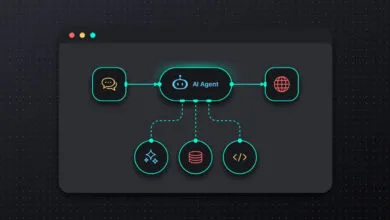
The latest version of Chrome, version 146, includes an early experimental preview of a potentially transformative web standard called WebMCP, or the Web Model Context Protocol. This new protocol is designed to bridge a fundamental gap: the modern web was built for human eyes, but a new era of AI agents requires a more structured way to interact. WebMCP allows websites to explicitly expose their interactive tools, like booking forms or search functions, in a way that AI can understand and use directly, moving beyond fragile screen-scraping.
Traditionally, for an AI to book a flight on a website, it would have to visually parse the page, identify buttons and fields, and guess how to input data, a process prone to breaking with any design change. WebMCP reimagines this interaction. Instead of looking for a “Book Now” button, an AI agent can simply call a structured `bookFlight()` function, providing clear parameters like dates and destinations, and receive a confirmation in a predictable format. It turns website interactions into something resembling a clean, well-documented API call.
This protocol operates through a few core mechanisms. First is discovery, where a page lists the tools it offers, such as `checkout` or `searchProducts`. Each tool is defined by a JSON schema that specifies the exact inputs required and the outputs returned. For instance, a flight booking tool would define needed fields like origin, destination, and passenger count. Finally, state management ensures tools are only available when relevant; a checkout tool might only appear once items are in a cart, preventing agent confusion.
The significance of WebMCP lies in addressing the current shortcomings of AI-web interaction. Today, agents rely either on brittle automation that mimics human clicking, which fails with every website update, or on limited public APIs that most sites don’t offer. WebMCP represents a pragmatic middle ground, allowing developers to make their existing web interfaces natively understandable to AI without building a separate API from scratch. This shift is akin to the early days of search engine optimization; preparing for AI agents is becoming the next critical layer of web development.
Real-world applications are vast. In B2B contexts, a procurement agent could use a standardized `requestquote` tool across multiple industrial supplier sites to gather bids efficiently. For consumers, a personal agent could use `searchproducts` tools from various retailers to instantly compare prices and availability. The protocol enables agents to perform complex, multi-step tasks like assembling a travel itinerary from separate airline, hotel, and rental car sites without relying on a central aggregator.
Implementing WebMCP offers developers two primary paths. The Imperative API provides programmatic control, allowing tools to be registered dynamically using JavaScript via the `navigator.modelContext` interface. Developers define a tool’s name, description, input schema, and an execution function. The Declarative API, however, might be the quicker route for many. By adding specific HTML attributes like `toolname` and `tooldescription` to existing forms, the browser can automatically translate those forms into structured tools AI agents can call. This means many current websites could become agent-compatible with minimal code changes.
For those looking to experiment, WebMCP is available behind a flag in Chrome 146. After enabling the “WebMCP for testing” flag in `chrome://flags` and restarting the browser, developers can use a companion inspector extension to see registered tools and test executions. It’s crucial to view this as an experimental preview; the standard is still evolving. However, early exploration is wise. Following best practices from initial documentation, such as using clear, action-oriented tool names, keeping tools atomic, and ensuring robust validation, will set a strong foundation.
Looking ahead, WebMCP signals a move toward “agent-ready” design as a core web development principle. While the final specification may change, the direction is clear: the websites that will thrive are those that make their functionality not just discoverable, but directly actionable by the AI agents that will increasingly act on behalf of users. It’s about transitioning from being a source of information to becoming a platform for automated task completion.
(Source: Search Engine Land)