Google’s AI Agent Changes SEO Strategy
▼ Summary
– The traditional human-centric web is being replaced by an “agentic web,” where AI agents perform tasks like browsing and transactions.
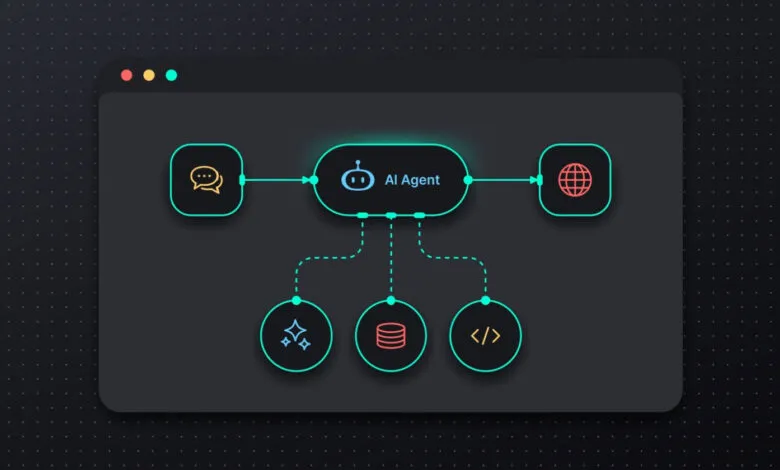
– Google has introduced a new user agent tag and protocols like WebMCP to enable machines to interact directly with website functionality and data.
– Key AI protocols include MCP for backend data access, A2A for bot communication, and UCP for direct machine-to-business commerce.
– Search is evolving into AI Search, with Google integrating AI deeply into its products and moving beyond the traditional creator-traffic partnership.
– This shift presents a major opportunity for SEO and content creators to optimize for direct automated actions, such as lead generation and commerce, rather than just clicks.
The digital landscape is undergoing its most profound transformation in decades, shifting from a platform designed for human clicks to one built for autonomous machine action. Google’s new WebMCP protocol and the introduction of a dedicated Google-Agent bot signal that the agentic web is no longer a speculative future, it is the operational present. While many professionals debate bot-blocking tactics or new job titles, the underlying reality has already changed: machines are beginning to browse, interact, and transact directly with websites.
The familiar model of the web, where human users scroll and click, is rapidly giving way to this new paradigm. Google’s recent announcement of a specialized user agent for AI systems, such as those in Project Mariner, formalizes this shift. This development is merely the foundation. These agents will soon perform complex tasks far beyond simple page navigation.
In a recent discussion, Google’s Head of Search, Liz Reid, acknowledged that human perspective will remain valuable, but she also projected a world where “a lot of agents are talking with each other.” This vision is supported by new AI protocols outlined by Google that demand immediate attention from every business and webmaster. Understanding their function is critical for future strategy.
The Model Context Protocol (MCP) allows agents to securely access backend data systems. Agent2Agent (A2A) communication enables direct bot-to-bot negotiation and transactions. Perhaps most transformative is the Universal Commerce Protocol (UCP), which permits a machine to complete a purchase directly from search results. Additional frameworks like Agent to User Interface (A2UI) and Agent User Interaction (AG-UI) manage dynamic interface creation and real-time AI data streaming.
As discussed with industry expert Liz Micik, the core innovation is WebMCP. Unlike standard browsers that interpret visual pixels, WebMCP allows AI agents to interact natively with a website’s functional tools in real time. This is a fundamental upgrade from browsing to operating.
The immediate application is the automated completion of lead forms with perfect accuracy. The future, however, holds more sophisticated possibilities. Imagine publishing specialized agents, for instance in the SEO field, that other businesses can access. These could operate on a SaaS model or, more likely, interact directly via WebMCP. Your agent could negotiate pricing with my agent, collaborate on tasks, and even help each other improve performance autonomously.
This evolution redefines the core product. As Google’s Nick Fox recently stated, “Search is becoming AI Search, and the Gemini app is your personal assistant.” The company now views AI Mode and AI Overviews as integrated components of a single, assistant-driven experience. This direction was not a panicked reaction to competitors but part of a long-term strategic plan. The agentic web has been in development for years.
A perspective worth considering is that from the dawn of modern search until recently, content creators provided data that trained Google’s AI models. In exchange, they received human traffic and ad revenue. That implicit partnership, in its traditional form, is now evolving into something new.
For those in SEO and digital marketing, this transition represents the field’s greatest opportunity since the invention of the search engine. While moving from a human-first to an agent-first web may seem daunting, it unlocks unprecedented potential. WebMCP and UCP mean we are no longer just optimizing for rankings and clicks, we are optimizing for direct action. Success will belong to those who build for frictionless commerce and automated lead generation. Creators who understand how to interface with these backend systems will achieve a scale and efficiency impossible through human traffic alone. The partnership has changed, but the potential for what can be built on this new web is extraordinary.
Navigating this shift requires proactive learning, as even Google acknowledges the precise path is still unfolding. To prepare, first, thoroughly familiarize yourself with how WebMCP functions. Ecommerce professionals should prioritize understanding the Universal Commerce Protocol (UCP). Begin developing practical skills by learning to vibe code using platforms like Claude Code, Google’s AI Studio, or tools such as Antigravity. Most importantly, focus on the creative and productive applications of AI. Avoid being distracted by speculative media narratives. The future belongs to those who lean into this change and learn to harness these powerful new tools for constructive purposes.
(Source: Search Engine Journal)