Lego’s New Smart Bricks Spark Expert Concern
▼ Summary
– Lego has unveiled Smart Bricks, tech-filled building blocks that add sound, light, and motion reactions to sets, calling it their most revolutionary innovation in nearly 50 years.
– The product, announced at CES 2026, has received a mixed reaction from play experts who worry it could undermine the imaginative, open-ended play that defines traditional Lego.
– Critics argue that traditional Lego already allows children to imagine movement and sound, making these electronic features potentially unnecessary and detrimental to creative play.
– The Smart Play System includes Smart Bricks with sensors and chips, plus Smart Minifigures and Tags that interact to trigger digital responses, like a birthday cake playing a song.
– Lego executives view digital integration as an opportunity to expand physical play, not a threat, aiming to seamlessly blend interactivity with their classic building experience.
The recent unveiling of Lego’s Smart Bricks has ignited a significant conversation about the future of creative play. Announced at CES 2026, this new Smart Play system integrates technology directly into the classic building blocks, promising to bring models to life with sound, light, and motion detection. While Lego heralds this as its most revolutionary step in decades, launching first with a Star Wars set, child development experts express deep reservations about the potential impact on imaginative development.
Josh Golin, executive director of the children’s advocacy group Fairplay, argues that these tech-filled bricks could “undermine what was once great about Legos.” He emphasizes that the core value of traditional Lego play lies in children generating their own narratives and sound effects through pure imagination. Watching a child with basic bricks, he notes, reveals creations that already move and make noise in the child’s mind, without needing electronic assistance. This perspective finds support from academic circles. Andrew Manches, a professor specializing in children and technology, acknowledges the unique beauty of Lego’s simplicity, the freedom to endlessly adapt simple blocks into personal stories. He cautions that adding predefined digital responses might constrain that open-ended creativity.
Despite these concerns, Lego’s leadership presents a different vision. Chief Product Officer Julia Goldin frames digital technology not as a threat, but as a tool to expand physical play. The company aims to weave interactivity seamlessly into the building experience, creating a hybrid form of engagement. Professor Manches also recognizes a potential benefit, welcoming thoughtful integration that responds to how children naturally interact with physical objects.
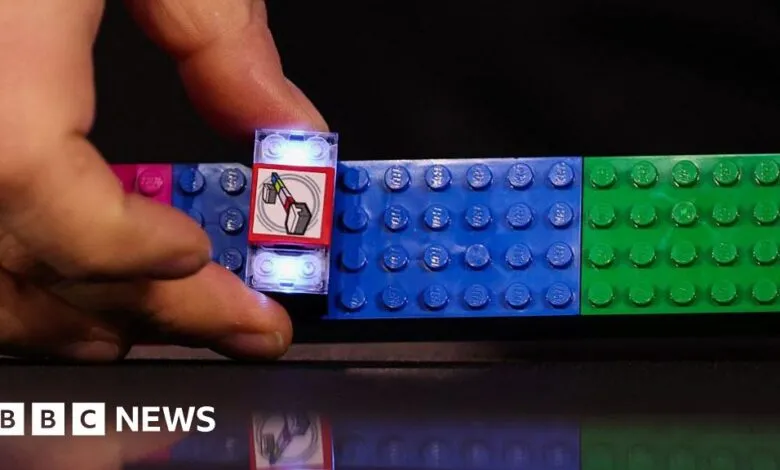
So, what exactly are Smart Bricks? These 2×4 units are miniature hubs of technology, packed with sensors, lights, a sound synthesizer, and a custom chip. They detect motion, position, and distance, enabling models to react during play. However, they are part of a broader ecosystem. The system also includes Smart Minifigures and Smart Tags, which carry digital identifiers. When these components detect each other, they trigger specific sounds or reactions through the central Smart Brick.
For example, during a demonstration, a Lego birthday cake recognized when its candles were blown out, responding with a cheerful song. A helicopter model produced realistic rotor sounds when moved and its brick flashed red upon a simulated crash. This functionality relies on a proprietary wireless system that allows the three components to communicate and produce coordinated responses, aiming to create a more dynamic play session.
The debate ultimately centers on a fundamental question: does enhancing a toy with technology enrich the experience or inadvertently replace the crucial, internal work of a child’s imagination? Lego is betting on enrichment, while play advocates worry about substitution. As these smart sets prepare to hit shelves, parents and educators will be watching closely to see how this new chapter in play actually unfolds in children’s hands.
(Source: BBC)