Zoox built its robotaxi by starting with sensors, then the design
▼ Summary
– Self-driving technology has matured since its peak hype nearly a decade ago, with robotaxis now operating in cities like San Francisco and Austin.
– Zoox, acquired by Amazon in 2020, uses a purpose-built robotaxi design rather than retrofitting existing vehicles.
– The robotaxi’s sensors are mounted on ledges at the top four corners for unobstructed views, optimized for a vehicle without a traditional hood.
– The vehicle features a symmetrical, bidirectional design that eliminates the need for three-point turns and enables agile maneuvers like crab walking.
– Zoox is currently offering ride-hailing services in Las Vegas and San Francisco using its sci-fi-inspired, custom-built robotaxi.
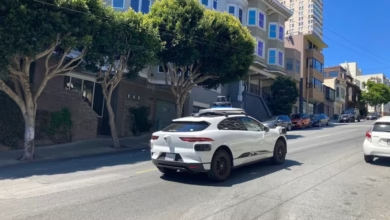
These days, the spotlight is trained on artificial intelligence and robotics, but just under a decade ago, autonomous vehicles were the undisputed stars of the tech world. Walk the floor at CES in the late 2010s, and you could barely move without encountering a robotaxi startup. While the pandemic thinned the herd of competitors, the underlying technology has only grown sharper. Visit the right urban hubs,San Francisco and Austin, Texas, come to mind,and you’ll spot dozens of sensor-laden vehicles weaving through downtown traffic.
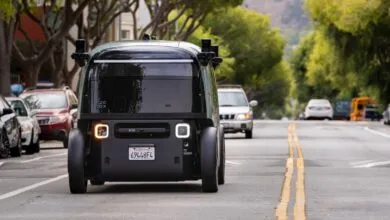
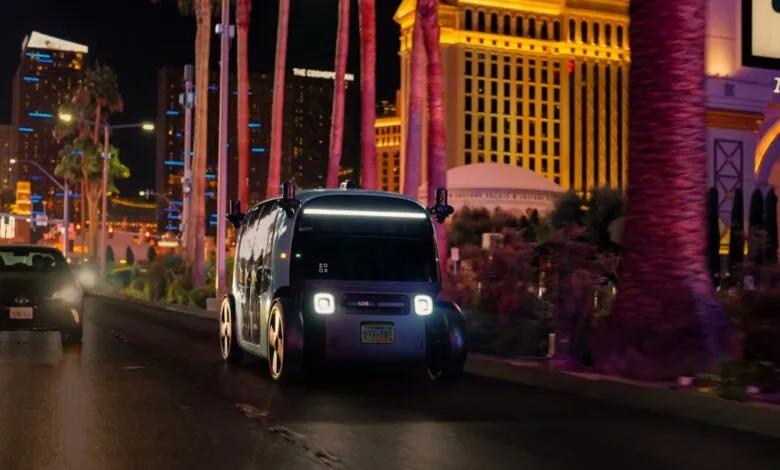
Among them, Zoox’s pod-like robotaxis are impossible to miss. Most developers in the space retrofit conventional cars, like the Hyundai Ioniq 5, adding sensors and heavy computing power to make them drive themselves. Zoox,acquired by Amazon in 2020,used that approach for its test fleet. But as it rolls out ride-hailing services in Las Vegas and San Francisco, it is deploying a purpose-built vehicle that looks like it rolled straight off a sci-fi film set.
“A robotaxi is not a car; it’s not a human-driven vehicle, and the requirements are wildly different, although it has to live in that world,” said Chris Stoffel, director of robot industrial design and studio engineering at Zoox.
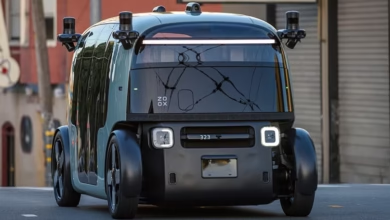
The design process begins with the sensors. Each one sits on a small ledge protruding from the top four corners of the robotaxi’s body. From that elevated perch, every sensor enjoys an unobstructed view, giving the vehicle excellent situational awareness, especially straight ahead. “Because we don’t have a traditional hood, we’ve optimized our frontal coverage in a way that would be nearly impossible on a retrofitted vehicle,” noted Ryan McMichaels, Zoox’s director of sensor engineering.
Another standout feature is the robotaxi’s symmetrical, bidirectional design. It doesn’t matter whether the vehicle is coming or going. This is a major advantage for an on-demand ride-hailing service. There is no need for a three-point turn, and with its symmetrical steering axles, the Zoox robotaxi offers unmatched agility. Both axles share the same steering range, allowing the vehicle to crab walk with far greater precision than even the GM Hummer EV when it performs its signature party trick.
(Source: Ars Technica)