Two-Seater Robotaxis: A Smarter Urban Mobility Solution
▼ Summary
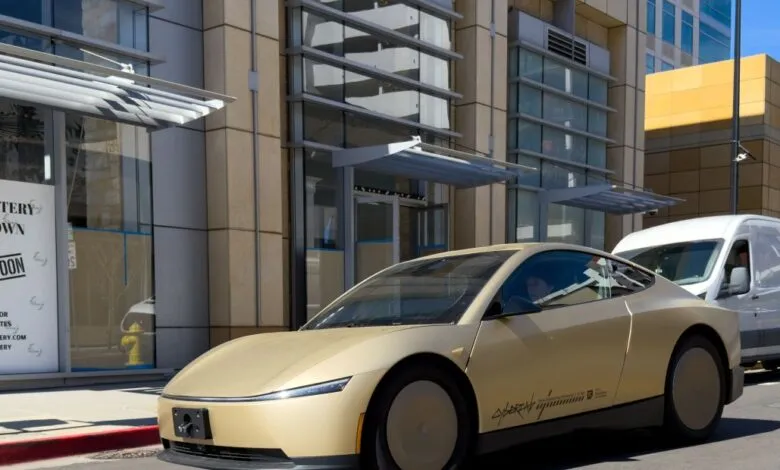
– Tesla’s two-seat Cybercab robotaxi, revealed in 2024, entered production last month and prototypes are now being tested.
– Lucid Motors recently unveiled its own two-seat robotaxi concept called the Lunar, designed for energy efficiency and low cost.
– The rationale for two-seaters is that over 90% of rideshare trips have one or two passengers, making smaller, cheaper vehicles logical for fleet operators.
– A smaller, lighter two-seat EV requires a less expensive battery, recharges faster, and has lower lifetime operating costs, which is critical for robotaxi economics.
– The low, sleek design of both concepts minimizes aerodynamic drag for efficiency, though some argue an upright design would be better for low-speed urban entry and exit.
The initial reveal of a two-seater robotaxi often prompts skepticism. When Tesla first showcased its Cybercab concept in 2024, a common reaction was to question the practicality of a taxi with such limited capacity. This sentiment persisted for months across social media, with many dismissing the idea as fundamentally flawed for shared urban mobility. However, the recent debut of a second major player in this niche suggests a calculated strategy is at work. Following the start of Cybercab production, Lucid Motors has now unveiled its own Lunar robotaxi concept, signaling a concerted industry push toward smaller, purpose-built autonomous vehicles.
During Lucid’s recent Investor Day, the company’s roadmap to profitability included new midsize models and advanced powertrains. The event’s surprise finale was the Lunar, a sleek, doorless two-seater displayed to highlight its interior space and cargo area. In a discussion with Uber’s Andrew Macdonald, acting CEO Marc Winterhoff detailed a partnership where Uber has committed to purchasing 20,000 Lucid Gravity SUVs equipped for autonomous driving. A similar agreement is planned for a future Lucid midsize EV, underscoring a strategic shift toward fleet operations.
This focus reveals the core economic logic behind the two-seat design. Industry data indicates that a vast majority of rideshare trips, often exceeding 90 percent, involve only one or two passengers. Building a vehicle tailored to this predominant use case unlocks significant efficiencies. A smaller, lighter vehicle requires a smaller, less expensive battery to achieve necessary range, which drastically reduces both upfront cost and long-term operating expenses. Lucid’s chief engineer, Zach Walker, explained that for a robotaxi covering 100,000 miles annually, each kilowatt-hour reduction in battery capacity could save an operator about $1,000 per year in charging costs.
This creates a virtuous circle of engineering. Without the need for a steering wheel or the extreme performance expectations of a retail sports sedan, designers can optimize every component for cost and efficiency. Suspension systems can be tuned for comfort over aggressive handling, potentially allowing for simpler, cheaper parts. The low, aerodynamic profile of both the Cybercab and Lunar concepts further enhances energy efficiency, especially at higher speeds. While some analysts argue that urban trips prioritize easy entry over low drag coefficients, the pursuit of maximum energy efficiency remains a primary driver of this form factor.
The ultimate adoption of these vehicles hinges on several factors. They must prove to be safe, reliable, and not contributors to urban congestion. For ridehail companies, the lifetime cost must undercut that of human-driven vehicles. The user experience would also require adjustment, such as specifying passenger count during booking, but this friction may be acceptable if it translates to lower fares. While the sleek designs might inspire thoughts of a compelling consumer sports coupe, the immediate business case is firmly rooted in high-volume fleet economics. The emergence of two major automakers pursuing this path suggests the two-seat robotaxi is not an oddity, but a deliberate answer to the specific demands of autonomous ridehailing.
(Source: The Verge)
