OpenAI Data Center Chief Leaves as Firm Pivots to Leasing
▼ Summary
– OpenAI confirmed that Chris Malone, its head of data centers, has left the company and his role has been split among other leaders.
– The company is shifting strategy from building new facilities to leasing existing ones, a move that reduces risk and accelerates capacity acquisition.
– This departure is part of a broader trend of senior leadership changes at OpenAI since April, including exits by the COO and safety chief.
– Analysts suggest these executive reshuffles are preparation for an anticipated public listing in 2027 or sooner.
– The transition reflects a phase change in OpenAI’s operations from intensive construction to procurement-focused scaling.
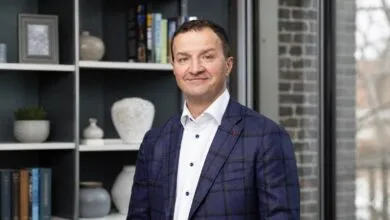
OpenAI has confirmed that Chris Malone, the executive who led its data center expansion, has departed the company. In a move that signals a strategic shift, OpenAI has dissolved the specific role Malone held and reallocated his responsibilities. Anissa Gardizy at The Wall Street Journal broke the news earlier in the day, while an OpenAI spokesperson confirmed to Bloomberg’s Dina Bass on Monday that Malone is no longer with the firm.
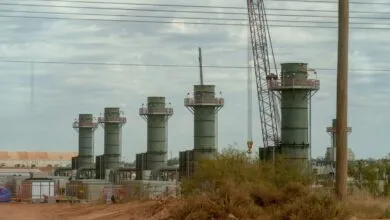
Malone joined OpenAI in March 2025, shortly after the company unveiled Stargate. This joint venture with Oracle and SoftBank aims to build the massive computing infrastructure required for its artificial intelligence models. The flagship site for this initiative remains under construction in Abilene, Texas. However, the leadership structure surrounding this critical infrastructure is undergoing significant changes.
A Structural Pivot from Building to Leasing
OpenAI is not merely filling a vacancy; it is restructuring how it acquires computing power. The company has appointed a new chief technology officer to oversee computing capacity, effectively splitting the duties previously managed by Malone. More importantly, OpenAI is reviving initiatives focused on leasing entire facilities rather than solely constructing new ones.
This represents a fundamental change in strategy. Stargate is a construction program involving land acquisition, permitting, grid connections, and long-term capital commitments. In contrast, leasing existing facilities is a procurement strategy that transfers risk, accelerates timelines, and shifts counterparties. By prioritizing leased capacity while its head of construction leaves, OpenAI is indicating a preference for speed and flexibility over vertical integration.
The job itself has evolved rapidly. Running data centers for an AI lab has transitioned from a property management function to a power trading operation. OpenAI advertised for a power trading lead in August, treating electricity as a core business asset rather than a simple utility expense. This evolution occurred within 18 months, fundamentally altering the scope of Malone’s original role.
Leadership Turnover Accelerates Ahead of IPO
Malone’s departure is part of a broader wave of senior exits at OpenAI since April. Kevin Weil, the former product chief, left in April. Fidji Simo, who oversaw core business operations, stepped down last month following medical leave. Brad Lightcap, the chief operating officer, announced his departure this month after eight years. Additionally, the head of safety left in July after safety functions were folded back into research.
Most recently, OpenAI hired Dali Rajic, president and COO of Wiz, as its second chief revenue officer in under a year. He succeeds Denise Dresser, the former Slack CEO, who had only taken the role in December. Counting Malone, seven senior leaders have either left or been replaced since April.
This churn aligns with OpenAI’s plans to go public. Chief Financial Officer Sarah Friar stated last week that the company intends to list in 2027 or sooner. Public companies require stable leadership structures that satisfy Wall Street expectations. Furthermore, executives who survive intense build phases often depart once their equity vests, particularly when the next phase involves procurement rather than construction.
Scale, Risk, and Global Context
The scale of OpenAI’s ambitions is immense. The company is planning a $30 billion data center in Georgia and pushing into Ohio, where Nvidia has discussed guaranteeing $250 billion in financing for chip housing. Oracle has noted that a single AI data center could expose it to a $7 billion power guarantee, while SoftBank has raised a $60 billion bond to fund these bets. Managing these diverse counterparty relationships requires precise coordination.
While OpenAI’s efforts are concentrated in the United States, leveraging cheaper land and faster permitting, Europe faces different constraints. European operators queue for grid capacity rather than competing for it, causing buildouts to drift toward markets with shorter queues. The shift toward leasing is particularly relevant in Europe, where colocation operators offer finished capacity that matches OpenAI’s current procurement goals.
What Remains Unclear
OpenAI confirmed Malone’s departure but provided no reason for his exit. Sources do not indicate where he is going next, and he did not immediately respond to messages sent via LinkedIn. The company has also not named the individual appointed as chief technology officer for computing capacity.
Departures at this level rarely come with detailed explanations, and the absence of one does not necessarily imply controversy. However, the operational stakes are high. Data center programs rely on deep relationships with utilities, planning authorities, and grid operators. Interconnection queues can last for years, and delays in securing power can strand committed capital.
Observers will watch three key indicators moving forward: the identity of the new CTO for computing capacity, whether public timelines for sites in Abilene, Georgia, or Ohio slip, and the details included in the eventual prospectus. As OpenAI prepares for a 2027 listing, it must disclose key-person risks and compute commitments to regulators. The company is now testing how many of these risks it must publicly acknowledge.
(Source: The Next Web)