OpenAI names new CRO amid ongoing executive shake-up

▼ Summary
– OpenAI replaced chief revenue officer Denise Dresser after nine months, appointing Wiz president and COO Dali Rajic to the top sales role.
– The change follows recent departures of COO Brad Lightcap and CEO of AGI deployment Fidji Simo, with co-founder Greg Brockman taking a larger management role.
– Brockman announced Rajic’s hiring, noting the need to turn lessons into “repeatable execution” as AI deployment evolves; Rajic’s former employer Wiz was acquired by Google for $32 billion.
– OpenAI reaches over one billion weekly active users and two million businesses, but executives have indicated the company hasn’t met all revenue goals.
– OpenAI filed confidentially with the SEC for a potential IPO, and bought $7 billion in employee shares this week, possibly signaling a delayed public offering.
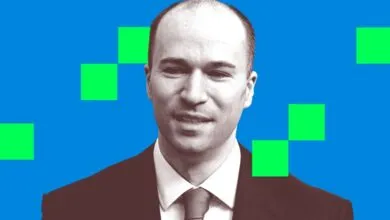
OpenAI is shaking up its executive leadership once again, announcing that Dali Rajic, the former president and COO of cybersecurity firm Wiz, will step in as the company’s new chief revenue officer. Rajic replaces Denise Dresser, who held the position for only nine months before being reassigned.
The leadership transition is part of a broader restructuring that has unfolded over the past month. Notably, the company recently saw the departures of COO Brad Lightcap and Fidji Simo, who served as CEO of AGI deployment and was considered the second-highest-ranking executive at the organization.
Following Simo’s exit, co-founder and president Greg Brockman has assumed a more prominent management role. Brockman announced Rajic’s appointment in a blog post, praising Dresser’s contributions during what he described as a “formative period” for the business. He added that Rajic will “turn what we’ve learned into repeatable execution” as OpenAI builds out its full system to make AI broadly useful.
Rajic arrives from Wiz, a cloud security company that Google acquired this year for $32 billion, marking the tech giant’s largest acquisition to date.
OpenAI currently reports more than one billion weekly active users across its products and serves roughly two million businesses. Yet despite that impressive scale and the strength of its models, executives have acknowledged, both in private conversations and public statements, that the company has not fully met its revenue targets.
The organization has also filed confidentially with the SEC for a potential IPO, though no timeline has been announced. In a related move, OpenAI purchased $7 billion worth of employee shares this week through a tender offer, allowing staff to liquidate some equity compensation. That step could signal a delay in any public offering, since private companies often shore up their executive teams ahead of a market debut.
Bloomberg News reported that an OpenAI blog post referenced a need for “relentless focus” on “measurable business impact,” though those remarks appear to have been scrubbed from the published version. Still, CEO Sam Altman has spoken this year about prioritizing enterprise deployment, trimming back technology projects and experiments that he views as distractions from that central objective.
(Source: TechCrunch)