Apple Ends Mac Pro Line, No New Models Coming

▼ Summary
– Apple has discontinued the Mac Pro and has no plans to design a new version.
– The Mac Pro’s 2013 cylindrical redesign was a failure due to thermal constraints and a lack of expansion slots.
– Apple has largely replaced the Mac Pro with the smaller, newer Mac Studio as its high-end desktop.
– The Mac Pro was last updated in 2023 with an M2 Ultra chip but used a chassis design from 2019.
– The machine was never mainstream, partly due to its high starting price of $6,999.
Apple has officially discontinued its Mac Pro desktop computer, confirming that no future models are in development. The company has removed the product from its online store, signaling a definitive end to a workstation line that has struggled to find a mainstream audience. This decision marks a significant shift in Apple’s strategy for professional desktop computing, pivoting away from a high-end modular tower toward more integrated solutions.
The final update to the Mac Pro arrived in 2023 with the introduction of the M2 Ultra Apple silicon chip, but its physical design remained unchanged since a major 2019 overhaul. That redesign, which returned to a more traditional tower form factor, was itself a course correction after the poorly received cylindrical “trashcan” model released in 2013. With a starting price of $6,999, the Mac Pro consistently occupied a niche position in the market.
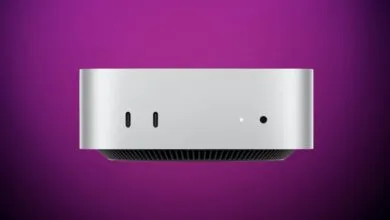
Apple’s professional desktop focus has now consolidated around the Mac Studio. This compact machine, which utilizes newer Apple silicon architecture, effectively serves as the replacement for the Mac Pro in Apple’s lineup. The current Mac Studio features the M3 Ultra chip, and a refresh with an M5 Ultra processor is anticipated later this year. For most professional users, the Mac Studio delivers comparable performance in a smaller footprint, though it lacks the extensive PCIe expansion slots that defined the Mac Pro’s modularity.
The roots of the Mac Pro’s decline trace back to 2013’s controversial redesign. That model, a sleek cylinder, was Apple’s bold attempt to reimagine the workstation. At its unveiling, then-Senior Vice President Phil Schiller famously retorted to critics, “Can’t innovate anymore, my ass.” The reality, however, was a machine hampered by severe thermal constraints and a lack of internal expandability. It relied on Thunderbolt 2 for expansion and could not accommodate larger, more powerful graphics cards as technology evolved.
Apple eventually acknowledged the design’s limitations, apologizing to professional users for creating a system that was essentially impossible to upgrade meaningfully. The company spent six years developing its successor, finally launching the modular tower in 2019. That model received only one chip update before being discontinued. In total, Apple released just three Mac Pro iterations over thirteen years, a slow update cycle that reflected its challenging position.
Today, Apple’s desktop portfolio is streamlined. The Mac Studio stands as the high-end option for demanding workflows, complemented by the Mac mini and the all-in-one iMac. For the vast majority of users, the capabilities of the Mac Studio will be more than sufficient, rendering the niche, expensive Mac Pro an artifact of a previous computing era. Its retirement underscores Apple’s full commitment to its integrated silicon architecture and a more consolidated hardware strategy.
(Source: MacRumors)