Europe scraps Ariane 6 rocket upgrade plans
▼ Summary
– Europe’s Ariane 6 rocket has completed eight missions since its debut two years ago, all reaching orbit safely.
– The expendable rocket can carry over 20 metric tons to low-Earth orbit.
– Ariane 6 has had a smoother rollout than U.S. rockets New Glenn and Vulcan, which faced significant growing pains.
– Despite successful launches, the rocket’s future is threatened by high operational costs.
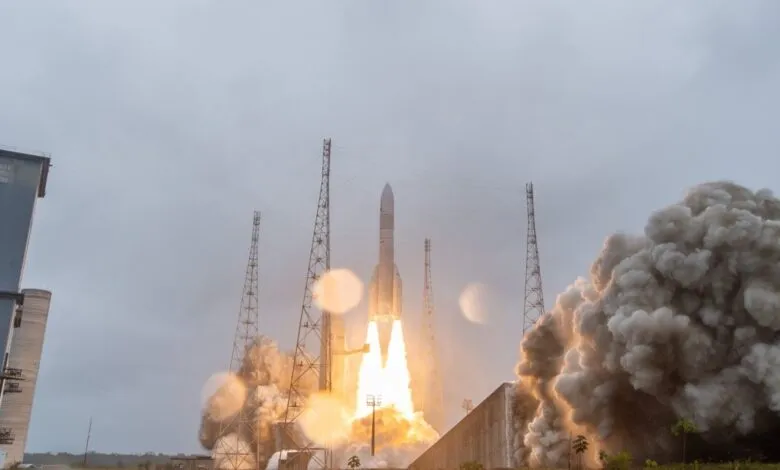
Europe’s Ariane 6 rocket has quietly built an impressive track record since its debut two years ago, completing eight missions with every single one reaching orbit without incident. The heavy-lift, expendable vehicle can carry upwards of 20 metric tons into low-Earth orbit, a capability that places it among the most powerful launchers currently in service.
What stands out most, though, is how smoothly the Ariane 6 has come online compared to its American counterparts. Both Blue Origin’s New Glenn and United Launch Alliance’s Vulcan have wrestled with significant technical setbacks and delays during their early operational phases. European engineers, by contrast, have managed a far more orderly introduction, a testament to careful planning and disciplined execution.
Yet for all that early success, the rocket’s long-term outlook is now clouded by a persistent problem: cost. The expense of flying an Ariane 6 remains stubbornly high, and that financial pressure has forced a strategic rethink. European space officials have now decided to abandon the planned upgrades that were once seen as essential to keeping the vehicle competitive in a rapidly changing launch market.
The decision marks a significant shift in ambition. Rather than pouring more money into refining the Ariane 6, Europe appears to be redirecting its focus toward next-generation technologies that could offer cheaper, more flexible access to space. It is a pragmatic acknowledgment that incremental improvements to an already expensive rocket may not be enough to close the gap with rivals who are driving down prices through reusability and sheer launch volume.
For now, the Ariane 6 will continue to fly, and its reliability record speaks for itself. But without the promised enhancements, its role may increasingly be confined to institutional missions and flagship scientific payloads, where dependability matters more than price. The commercial market, already fiercely competitive, may prove harder to crack.
(Source: Ars Technica)