Weather drones fill a data gap armies and traders rely on
▼ Summary
– AI weather forecasters rely on fresh atmospheric data, but the supply has thinned as radiosonde balloon launches decline, creating a blind spot in the lowest few kilometers of the atmosphere.
– Drones, like Meteomatics’ Meteodrones, are replacing single-use weather balloons by sampling temperature, humidity, pressure, and wind, then landing to be reused, improving coverage and cost efficiency.
– US National Weather Service suspended or reduced balloon launches due to federal staff shortages through 2025, prompting a shift to operational drone data, delivered by Meteomatics for the first time this year.
– Energy traders and the military are key customers for low-altitude drone data, as sharper forecasts provide a trading edge in power and gas markets and inform military decisions on flying and firing.
– The article’s core irony: the AI forecasting race focuses on models like Google DeepMind’s, but the real competitive edge lies in owning sensor networks, with European firm Meteomatics exporting drone technology to the US.
The artificial intelligence weather boom has a dirty secret. For all the hype around models that can predict storms days in advance, an AI forecaster is only as sharp as the observations feeding it, and lately those have grown scarce. Drones are now being launched to fill that void, quietly becoming the sensors that militaries and energy traders alike depend on.
The gap sits in the lowest few kilometers of the atmosphere, the layer where most of our weather actually unfolds. For decades, that slice was measured by radiosondes, the instrument-laden balloons released twice daily from stations around the globe. As those launches dwindle, so does the data, and the timing could not be worse for an industry racing to build the most sophisticated forecasts money can buy.
The appeal of AI meteorology is hard to resist. Google DeepMind has touted its system as the world’s most accurate 10-day weather forecaster. But a model trained on yesterday’s records still needs fresh measurements to know what the sky is doing right now. Cut off from ground truth, even the most advanced neural network is essentially guessing.
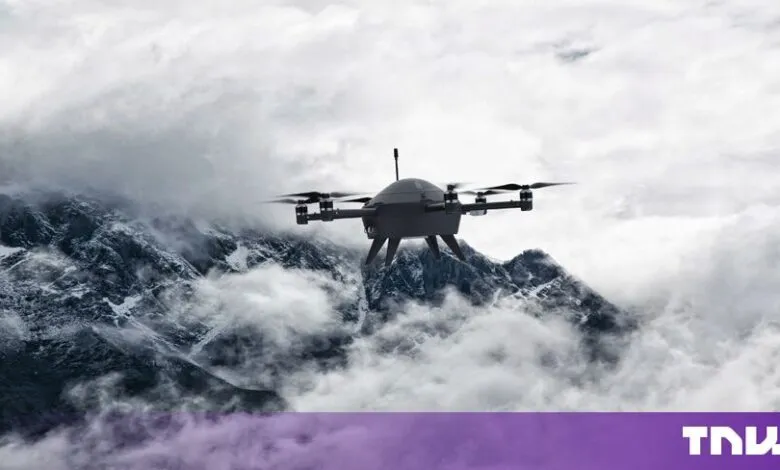
Part of the decline is self-inflicted. In the United States, staff shortages following federal layoffs pushed the National Weather Service to suspend or reduce launches at several upper-air stations through 2025, punching holes in a dataset forecasters had long taken for granted. Enter the drone. Companies like Switzerland’s Meteomatics fly what they call Meteodrones, small uncrewed aircraft pitched explicitly as replacements for radiosondes. They climb several kilometers, sampling temperature, humidity, pressure, and wind on the way up, then land to be sent up again.
The economics help too. A weather balloon is a single-use affair, drifting off on the wind and rarely recovered, whereas a drone gathers its data and returns to fly again, turning patchy coverage into a dependable feed. The concept is moving from demonstration to duty. Meteomatics says it delivered operational weather-drone data to the US National Weather Service for the first time earlier this year, part of a wider NOAA push to fold the aircraft into everyday forecasting rather than treat them as a science experiment.
That is where the money comes in. In power and gas markets, prices swing on wind, solar output, and temperature, so a forecast even slightly sharper over the coming hours is a direct trading edge. Energy traders are among the keenest customers for better low-altitude data, for the plain reason that it pays. The military interest runs on the same logic. The very readings that help a trader position a gas book also help an army decide when to fly, when to fire, and when to move, which is why the drones serve soldiers and speculators alike.
It all lands on an awkward truth for the AI-weather crowd. Google DeepMind, whose latest forecaster has blown away the competition, and challengers such as Switzerland’s Jua, which claims to beat Microsoft and Google, are racing to build better models. Yet the race for better raw data is arguably more important, and a good deal less glamorous.
For Europe, there is a strategic upside buried in the story. Meteomatics is a European firm selling the picks and shovels of a data gold rush into American forecasting, a rare case of the continent exporting the kit rather than importing it, even as the marquee AI models still emerge from Silicon Valley. There is a neat irony in it. The future of forecasting was meant to belong to the software, to sprawling models trained on decades of history. Instead it may hinge on who can put the most sensors in the sky, and who owns the readings they send back. Whoever does can make money or win battles, a fair prize for a fleet of drones doing the unglamorous work the algorithms cannot manage without.
(Source: The Next Web)