AI Weather Startup Outperforms Government Forecasts
▼ Summary
– WindBorne Systems released WeatherMesh-6, an AI weather model that provides more accurate and frequent forecasts than the European Centre for Medium-Range Weather Forecasts (ECMWF), including hourly updates and 3 km resolution in high-data regions.
– The startup improved WeatherMesh-6 by directly feeding sensor data from its fleet of 400 weather balloons into the deep learning model, reducing reliance on ECMWF’s initial conditions.
– WeatherMesh-6 is as accurate at five days out as traditional forecasts are the day before, particularly for surface temperature measurements.
– WindBorne sells its balloon data to NOAA, the U.S. Air Force, and the Navy, and its forecasts to investors and commodity traders, while focusing on building out model and data infrastructure.
– The company uses the global aviation surveillance system ADS-B to maneuver its balloons away from aircraft, following a 2023 incident where a United Airlines jet hit one of its balloons.
A new AI-driven weather forecasting system released today by WindBorne Systems claims to surpass the accuracy and frequency of predictions from the European Centre for Medium-Range Weather Forecasts (ECMWF), long considered the gold standard in global meteorology. The breakthrough, according to the startup, stems from innovations in how sensor data is fed into deep learning models, enabling more precise and timely forecasts.
Founded in 2019 by a group of Stanford students, WindBorne originally focused on building improved weather balloons to sell data. However, the emergence of weather-forecasting deep learning models in 2022 shifted the company’s strategy. The team realized they could capture more value by developing their own predictive model. Today marks the launch of the sixth iteration of that model, WeatherMesh-6, which WindBorne says outperforms both traditional and AI forecasts from the ECMWF.
According to Kai Marshland, WindBorne’s chief product officer, a simple way to grasp the improvement is that WeatherMesh-6 delivers accuracy at five days out that rivals what traditional models achieve the day before, especially for surface temperature measurements. The model also produces forecasts every hour, compared to the six-hour intervals of traditional systems. Its resolution has been refined to 3 km in Europe and the continental U. S., where data quality is highest.
Traditional weather forecasts rely on complex physics models that demand expensive supercomputers and lengthy processing times. AI models, developed by startups and major labs like Google DeepMind, generally operate faster but have historically lacked the resolution and long-term accuracy of physics-based systems. Yet, weather AI is advancing rapidly and is already being integrated into government agencies worldwide, with researchers working to merge it into the systems that aggregate data for public forecasts.
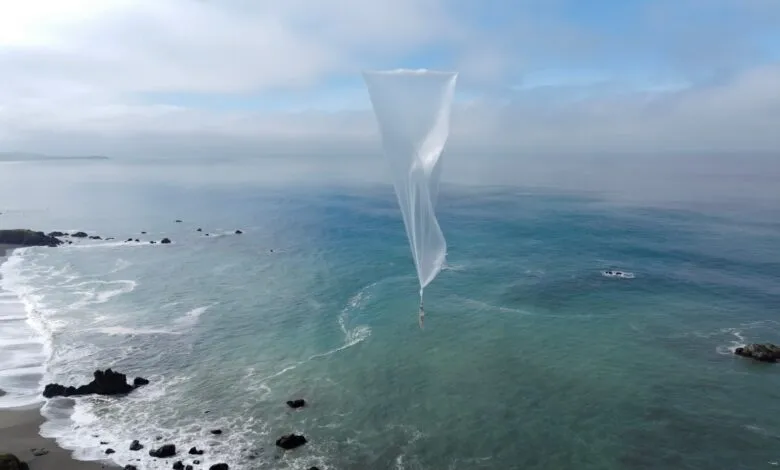
WindBorne’s edge comes from its unique combination of model-building and data collection. The company now maintains about 400 balloons in flight at any given time, launched from 15 sites globally. The latest improvements in WeatherMesh-6 stem from enhancements in how balloon-collected data is assimilated into the models. “I don’t understand, personally, the business model of being an AI-based weather company without a dataset advantage,” WindBorne CEO John Dean told TechCrunch.
The ECMWF’s historical superiority is attributed to its expertise in data assimilation, the process of converting disparate sensor readings into a coherent, machine-readable picture of the world. Currently, AI weather models depend on datasets from the ECMWF and the U. S. National Oceanic and Atmospheric Administration (NOAA). However, WindBorne and others are working to feed data directly into their models. Joan Creus-Costa, the company’s head of AI, says the direct ingestion of data from their balloons and other sources is the primary driver of improvement in WeatherMesh-6. It took a year of tuning and re-architecting the transformer-based model to achieve stable forecasts.
“When we started doing data assimilation, we were still very heavily reliant on ECMWF,” Dean said. “I predict today, if we removed ECMWF’s initial conditions, we would actually still do pretty good.”
The company faced a scare last year when a United Airlines jetliner struck one of its balloons. The plane suffered minor damage, but no injuries occurred, partly because WindBone complied with U. S. regulations on sensor package size. Now, the company uses the global aviation surveillance system ADS-B to monitor air traffic and maneuver its balloons out of harm’s way, aiming to reduce the risk of another collision.
WindBorne, which has raised $25 million in venture funding with a reported valuation of $85 million in 2024, sells its balloon data to NOAA for use in American weather forecasting, as well as to the U. S. Air Force and Navy. The company also offers forecasts to investors and commodity traders. Yet Dean emphasizes that WindBorne remains focused on building out its model and data infrastructure rather than commercial products, partly due to the shifting nature of information consumption.
“I’m not trying to invest a massive team into building a SaaS product, if the way people want consumer information two years from now is through an agent, right?” Dean said.
(Source: TechCrunch)