Volvo app grades your driving, shares score with insurer
▼ Summary
– Volvo is launching Safety Coach, an optional app that scores braking, acceleration and cornering, with high scorers offered cheaper usage-based insurance through Volvia.
– It starts in Sweden and Norway this month, with the United States and other European markets to follow.
– The scoring algorithm comes from Cambridge Mobile Telematics, and Volvo argues predictable driving reduces accidents by making drivers easier for others to anticipate.
– Safety Coach is optional, drivers manage their own data, and can stop sharing with insurers at any time, a lesson learned from General Motors’ data-sharing scandal.
– Volvo has not disclosed a US insurance partner, discount size, or whether poor scores can negatively affect drivers.
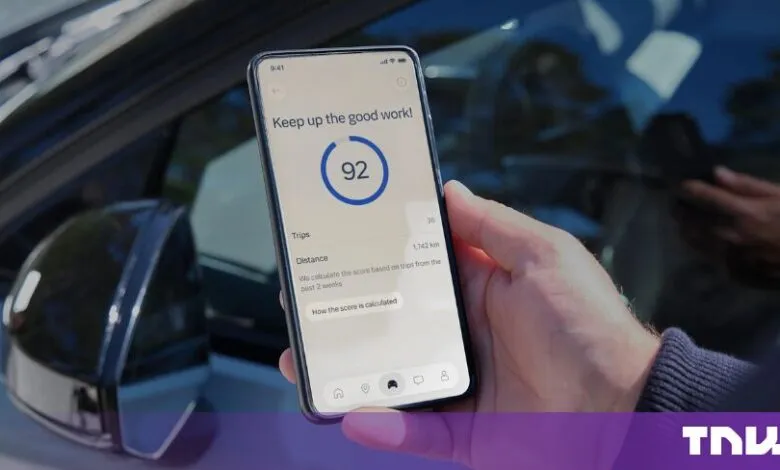
Volvo is putting a new twist on connected-car technology by introducing an app that evaluates driving habits and shares those insights with an insurance provider. The automaker’s Safety Coach feature tracks braking patterns, acceleration behavior, and cornering techniques, generating a rolling safety score based on the previous two weeks behind the wheel. Drivers who choose to share that data can unlock access to usage-based insurance pricing through Volvia, a joint venture between Volvo and If P&C that has operated since 1959.
The rollout begins this month across Sweden and Norway, where the app will be available on most Volvo models from the 2020 model year onward that run the Google-based infotainment platform. That includes the electric EX40, EC40, EX60, and EX90, as well as combustion-powered offerings like the XC40, S60, XC60, and XC90. Expansion into the United States and additional European countries is scheduled for a later phase.
Under the hood, the scoring system relies on technology from Cambridge Mobile Telematics, a company that describes itself as the largest telematics and AI operation focused on road safety. Volvo frames the initiative around predictability rather than punishing cautious driving. Mikael Ljung Aust, a driver behaviour expert at the company, explained that research indicates many collisions stem from surprise. When drivers stay within expected speed ranges and avoid sudden movements, he noted, they become easier for other road users to anticipate.
The consent framework may deserve closer scrutiny than the app itself. Safety Coach is entirely optional, drivers retain control over their own data, and a single opt-in does not create a permanent arrangement. Users can pause sharing with insurers at any point and resume later if they choose.
That flexibility appears to reflect lessons drawn from General Motors’ recent troubles. GM had funneled OnStar driving data to brokers who then sold it to insurers without proper consent, prompting the US Federal Trade Commission to prohibit the company from sharing such information with consumer reporting agencies for five years.
The scoring concept mirrors what Tesla introduced, and that system has drawn criticism since its debut. Tesla owners have frequently complained that their scores suffer due to hard braking events they did not initiate, which led the company to implement a dispute resolution process.
Driver monitoring is becoming more common across Europe regardless of automaker initiatives. New EU vehicle regulations already mandate a camera that watches the driver in every new car, although that particular system remains confined to the vehicle itself and does not transmit information to insurance companies.
What Volvo has yet to disclose is the commercial side of the equation. The company has not named a US insurance partner, provided any indication of discount size, or clarified whether a poor score could ever work against a driver, as opposed to simply failing to earn a reduction.
(Source: The Next Web)