Corgi denies stealing open source product it allegedly copied
▼ Summary
– Papermark accused Corgi of stealing its software, sharing screenshots showing identical feature names and wording; Corgi denied the claim, stating no code was used.
– Corgi CEO Nico Laqua admitted that “vibe-coding” led to replicating Papermark’s visual style and language, but said the offending elements were already changed.
– Corgi issued a cease and desist letter to Papermark’s co-founder demanding removal of the accusation tweet, and also sent one to a critic who joked about the controversy.
– The controversy raises a moral question: if vibe coding copies look and function without identical code, does legal distinction matter?
– Corgi has a history of litigation, including suing former employees, and its CEO recently faced backlash for advocating seven-day workweeks.
Y Combinator-backed insurtech startup Corgi has found itself at the center of another controversy after being accused of copying open source software and rebranding it as its own. The allegations, leveled by Papermark co-founder Marc Seitz on X, claim that Corgi’s newly launched product, Dataroom, was built using stolen code from Papermark’s open source data room software.
Corgi has firmly denied the accusation. A spokesperson told TechCrunch, “No code was used from Papermark.” Still, the initial claim gained traction quickly after Seitz posted screenshots showing that Corgi’s product used identical language for the same features as Papermark’s, word for word. Deal room software is designed for secure document sharing, commonly used by startups during fundraising and due diligence with venture capitalists.
Seitz went further, calling Corgi’s product “copyright and license-infringing” and labeling it “fraud.” Corgi co-founder and CEO Nico Laqua responded by promising to investigate. Shortly after, he posted his own evidence on X, showing that the underlying code between the two products was different.
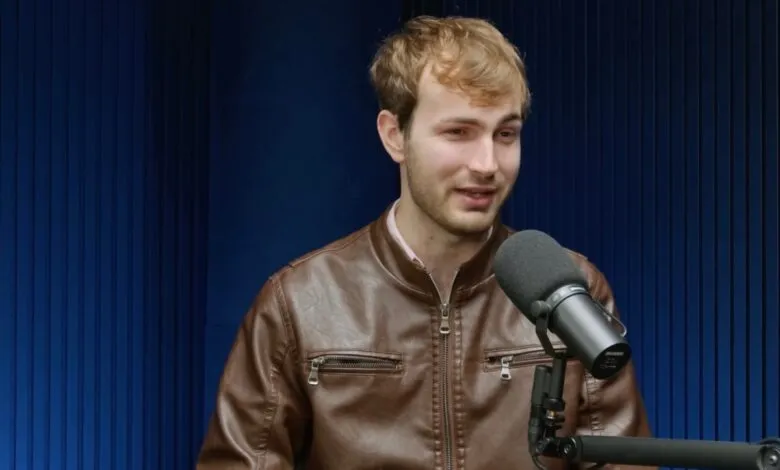
While Laqua strongly rejected the license violation claim , arguing that “stole my enterprise-code” is not the same as “copied my style” , he admitted that relying on vibe-coding led to the replicated features. “Looking back, we should’ve leaned more into our own language and visual choices instead of taking cues from existing products in the space, and that’s on us,” he wrote.
A Corgi spokesperson confirmed that the offending features were vibe-coded and have since been changed. “The issues were isolated to visual elements on two peripheral settings pages,” the spokesperson said, adding that these elements were “immediately updated” and that “our team confirmed that no code was used from Papermark.”
Laqua and the spokesperson also suggested that Papermark’s accusations stem from competitive pressure, since Corgi offers a mostly free product that competes with Papermark’s SaaS. “I get that this stings since we’re putting out something mostly free that competes with his SaaS. I’d be mad too,” Laqua wrote of Seitz. Seitz has not yet responded to a request for comment.
But the situation raises a deeper question: If vibe coding makes it easy to replicate the look, feel, and functionality of another product without copying its code line by line, does it matter if the source code isn’t identical? Legally, it is the only thing that matters. So this is not the same as the 2024 controversy involving YC alumnus PearAI, which admitted to cloning an open source project and releasing it under its own license. Morally, however, the line is blurry and will only become more so.
Dan Barrett, a fellow YC alum and founder of OpenProse, summed it up on X: “In a world where a bot can trivially copy 1:1 the structure of something even if the character-level code diverges … what makes one unacceptable and the other not? existing IP law, incidental to the old world? is there not some greater principle at work here?”
Corgi is now working hard to contain the reputational fallout. The company confirmed it has sent a cease and desist letter to Seitz, demanding he remove the tweet. The founder of Hello World Cafe, which competes with Corgi’s coffee shop business, also claims he received a cease and desist from Corgi’s lawyers for a tweet joking about the Dataroom controversy. Despite the legal threats, the conversation continues to spread across X with hundreds of comments and subtweets.
This latest incident adds to a growing list of controversies surrounding Corgi. The two-year-old startup has developed a reputation for being litigious, having already sued several former employees. Laqua also went viral recently for comments on Harry Stebbings’ podcast, where he said he expects employees to work seven days a week. “Whatever you can done in five days, I promise you, you’ll get more done in six and seven,” he said.
That kind of thinking reflects the fallacy of startup hustle culture. Decades of research consistently show that human productivity is not a linear function of hours worked. While short sprints can be effective for urgent problems, routine overwork reduces productivity, not the other way around.
The startup has also drawn attention for the speed of its fundraising. Last month, Corgi raised a $106 million Series B1 at a $2.6 billion valuation, just three weeks after announcing a $160 million Series B at a $1.3 billion valuation and four months after its $108 million Series A. Even by AI-startup standards, that pace is remarkable.
(Source: TechCrunch)