New startup aims to fix robotaxis’ wasted miles for cleaning and charging
▼ Summary
– Autonomous vehicles drive “deadhead miles” without passengers, which is a major barrier to profitability for robotaxi companies.
– Aseon Labs has raised $10 million in seed funding to build parking space-sized robotic pods that can inspect, clean, and charge robotaxis.
– The pods are designed as temporary, movable structures to avoid lengthy permitting processes and can be relocated if a location underperforms.
– The pods use computer vision and AI to detect problems they shouldn’t handle, such as stains that could worsen with cleaning, diverting those vehicles to central depots.
– Aseon Labs’ co-founders previously built battery-swapping infrastructure for micromobility fleets and are applying similar decentralized infrastructure thinking to autonomous vehicles.
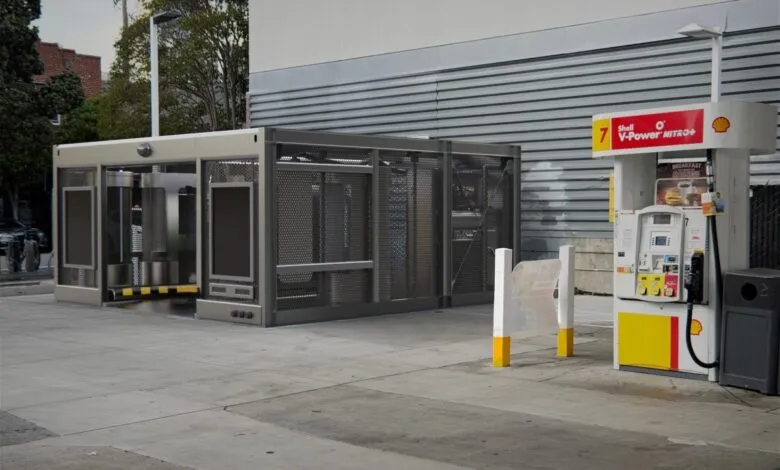
Wandering through San Francisco, you’ll likely spot a driverless car gliding along empty, waiting for a passenger or heading to a far-off depot for cleaning and charging. These deadhead miles,the distance traveled without a paying rider,stand as a major hurdle between robotaxi companies and profitability. A Redwood City, California startup called Aseon Labs believes it has a solution: compact, parking space-sized automated pods scattered across cities to inspect, clean, and charge autonomous vehicles. The company, founded by the team behind battery-swapping startup Pushme, calls them robotic pit stops for the robotaxi industry, and the concept has already drawn investor interest.
Aseon Labs has secured $10 million in a seed round led by Crane Venture Partners, with participation from Y Combinator, Uber co-founder Garrett Camp’s venture firm Expa, Robin Hood Ventures, and Founders Capital. Angel investors include former Google executive Adrian Aoun, Mercury founder Immad Akhund, Zimride co-founder Rajat Suri, and team members from Anthropic, Nuro, Turo, and Revolut. The startup remains in its infancy. According to co-founder and CEO George Kalligeros, the seed funds will finance five prototype pods, expand the six-person robotics and engineering team to roughly a dozen, and secure real estate for the network.
“To reach economic parity with ride-hailing,where we need to get with self-driving cars,and stop subsidizing the cost, you need utilization to go up,” Kalligeros told TechCrunch. “You need the robotaxi in continuous operation throughout the entire demand curve of the day.” Aseon’s pitch is straightforward: a distributed network of autonomous pods would slash deadhead miles, ultimately making robotaxi services profitable.
Kalligeros and co-founder and COO Dan Keene come from outside the autonomous vehicle world but bring expertise in scaling hardware and real estate ventures. Kalligeros worked as a mechanical design engineer at Bentley Motors and Tesla before founding Pushme in 2016, which built battery-swapping infrastructure for micromobility fleets. Pushme was acquired by Tier Mobility in January 2020. “The parallel I’ll draw is we were tasked by SoftBank to put this across as many markets where it made sense for Tier within a very short, compressed period,” Kalligeros said. “The playbook became, how do we sprinkle locations across the city center where it makes sense, while making it easy to deploy as non-permanent infrastructure?”
Aseon Labs is applying that same logic to autonomous vehicles. While researching the industry, the pair visited AV depots where robotaxis undergo inspection, maintenance, cleaning, and charging. Real estate costs often push these depots outside city centers, far from most ride-hailing activity. “Depot infrastructure is the key requirement for launching a new city for any AV operator,” Kalligeros said. “And what happens in the depot right now,the operational backbone of autonomy,is not fully baked.”
The founders settled on creating smaller, independently powered autonomous pods that can be dispersed throughout a city and moved as needed. Each unit includes cameras for vehicle inspection and robotic arms to retrieve lost items and clean interiors. Classified as temporary structures, these pods avoid lengthy permitting processes and allow relocation if a location underperforms. They run on propane generators or connect to existing power sources through partnerships with EV charging companies. Early versions will be staffed, but the goal is full autonomy.
Aseon Labs isn’t trying to solve every edge case. Instead, it uses computer vision and AI,specifically vision-language-action models common in modern robotics,to detect problems the pod shouldn’t handle. For instance, if a camera spots melted chocolate on a backseat, the robotic arm stands down to avoid worsening the stain. The vehicle is then charged and sent to the company’s central depot for human intervention. Aseon Labs hasn’t signed contracts with any robotaxi firms yet, but Kalligeros noted widespread interest. “Pretty much everyone wants to try it,” he said.
(Source: TechCrunch)