Planet and Star’s Magnetic Fields Connect in Ultra-Close Orbit
▼ Summary
– Most early exoplanet discoveries showed that planets with very short orbits are common, unlike our Solar System.
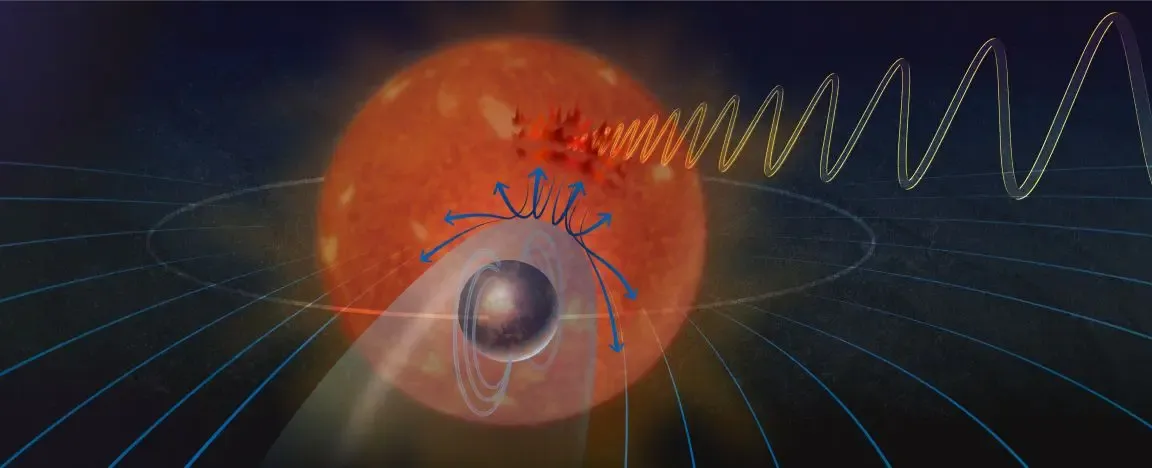
– A star/planet system has been found with periodic brightening likely caused by overlapping magnetic fields.
– The idea of magnetic interaction between close-orbiting planets and their stars was proposed before observational evidence.
– Researchers conducted a comprehensive study of flaring on the star GJ 436, a red dwarf 30 light-years away.
– The exoplanet orbiting GJ 436 is four times Earth’s mass and completes an orbit every 2.6 days.
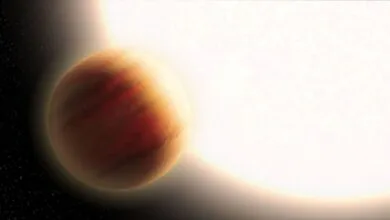
For most of human history, the idea of a planet being “close to the Sun” was anchored by Mercury,an 88-day orbit and a scorched, airless surface. But exoplanet discoveries quickly shattered that assumption. Across the galaxy, planets with orbits lasting just a few days are remarkably common. Their extreme proximity to their stars produces phenomena that seem alien by our standards: atmospheres inflated to impossibly low densities, or skies filled with metallic vapor.
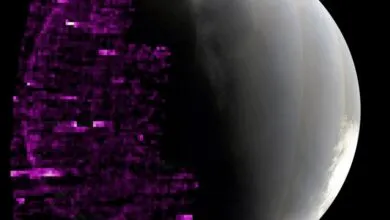
Now, scientists have identified another strange twist in these ultra-tight systems: overlapping magnetic fields. A new study points to a specific star and planet pair that periodically brightens, a behavior the team attributes to the interaction between the magnetic fields of both bodies.
Theory preceded observation in this case. Researchers had already hypothesized that a planet orbiting extremely close to its host star could generate magnetic interactions if its field were strong enough. In recent years, some evidence has emerged,including one instance where a very young star appeared to flare in sync with its innermost planet’s orbit.
An international team has now conducted the most detailed analysis yet of flaring activity in a star hosting a close-in planet. The star, designated GJ 436, is a red dwarf roughly half the mass of the Sun, located about 30 light-years away. It hosts a single known exoplanet, roughly four times Earth’s mass, which completes a full orbit every 2.6 days.
(Source: Ars Technica)