Philips Hue Smart Lights Get Connectivity Upgrade

▼ Summary
– Philips Hue will enable Matter-over-Thread bulbs to run both Thread and Zigbee simultaneously, allowing direct connection to Matter ecosystems while staying linked to a Hue Bridge.
– The update is powered by Silicon Labs’ concurrent multiprotocol technology (CMP), which lets Bluetooth, Zigbee, and Thread operate in parallel.
– With CMP, lights can have two masters, maintaining simultaneous connections to the Hue ecosystem and a Matter controller, eliminating the need to route Matter traffic through the Hue Bridge.
– The feature will roll out later this year to Hue’s recent devices built on Silicon Labs’ MG26 and SiMG301 wireless SoCs.
– Hue CTO George Yianni says the company is not currently using Thread for its own use cases but does not rule out a future move if Thread evolves to offer advantages over Zigbee.
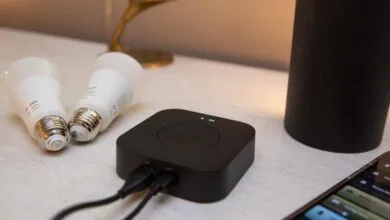
Philips Hue is rolling out a significant connectivity upgrade for its Matter-over-Thread smart bulbs, enabling them to run both Thread and Zigbee simultaneously. This update allows compatible Hue bulbs and fixtures to connect directly to a Matter ecosystem,such as Apple Home, Amazon Alexa, or Google Home,while staying linked to a Hue Bridge and the broader Hue ecosystem.
“Today you cannot have Zigbee and Thread running at the same time, so when you commission it, you have to choose,” explained Philips Hue CTO George Yianni. “If you want to then later switch, you have to reset it.” This dual-protocol limitation is shared by products from other companies like Aqara and Ikea, whose Matter-over-Thread devices also rely on Zigbee’s Touchlink.
The upcoming update is powered by a radio synchronization feature developed by Hue’s chip supplier, Silicon Labs, known as concurrent multiprotocol technology (CMP) . This technology enables Bluetooth, Zigbee, and Thread to operate in parallel. “This means a light can be linked to a Hue Bridge or a Hue remote control and the Thread network,” Yianni said. “It will listen to both sets of commands and respond without you having to think about switching or setting it up differently.”
The feature will be introduced later this year for Hue’s latest devices, which are built on Silicon Labs’ MG26 and SiMG301 wireless SoCs,chips that launched late last year. “It was always the plan to do that; it just wasn’t quite ready at launch,” Yianni noted. Interestingly, Ikea’s devices use a Qorvo chip capable of a similar technology called ConcurrentConnect. One key advantage of enabling both radios is that powered devices can act as mesh extenders, meaning your Hue bulbs could help reinforce your Thread network.
Currently, Hue lights paired with a Hue Bridge can be exposed to Apple Home, Google Home, and other Matter platforms via Matter bridging. With CMP, Matter traffic no longer needs to route through the Hue Bridge. Instead, lights can have two masters, maintaining simultaneous connections to both the Hue ecosystem and a Matter controller. This means you can pair directly with Matter without sacrificing any Hue-specific features.
The immediate benefit is greater flexibility, but the update also offers future-proofing. “We’re not using Thread for our own use cases,” Yianni said, but he did not rule out moving the Hue ecosystem to Thread if the standard evolves to offer advantages over Zigbee. “It does give us options if future evolutions in the Thread standard would allow us to use it for our use cases,” he added. “That would be something which would maybe make us reconsider the stance. If we can actually do better entertainment syncing, more motion-aware areas on a Thread network… I can imagine a future where that might happen if it allowed us to do new features, offer new functionality.”
For now, Hue users will soon be able to connect compatible bulbs directly to Apple Home, Google Home, and other Matter platforms, all while continuing to enjoy the full range of features available through the Hue Bridge.
(Source: The Verge)