Samsung Reveals Fastest UFS 5.0 for Next-Gen On-Device AI
▼ Summary
– Samsung developed the industry’s first UFS 5.0 solution, achieving the highest data transfer speed of 10.8 GB/s for faster storage and processing in mobile memory.
– The new standard enables reduced latency and faster response times for on-device AI applications, such as running large language models.
– Power efficiency is improved by over 40% compared to UFS 4.1 through innovations like clock gating and multi-voltage technologies.
– The UFS 5.0 package is 16.7% smaller than its predecessor, measuring 7.5mm x 13mm x 0.9mm, to enhance design flexibility for mobile, wearable, and XR devices.
– Samsung will begin mass production of UFS 5.0 in capacities up to 1TB in the fourth quarter of this year.
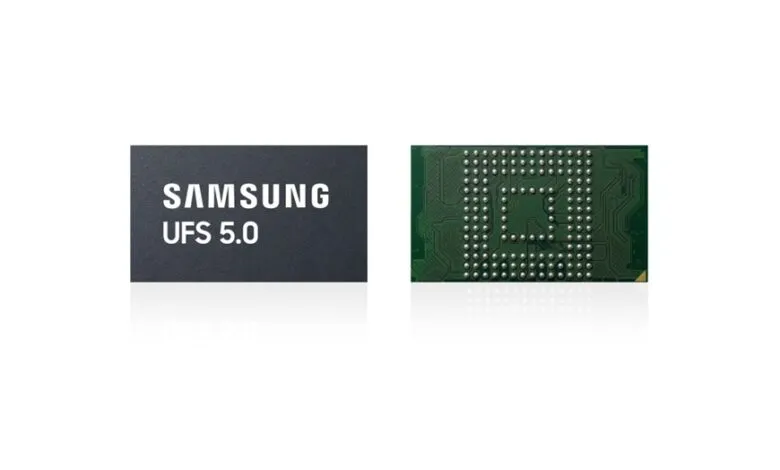
Samsung Electronics has announced the industry’s first Universal Flash Storage (UFS) 5.0 solution, setting a new speed record for mobile memory. With data transfer rates reaching 10.8GB/s, this breakthrough is designed to accelerate on-device AI performance, enabling faster processing and lower latency for next-generation smartphones and wearables.
The new UFS 5.0 standard delivers sequential read speeds of up to 10.8 GB/s and sequential write speeds of up to 9.5 GB/s , more than double the performance of the previous UFS 4.1 specification. This leap in bandwidth allows mobile devices to handle large language models (LLMs) and other AI workloads with significantly reduced lag, making real-time, on-device AI more practical than ever.
“In the era of on-device AI, storage devices are evolving into a key driver defining AI experiences,” said Jangseok Choi, head of Memory Product Planning at Samsung Electronics. “As we successfully move beyond the development stage of the industry’s first UFS 5.0 solution, Samsung is setting a new standard for storage on the go and will continue to drive innovation for the next-generation mobile platform market.”
As generative AI shifts from cloud-based to local processing, the volume of data required for on-device tasks has surged. UFS 5.0 addresses this by transforming storage from a simple data repository into core infrastructure that actively supports AI computation.
Power efficiency has also seen a major upgrade. Compared to UFS 4.1, the new solution reduces power consumption by over 40%, thanks to innovations like clock gating and multi-voltage technologies. These features lower the energy needed to transfer the same amount of data, extending battery life in future mobile devices.
Samsung has also shrunk the physical footprint of the UFS 5.0 package to just 7.5mm x 13mm x 0.9mm , a 16.7% reduction from its predecessor. This compact design enhances flexibility for manufacturers integrating storage into slim smartphones, wearables, and extended reality (XR) headsets.
Mass production of the UFS 5.0 solution is scheduled to begin in the fourth quarter of this year, with capacities available up to one terabyte (TB). By staying ahead of industry demands, Samsung aims to scale supply for flagship smartphones, XR devices, and AI wearables, cementing its leadership in next-generation mobile memory.
(Source: Samsung.com)