Zoox recalls robotaxi software after smoke confusion
▼ Summary
– Zoox issued a software recall after a robotaxi struggled to navigate a smoke-filled emergency fire scene in June, and has shipped a software update to its 105 vehicles.
– No one was in the vehicle during the incident, and Zoox is unaware of any injuries related to the problem.
– The recall follows a letter from NHTSA warning autonomous vehicle companies to stop interfering with first responders, calling emergency detection a “functional insufficiency.”
– Zoox decided to issue the recall on July 7 after investigating the incident and consulting with NHTSA, and this is not its first recall.
– Zoox is expanding testing to new cities and offering free rides in Las Vegas and San Francisco, pending NHTSA exemption for its steering wheel- and pedal-less robotaxis.
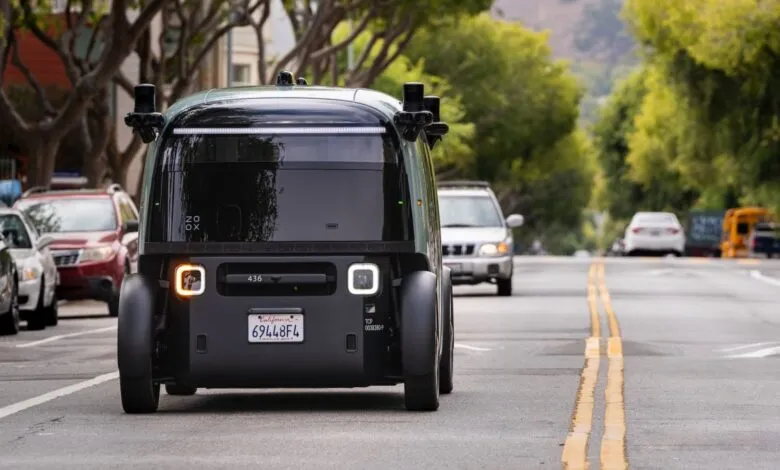
Zoox has issued a software recall for its autonomous fleet after one of its robotaxis failed to properly handle a smoke-filled emergency scene in June. The Amazon-owned company confirmed on Friday that it has deployed a software update to all 105 affected vehicles to fix the issue.
In a statement to TechCrunch, Zoox explained that the update “enhances the existing capability of detecting active [emergency] scenes by adding the ability to detect and respond to heavy smoke in certain situations.” No passengers were inside the vehicle during the June incident, and Zoox informed the National Highway Traffic Safety Administration (NHTSA) that it has no reports of injuries linked to the problem. The NHTSA’s report does not specify the location of the incident, and Zoox declined to provide further details.
The recall comes just one week after NHTSA Administrator Jonathan Morrison sent a letter to self-driving car companies, warning them to stop interfering with first responders. “Let me be clear: the inability to detect and appropriately respond to such situations represents a functional insufficiency,” Morrison wrote. “Emergency scenes are not rare or extreme ‘edge cases.’ As such, NHTSA is today issuing a call to action for AV developers and operators to immediately focus their resources on fixing this issue.”
TechCrunch has previously reported on Waymo’s repeated conflicts with first responders as the company expands into new cities. As of March of this year, Waymo had at least six incidents where emergency personnel had to physically move robotaxis away from active scenes.
According to the NHTSA report detailing the recall, on June 20, a Zoox robotaxi “encountered heavy smoke that obscured an active emergency fire scene that was not cordoned off with cones.” The vehicle “braked hard while attempting to steer away before coming to a stop.” A Zoox teleoperator was able to reverse the vehicle away from the scene, allowing first responders to place traffic cones.
Zoox told NHTSA that it conducted an internal investigation to identify the root cause and check for similar events. The company stated that “this is the only event of this kind that Zoox has experienced.” Between late June and early July, Zoox held multiple discussions with the safety regulator regarding the “severity, frequency, and root causes” of the issue. The company decided to issue the recall on July 7, one day before Morrison’s letter.
This is not Zoox’s first recall. In March 2025, the company voluntarily recalled its vehicle software to resolve a hard braking issue that NHTSA had been investigating since 2024. Two more recalls followed in May 2025 after a collision with a passenger car and an incident involving an e-scooter rider striking a Zoox vehicle.
Zoox has been steadily expanding its testing operations to new cities and is currently offering free rides in Las Vegas and San Francisco ahead of a planned commercial launch. That launch depends on NHTSA granting the company an exemption from certain Federal Motor Vehicle Safety Standards, as Zoox’s robotaxis lack a steering wheel and pedals. NHTSA has also recently proposed removing the brake pedal requirement for vehicles designed to be fully autonomous.
This story has been updated with a statement from Zoox.
(Source: TechCrunch)