How a Regulatory Quirk Unlocks Free Waymo Rides in California

▼ Summary
– California’s favorable conditions have supported robotaxi growth for nearly two decades, but a delayed state regulatory decision is slowing Waymo’s expansion.
– Waymo cannot yet expand into parts of Northern and Southern California and cannot charge passengers for rides in its new Ojai vehicle.
– The Ojai robotaxis may remain free for riders until at least September 25, while Waymo continues charging for rides in its Jaguar I-Pace fleet.
– California requires robotaxi companies to get approval from both the DMV and the California Public Utilities Commission (CPUC) to operate and carry paying passengers.
– Waymo’s CPUC application has faced controversy, including requests for information on emergency response and unaccompanied minors, leading to an extension through September 25.
Robotaxis have found a natural home in California, where nearly two decades of favorable weather, tech enthusiasm, and a skilled workforce have fueled their rise. Yet a regulatory bottleneck at a state agency is now putting the brakes on Alphabet’s Waymo, the dominant player in U.S. driverless ride-hail services.
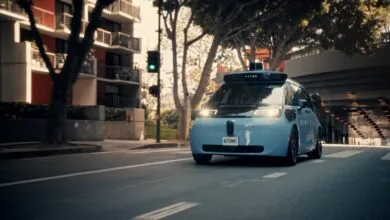
The delay prevents Waymo from expanding into new areas of Northern and Southern California. But for passengers, there’s a silver lining: the company still cannot charge riders for trips in its newest vehicle, a pale blue Chinese-made model called the Ojai, which began picking up customers last month. If Waymo continues operating these cars in its driverless fleet, rides could remain free through late September and possibly longer. (The company still charges for rides in its Jaguar I-Pace robotaxis, which form the bulk of its fleet.)
Unlike other states where robotaxis can launch testing and public service with minimal oversight, California requires explicit permission before any autonomous vehicle hits public roads. Companies must first obtain approval from the state Department of Motor Vehicles to operate, and then secure authorization from the California Public Utilities Commission (CPUC) , which regulates taxis and other transportation services, to carry paying passengers.
Waymo applied to the CPUC in January to both expand its service area and add the Ojai vehicles to its fleet. The proposed Northern California expansion would stretch from Sea Ranch and Sacramento south through Berkeley, Oakland, and into San Jose. In Southern California, the service area would grow beyond Los Angeles into Thousand Oaks and Santa Clarita, and extend down to the Tijuana border past San Diego.
But the process has become mired in unusual controversy. In May, the CPUC requested more details about how Waymo handles emergency incidents, such as the December power outage in San Francisco that left more than 60 Waymos stranded in traffic. The agency also asked for new information about how the company ensures that unaccompanied minors do not ride in its cars, a violation of state law. These questions followed a formal complaint from a labor union representing ride-hail drivers, alleging that Waymo had been transporting unaccompanied minors.
According to Terrie Prosper, a spokesperson for the CPUC, the agency’s Consumer Protection and Enforcement Division and Waymo have agreed to a new extension through September 25. “Waymo’s request is still under review, and the elements requested for approval have not been authorized,” Prosper said.
(Source: Wired)