Why Top Wearables Are Designed to Be Ignored
▼ Summary
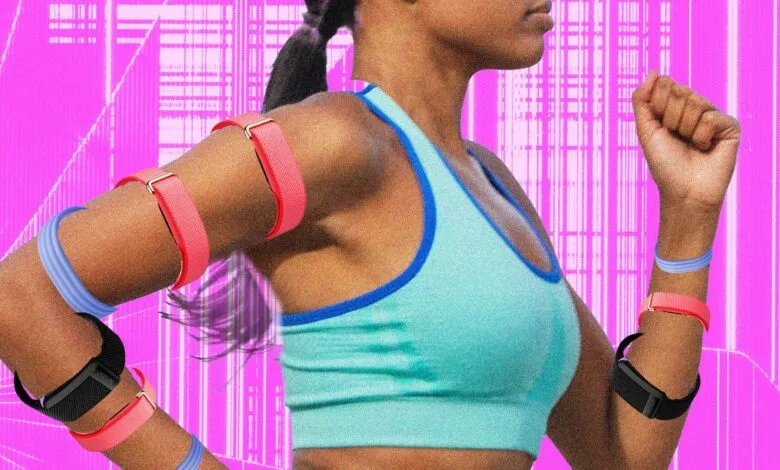
– Screen-free wearables are emerging as a new category of gadgets that collect health data without demanding constant user attention.
– Popular models include the Garmin Cirqa, Google Fitbit Air, Polar Loop, Amazfit Helio Strap, and Whoop series, with Apple reportedly considering entry into this market.
– The trend reflects a growing fatigue among consumers regarding attention-hoarding technology and social media platforms.
– Current smartwatches often function like phones with notifications, whereas screen-free devices aim to reset the wearable category by minimizing interaction.
– Despite smartwatches offering features like AI assistants and OLED screens, they have largely failed to deliver life-changing app ecosystems beyond basic utility.
The latest wave of consumer electronics is defined by a singular, counterintuitive goal: to be ignored. These devices are engineered to demand attention only when their power cells run dry. Known as screen-free wearables, they operate in the background, silently harvesting biometric data around the clock so users can review it later in companion apps, assuming they have the mental bandwidth to do so.
This category has seen explosive growth recently and shows no signs of slowing down. Major players like Garmin Cirqa, Google Fitbit Air, Polar Loop, Amazfit Helio Strap, and the pioneering Whoop series are leading the charge. According to Bloomberg, even Apple is exploring its own entry into this space. The driving force behind this shift is a growing fatigue with attention-hoarding technology and social media platforms, which many consumers now recognize as detrimental to their well-being.
I have tracked the evolution of these devices since their mainstream emergence with early Fitbit models starting in 2009. This new generation feels reminiscent of those initial releases. When I used the Fitbit Ultra in 2011, a clip-on tracker for jeans, I paid it so little mind that I went two days without noticing it had vanished from my person in Zagreb, Croatia. Similarly, while I enjoyed the playful screens on the 2012 Fitbit Zip, it was designed for minimal interaction, much like the modern Fitbit Air.
In contrast, recent years have seen me check my Garmin, Samsung, or Coros devices dozens of times daily. Notifications for emails and messages trigger a reflexive wrist raise. I find myself trapped in a cycle of checking morning and evening reports and obsessively monitoring sleep scores upon waking. The constant move alerts serve as a persistent, nagging reminder of the device’s presence.
The Return to Simplicity
These new devices represent a direct rejection of the current state of smartwatches. Modern fitness trackers increasingly mimic full smartwatches, featuring ubiquitous OLED screens and AI assistant integration. Yet, smartwatches have largely failed to deliver on their original promise of life-changing utility beyond what the first Apple Watch offered in 2015. While they may occasionally save lives, they rarely justify their constant intrusion.
Instead of nurturing vibrant app ecosystems, many wearable platforms have stagnated. Screen-free wearables aim to reset this trajectory through design subtraction. They retain essential components like heart rate sensors, batteries, accelerometers, and Bluetooth transmitters, but remove the display entirely. This approach strips away the digital noise, allowing the technology to function as a true passive health monitor rather than a distraction hub.
(Source: Wired)