New Algorithm Never Forgets Scents, Like Fruit Flies
▼ Summary
– Fruit flies possess a highly efficient olfactory system capable of processing and retaining scent memories despite having a tiny brain with only 140,000 neurons.
– Current electronic nose technologies are limited by high costs, narrow detection capabilities, and the inability to retain learned odors without interference.
– Researchers Kevin Max and Yang Shen developed a new algorithm named Spi-Fly inspired by the biological mechanisms of fruit fly smell.
– The article explains that smell is mechanically complex because odor molecules cannot be reduced to a single physical dimension like wavelength in vision or hearing.
– Existing commercial electronic noses from companies like Alpha MOS and Odotech are currently used for quality control and security but lag behind biological efficiency.
Mimicking the Fruit Fly’s Olfactory Mastery
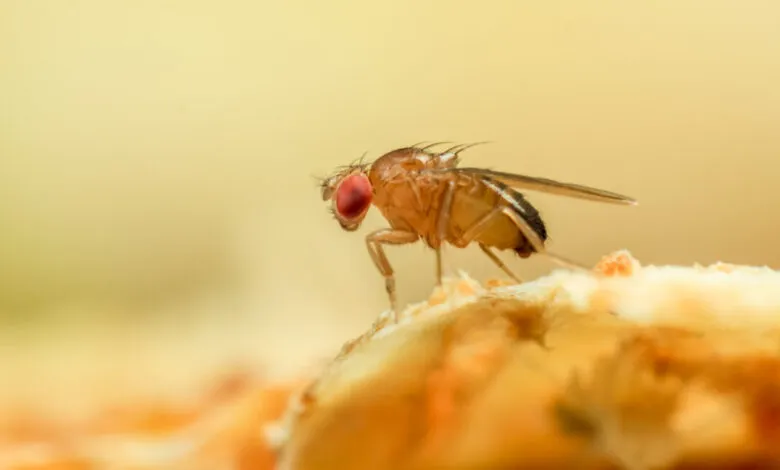
Fruit flies may not be celebrated for their intellectual prowess, and you have likely encountered more than one drowning in a forgotten glass of wine. Yet, with a brain comprising only about 140,000 neurons and weighing less than a poppy seed, Drosophila possesses an extraordinary ability to process vast arrays of odors in milliseconds while retaining those memories for extended periods. This biological efficiency stands in stark contrast to current technological attempts at artificial olfaction. Most existing electronic noses are costly, limited in detection range, and suffer from catastrophic forgetting, losing previously learned scents as soon as they acquire new ones.
Researchers are increasingly looking to nature for solutions to these engineering challenges. Among them are Kevin Max and Yang Shen at the Okinawa Institute of Science and Technology (OIST). Their work has led to the development of Spi-Fly, a novel algorithm detailed in a recent paper published in Neuromorphic Computing and Engineering. The goal is straightforward: replicate the fly’s superior odor recognition and memory retention capabilities in silicon.
The Complexity of Chemical Detection
Understanding smell requires grappling with its inherent mechanical complexity. Unlike vision or hearing, which can be mapped along single physical dimensions such as wavelength, odor molecules do not conform to such tidy parameters. Biological systems evolved a messier, yet highly effective, solution involving hundreds of distinct receptor proteins. Each protein is shaped to bind with specific molecular features, creating firing combinations that the brain must decode. This combinatorial complexity was so profound that it took until 1991 for Linda Buck and Richard Axel to identify the underlying receptor gene family, a discovery that eventually earned them the Nobel Prize in 2004.
Despite these scientific hurdles, commercial electronic noses are already available. Companies such as Alpha MOS, Aryballe, and Odotech produce devices used for food quality control, environmental monitoring, and security screening. However, these tools often lack the versatility and adaptability found in living organisms. By studying how fruit flies manage this intricate task with minimal neural resources, researchers hope to bridge the gap between current limited technology and true olfactory intelligence.
(Source: Ars Technica)