Elon Musk’s Unconventional Robotaxi Strategy Faces Reality Check
▼ Summary
– Tesla is launching its autonomous Cybercab robotaxi service in Austin, Texas, marking a significant step in Elon Musk’s vision for self-driving vehicles.
– The Cybercab relies on a camera-only approach using modified Full Self-Driving software, rejecting the multi-sensor strategy employed by competitors like Waymo.
– Unlike traditional Level 2 systems requiring human supervision, the Cybercab has no physical controls and depends on remote operators for emergency intervention.
– Critics highlight safety concerns as Tesla’s FSD technology has been linked to numerous crashes and fatalities, raising questions about the viability of this sensor-limited design.
– Musk faces intense scrutiny regarding his long-held belief that lidar is unnecessary, with the upcoming launch serving as a critical test of his autonomy strategy.
A High-Stakes Bet on Camera-Only Autonomy
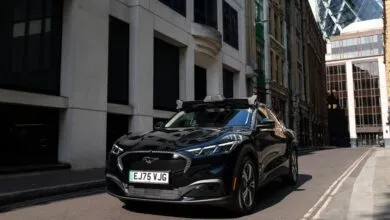
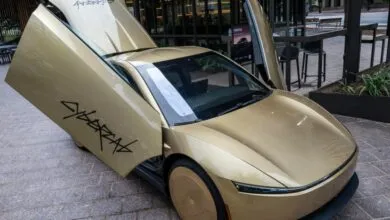
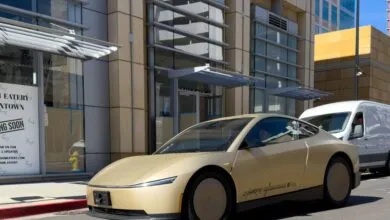
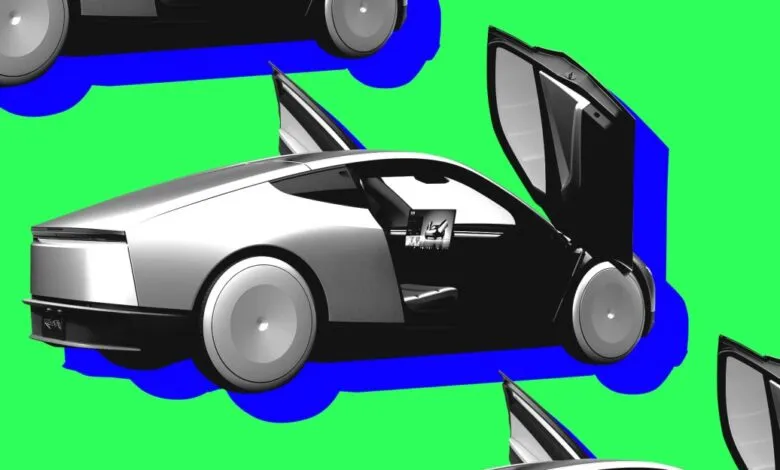
The long-awaited Tesla Cybercab is finally hitting the streets of Austin, Texas, marking a pivotal moment in Elon Musk’s quest for robotaxi dominance. Nearly two years after the initial reveal of this stripped-down, two-seater devoid of steering wheels or pedals, Tesla is transitioning from concept to reality. For supporters, this launch signals the dawn of a new era in autonomous transportation. However, skeptics argue that the company has wagered its entire future on a controversial technological approach that ignores industry standards for safety.
At the heart of this gamble is Tesla’s refusal to use lidar, the light-based sensor technology employed by competitors like Waymo. Instead, the Cybercab relies exclusively on a camera-only system powered by artificial intelligence and neural networks. This strategy aligns with Musk’s longstanding belief that human-like vision is sufficient for driving, rendering expensive sensors redundant. By eliminating physical controls and complex sensor arrays, Tesla aims to reduce manufacturing costs significantly, potentially allowing the vehicle to be sold for less than $30,000. Yet, this cost-saving measure introduces profound risks, as the absence of traditional fallback mechanisms means there is no human driver to intervene if the software fails.
The Sensor Debate: Vision vs. Redundancy
Musk’s dismissal of lidar dates back to his 2019 “Autonomy Day” event, where he famously labeled the technology a “fool’s errand” and predicted that any company relying on it was “doomed.” He argued that since humans drive using only their eyes, autonomous vehicles should not require additional hardware. Consequently, Tesla removed radar from its perception stack in 2022, despite internal warnings from engineers who feared that cameras would struggle in adverse weather conditions such as rain, fog, or intense sunlight.
This philosophical divide highlights a fundamental difference between Tesla and other leaders in the space. While Tesla bets on software sophistication, rivals like Waymo utilize a multi-sensor approach combining lidar, radar, and cameras to create redundant layers of perception. This redundancy allows for better depth perception and reliability in challenging environments. Waymo currently operates one of the largest fully driverless fleets in the United States, with approximately 4,000 vehicles active in up to 14 cities. Their success suggests that adding sensors does not hinder progress but rather enhances safety and operational scope.
Dmitri Dolgov, co-CEO of Waymo, acknowledged that while modern cameras have improved dramatically, they have inherent limitations when aiming for superhuman safety standards. In a recent discussion at Y Combinator’s Startup School, Dolgov stated, “You find that weak sensing just leads to a safety curve that flattens out way too early.” This perspective underscores the concern that a camera-only system may reach a plateau in reliability that falls short of the rigorous demands of public transportation.
Regulatory Hurdles and Public Trust
Launching a vehicle without steering wheels or pedals presents significant regulatory challenges. To sell the Cybercab to consumers, Tesla must secure exemptions from federal safety regulations that mandate traditional controls. The company also needs approval from state agencies, such as the California DMV, to operate fully driverless vehicles on public roads. These permissions require demonstrating a proven safety record, a metric where Tesla faces intense scrutiny. Unlike Waymo, which submits its data to independent bodies for validation, Tesla keeps its autonomous driving statistics opaque.
The company’s safety history is a point of contention. While Tesla claims its supervised Full Self-Driving (FSD) system reduces crash rates by up to 90%, independent trackers report numerous incidents. Data indicates that Tesla accounts for a disproportionate share of reported crashes involving driver-assist systems, with roughly 65 fatalities linked to Autopilot or FSD between 2013 and 2025. The National Highway Traffic Safety Administration (NHTSA) is currently investigating how Tesla reports these incidents, raising questions about transparency.
Public trust remains fragile. Surveys suggest that many consumers feel misled by Tesla’s marketing terminology and doubt the company’s commitment to safety protocols. The introduction of the Cybercab, which removes the possibility of human intervention entirely, tests this trust further. If the system encounters an edge case it cannot resolve, remote operators via Starlink connections will serve as the primary failsafe. However, reliance on teleoperation highlights the current limitations of fully autonomous capabilities.
Operational Realities in Austin
In Austin, Tesla is testing its most unsupervised operations, deploying a mix of modified Model Y vehicles and the new Cybercabs. According to the Robotaxi Tracker, the fleet size fluctuates wildly, with approximately 110 Model Ys actively operating in the area as of mid-2025. The addition of the Cybercab is expected to increase these numbers, but availability for paid passenger trips has historically been inconsistent.
The lack of a unified federal policy for autonomous vehicles forces Tesla to navigate a patchwork of state and local regulations. This fragmented landscape makes scaling difficult and expensive. While Musk promises rapid deployment due to lower production costs, the path to widespread adoption is obstructed by technical glitches, regulatory delays, and public skepticism. As Tesla barrels toward this launch, the true test will not just be whether the cars can drive themselves, but whether society is ready to trust them with its lives.
(Source: The Verge)