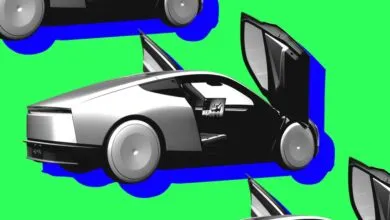
Tesla Cybercab Launch: A Surprisingly Quiet Debut

▼ Summary
– Tesla officially launched its driverless Cybercab vehicle at a closed-door event in Austin, Texas, marking a significant milestone for Elon Musk’s autonomous vehicle ambitions.
– The event was criticized for being muted and exclusive, with invitees facing NDAs and embargoes while non-invited influencers expressed dissatisfaction on social media.
– Tesla currently operates 256 unsupervised autonomous vehicles across six cities, significantly trailing Alphabet’s Waymo which runs approximately 4,000 vehicles in 14 cities.
– Questions remain regarding the Cybercab’s purchase price and availability, as the company focuses on fleet sales and infrastructure partnerships rather than immediate consumer retail.
– This launch introduces a new competitive phase for Tesla, pitting its stripped-down autonomy approach against established rivals like Waymo using modified Model Y vehicles.
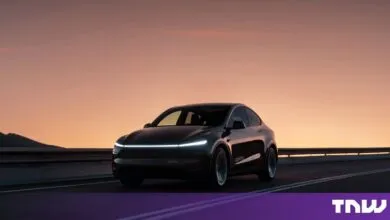
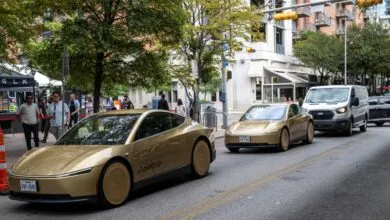
Tesla has officially unveiled its Cybercab, marking a pivotal, albeit understated, moment in the company’s long-standing bet on artificial intelligence and autonomous mobility. The reveal took place at a private gathering in Austin, Texas, attended by a select group of pro-Tesla content creators rather than mainstream media or the general public. This closed-door approach stood in stark contrast to Elon Musk’s history of grandiose product launches, serving as a muted debut for what he envisions as the future of transportation.
The event’s secrecy drew immediate scrutiny. Invited guests were required to sign nondisclosure agreements and adhere to strict embargoes until after the presentation concluded. Critics outside the inner circle expressed frustration with the exclusionary tactics. One prominent Tesla influencer community noted that they were left monitoring a webpage tracking robotaxi deployments instead of witnessing the unveiling live. As one invitee, Chuck Cook, highlighted the restrictive nature of the launch, he stated: “the company had him sign an NDA and agreed to an embargo requiring to wait to post content until after the event was over.” Not A Tesla App, a well-known industry observer, criticized the strategy, accusing the automaker of “dropping the ball.”
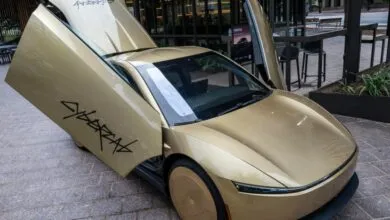
Despite the limited access, details about the vehicle have begun to emerge. The Cybercab is a two-seater sedan featuring gullwing doors and a complete absence of traditional controls such as steering wheels, pedals, or side mirrors. Instead, it relies on eight cameras and advanced AI to navigate without human intervention. Technical specifications filed with the Environmental Protection Agency reveal a lightweight design weighing just 3,113 pounds, powered by a single front-mounted 219-horsepower motor and a compact 48kWh battery. This makes the vehicle approximately 700 pounds lighter than the lightest Model 3, positioning it as Tesla’s most range-efficient car to date.
Regulatory filings also clarify current usage restrictions. The new Robotaxi service website explicitly bans passengers under the age of 13. Furthermore, promotional materials showcasing accessibility features have raised questions; one video depicted a wheelchair user manually folding and stowing their chair, suggesting the vehicle may not currently accommodate wheelchairs directly. While Tesla claims to have 45 Cybercabs registered with the Texas Department of Motor Vehicles, it remains unclear how many will enter commercial service immediately. The company is currently operating 256 unsupervised autonomous vehicles across six cities, a significant but modest number compared to Alphabet’s Waymo, which deploys roughly 4,000 vehicles in 14 locations.
Musk’s timeline for widespread availability continues to face skepticism. Two years ago, he suggested the Cybercab could be purchased for as little as $30,000, yet no specific release date for consumer sales has been confirmed. Interested parties can now submit inquiries through a new online form focused on “future Robotaxi opportunities,” including fleet purchases and infrastructure development. Meanwhile, Tesla’s broader self-driving narrative faces ongoing legal challenges. Customers and regulators are pursuing lawsuits alleging misleading claims about autonomous capabilities, particularly regarding older vehicles promised hardware upgrades that never materialized. Currently, the Full Self-Driving subscription remains a Level 2 driver-assist system requiring constant human oversight.
(Source: The Verge)