Tesla Cybercab Has No Steering Wheel, Just a Virtual Joystick

▼ Summary
– The Tesla Cybercab was launched in Austin, Texas, as a fully autonomous vehicle designed without steering wheels or pedals.
– Riders recently discovered hidden virtual joystick controls on the central display that allow for manual operation of the vehicle.
– These manual controls are intended for Tesla employees and depot workers to maneuver vehicles in tight spaces without remote assistance.
– Although customers found the interface, they were unable to use it, suggesting the feature may be an early software bug.
– The presence of these controls highlights the practical need for manual overrides even in vehicles designed to represent the future of transportation.
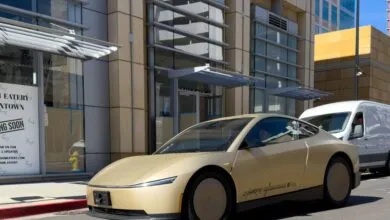
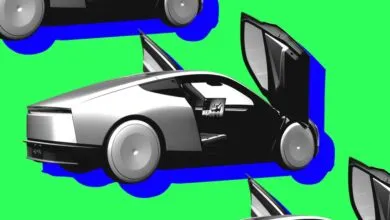
Tesla’s autonomous Cybercab, unveiled in Austin, Texas, was designed to eliminate traditional driving inputs entirely. The vehicle lacks a steering wheel and pedals, signaling a definitive shift toward fully self-driving technology. However, shortly after its official launch, reports emerged that riders encountered an unexpected feature: a hidden interface for manual control. This discovery suggests that while the car is built for autonomy, Tesla has retained a safety net for specific operational scenarios.
Hidden Controls for Fleet Operations
Videos shared on X reveal that passengers saw a square-shaped screen appear in the lower-left corner of the central display. This interface included a toggle for manual driving, labeled with “forward” at the top and “reverse” at the bottom. Additional buttons allowed users to stop the vehicle, sound the horn, and manually open the doors. To the right of these controls, live camera feeds were visible, although one video showed the image frozen on a Supercharger from a previous location.
These features are not intended for general passengers. Instead, they appear to be exclusive tools for Tesla employees and depot workers. Since the Cybercab cannot be driven conventionally, fleet operators need a way to reposition vehicles in tight spaces or parking lots without contacting the remote control center. This virtual joystick provides a practical workaround for low-speed maneuvering, ensuring that logistics remain efficient even when the vehicle is stuck.
Safety Protocols and Potential Misuse
Theoretically, these manual overrides could also assist law enforcement or emergency responders who need to clear a Cybercab from the roadway. Tesla has briefed the Austin police department on the new service, though it remains unclear if this manual override capability was discussed during those meetings.
Passengers who stumbled upon the interface attempted to use it but were unable to control the vehicle. It is likely that the controls were either disabled for non-authorized users or required specific authentication protocols that customers did not possess. The presence of this menu during public rides may have been an early software bug. Tesla will likely patch this issue before expanding the Cybercab’s release, ensuring that such administrative functions remain invisible to the average rider.
Balancing Autonomy with Practicality
Tesla constructed the Cybercab as a vehicle without manual controls to emphasize that human driving is becoming obsolete. The design choice was meant to communicate that the future of transportation is hands-free. Yet, the inclusion of these hidden controls highlights a pragmatic reality: even advanced autonomous systems require fallback mechanisms for maintenance, recovery, and emergency situations. While the Cybercab aims to redefine mobility, it still relies on human intervention in rare, critical moments.
(Source: The Verge)