Nvidia CEO says AI is creating ‘an enormous number of jobs’
▼ Summary
– Jensen Huang argues AI creates jobs and is the U.S.’s best opportunity to re-industrialize, not a cause of mass unemployment.
– Huang says automating a specific task does not replace a person’s entire job, as the broader job function remains.
– He expresses concern that “science-fiction” stories about AI dominating humanity will make people afraid to engage with it.
– Critics maintain that “doomer” rhetoric from the AI industry is a marketing gimmick for products not yet capable of such claims.
– Reputable organizations estimate that AI could eliminate up to 15% of U.S. jobs in the next several years.
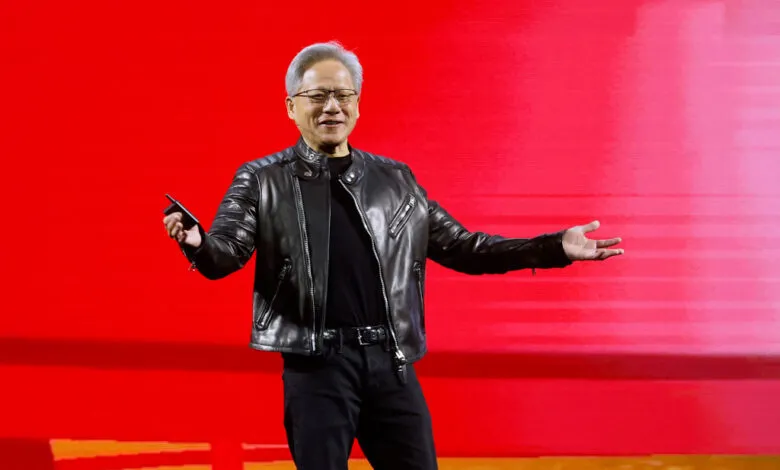
Nvidia CEO Jensen Huang pushed back against fears that artificial intelligence will trigger mass unemployment, arguing instead that the technology is creating an enormous number of jobs for American workers. Speaking Monday night at a Milken Institute event hosted by MSNBC’s Becky Quick, Huang rejected the dire predictions often made by “AI doomers” and painted a far more optimistic picture of the labor market’s future.
The conversation covered a wide range of topics, but the persistent undercurrent was public anxiety about AI’s economic impact. Quick pressed the issue directly, asking whether the speed of AI adoption could cause “a bigger dislocation than we’ve seen in the past that leads to greater inequality.” Huang’s response was unwavering in its confidence.
“AI creates jobs,” Huang declared, adding that the technology represents “the United States’ best opportunity to re-industrialize.” He emphasized that the AI sector is built on a new kind of industrial factory , facilities that manufacture the hardware serving as critical infrastructure for the industry. Nvidia, of course, is a leading supplier of that hardware. These factories require workers, Huang noted, as does the broader ecosystem of the blossoming AI industry.
Huang argued that automating a specific task does not automatically eliminate an entire job. People who assume otherwise, he said, “misunderstand that the purpose of a job and the task of a job are related” but not identical. Even when AI takes over a discrete function within a role, the employee’s broader organizational purpose typically remains intact.
The Nvidia chief also took aim at those who warn that AI will dominate humanity or wipe out entire economic sectors. “My greatest concern is that we scare people , all the people that we’re telling these science-fiction stories to, to the point where AI is so unpopular in the United States, or people are so afraid of it, that they don’t actually engage it,” he said.
There is a certain irony in Huang’s critique. Much of the doomer rhetoric has originated from within the AI industry itself. Critics argue that such hyperbole functions as a marketing gimmick, designed to generate buzz and excitement for products that lack the capabilities the hype suggests.
The long-term economic impact of AI remains uncertain. Still, reputable financial and academic organizations have projected that as much as 15% of U. S. jobs could be eliminated over the next several years as a direct result of the technology.
(Source: TechCrunch)