Stripe Launches Link Digital Wallet for AI Agents
▼ Summary
– Stripe has launched Link, a digital wallet for the AI era that allows users to connect payment methods, track spending, and manage subscriptions.
– Link enables users to securely integrate autonomous AI agents, giving them permission to pay without exposing raw payment credentials.
– The wallet supports various payment methods, including cards, banks, crypto wallets, and buy now/pay later services, and stores billing and shipping details.
– Users approve agent spend requests via OAuth authentication and mobile notifications, with future plans for customizable spending limits and autonomous approvals.
– Link is built on Stripe’s Issuing for agents, offering virtual cards with real-time authorization and spending controls, and developers can use it instead of building their own wallet.
Financial services giant Stripe has unveiled a digital wallet designed specifically for the age of AI, enabling autonomous agents to handle tasks like shopping, booking reservations, and purchasing tickets on behalf of users.
Rolled out during the company’s annual conference this week, Link serves as a centralized hub where users can connect multiple payment methods, monitor spending, and manage recurring subscriptions. Crucially, it also allows you to integrate your AI agents so they can spend securely without exposing your raw financial data.
Available across web, iOS, and Android, Link provides the standard features you would expect from a digital wallet. Users can link cards, bank accounts, crypto wallets, and buy now/pay later services, while also storing essential checkout details like billing and shipping information for faster transactions.
Additional practical tools include a clear view of your spending habits, the ability to track and update payment methods for subscriptions, and 90 days of purchase protection on eligible items from select merchants.
Yet the standout feature is Link’s compatibility with autonomous AI agents such as OpenClaw and similar platforms.
The surge in autonomous AI experimentation has been remarkable, with Apple reportedly selling out of its base model Mac Minis, a favorite hardware choice for running these persistent agents. Still, many users understandably hesitate to hand over sensitive payment credentials to an AI, even if it promises convenience by automating bookings.
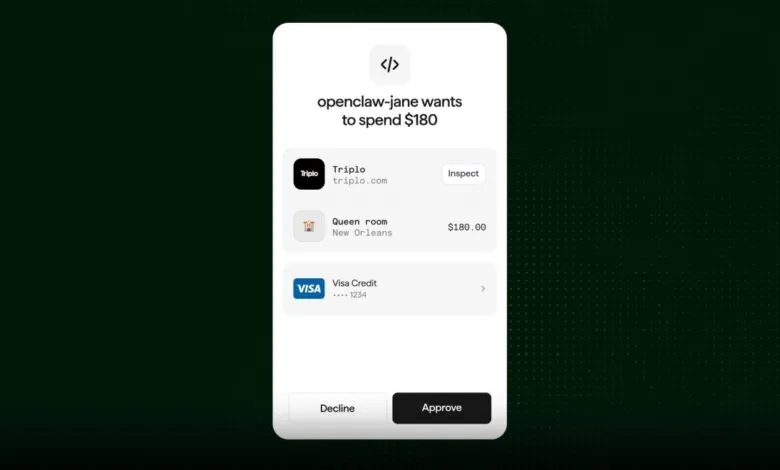
Link addresses this concern directly. Users can grant their AI agent permission to pay through the wallet without ever sharing their actual payment details. The process begins when a user authorizes the agent to access Link via a standard OAuth authentication flow. The agent then creates a spend request, provides context, and waits for user approval. Currently, this works with traditional payment methods, though Stripe has promised support for agentic tokens, stablecoins, and other payment types is coming soon.
On mobile and web, users receive a notification to approve each spend request. They must review the transaction before any payment credential is shared with the AI agent. Looking ahead, Stripe plans to introduce expanded controls that let users set spending limits or allow agents to act autonomously without prior approval.
The wallet is built on Stripe’s new Issuing for agents infrastructure, which enables users to create virtual cards for agents to use autonomously. These cards come with real-time authorization, spending controls, and full transaction visibility. Instead of handing over personal credentials, users can give agents programmatic access to Link for a one-time-use card, or use a Shared Payment Token (SPT) backed by payment cards and banks.
For developers and businesses building their own AI agents or personal assistants, Stripe notes that Link offers a ready-made wallet solution, saving them the trouble of building one from scratch.
(Source: TechCrunch)