Tim Cook Transforms Apple Into a Subscription Giant
▼ Summary
– Tim Cook’s tenure as Apple CEO, ending September 1, is defined by operational efficiency and financial growth, including leading Apple into its trillion-dollar era.
– His most significant achievement was expanding the services business, which set a quarterly revenue record of $30 billion and generated over $109 billion for fiscal year 2025.
– While services like the App Store began under Steve Jobs, Cook transformed Apple from a hardware company into a powerful platform company largely through this division.
– Cook’s successor, hardware-focused John Ternus, faces the challenge of extending Apple’s platform into the generative AI era, where its progress has been slow and marked by executive departures.
– Analysts note Ternus’s critical experience leading the Mac’s transition to Apple Silicon, a foundational platform shift that provides essential hardware positioning for future AI devices.
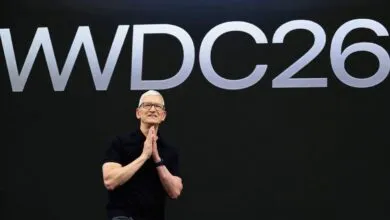
As Tim Cook prepares to conclude his tenure as CEO this September, his legacy will be marked by operational mastery and unprecedented financial scale, propelling Apple into the trillion-dollar era. Yet his most transformative impact may be the strategic pivot that turned Apple into a subscription powerhouse, fundamentally altering its economic engine.
Under Cook’s leadership, Apple’s services business has evolved from a peripheral offering into the company’s financial cornerstone. This portfolio, encompassing iCloud, the App Store, Apple Music, and Apple TV+, forms a recurring revenue layer deeply integrated into the iOS ecosystem. Its seamless connection to core applications like Messages creates a powerful retention tool, binding users more tightly to their iPhones.
The financial results are staggering. In the quarter ending December 2025, services revenue hit a historic $30 billion, a 14% year-over-year increase. This segment now outearns the combined sales of Mac, iPad, Apple Watch, and accessories. For the full 2025 fiscal year, services generated over $109 billion, maintaining that double-digit growth trajectory. This stands in stark contrast to 2011, when Cook began his tenure and services were not a separate reporting category, with iTunes bringing in roughly $6 billion annually.
While the groundwork for this model was laid earlier, with the App Store launching in 2008 under Steve Jobs, it was Cook who executed the vision at scale. Key architects like Phil Schiller and Eddy Cue helped establish the platform economics, including the controversial developer commission. Cook’s era saw Apple mature from a premier hardware maker into a dominant platform company, with services as the critical catalyst.
The central question now rests with incoming CEO John Ternus: can he extend this platform dominance into the generative AI era? Apple’s current position in advanced AI is uncertain. Despite years of leveraging machine learning, its approach to foundational models and chatbots has been unclear. Siri, once a pioneer, has struggled with capability and reliability. The 2024 announcement of Apple Intelligence promised a new direction, but delays and executive departures have clouded the outlook. Following the exit of AI head John Giannandrea in late 2025, software chief Craig Federighi has assumed oversight of Siri.
Ternus’s background is firmly in hardware engineering, having led that division since 2021. On the surface, a hardware expert may seem an unconventional choice to navigate the complex landscape of large language models and AI privacy. However, his recent record suggests a strategic capacity for platform-level transformation. As analyst Ming-Chi Kuo noted, Ternus spearheaded the critical Mac transition from Intel to Apple Silicon. This was not merely a component swap but a profound platform-level transition requiring exceptional execution and cross-functional coordination. That successful architectural shift provided the essential hardware foundation for Apple’s future AI devices. Ternus’s challenge will be to apply that same systemic vision to building a cohesive and competitive AI services layer, ensuring the subscription empire Cook built continues to thrive in a new technological age.
(Source: Wired)