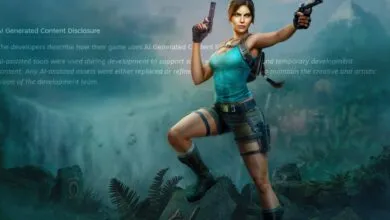
Expanse Dev Defends AI Use in Osiris Reborn RPG

▼ Summary
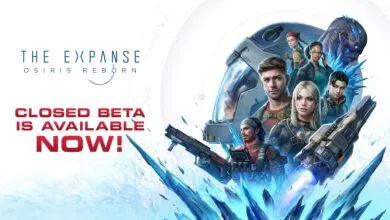
– Owlcat Games announced a new trailer and a Spring 2027 release window for *The Expanse: Osiris Reborn* during an Xbox showcase.
– The developer confirmed it is using generative AI tools for prototyping, placeholders, and technical iteration during the game’s development.
– The studio’s PR manager stated the final game will be fully human-made, with no AI used for writing, voice acting, or final in-game assets.
– This clarification follows a previous incident in March 2024 where the studio had to explain a job listing requiring AI concept generation expertise.
– The article expresses skepticism, noting AI-influenced prototypes can subtly affect final art and that such claims exist in a “grey area.”
The upcoming RPG The Expanse: Osiris Reborn generated significant buzz with a new trailer and a spring 2027 release window during a recent Xbox showcase. Yet the conversation has quickly shifted from the game’s promising Mass Effect-inspired scope to the developer’s confirmed use of generative AI tools in its production pipeline. Owlcat Games, the studio behind the project, has moved to clarify exactly how this technology is being implemented.
According to the studio’s PR manager, Katharina Popp, these AI systems are employed strictly for prototyping and iteration, not for creating final in-game content. The tools help the team visualize concepts rapidly, such as converting 2D images into 3D models or experimenting with color palettes. This process, Popp emphasized, is purely about accelerating early development. All placeholder assets generated by AI will be replaced by human-made artwork before the game ships. The studio asserts it does not use AI for writing dialogue or for voice acting, guaranteeing the final product will be crafted entirely by people.
This clarification follows earlier scrutiny the developer faced. Earlier this year, a job listing for a concept artist that mentioned AI expertise prompted questions about the studio’s long-term intentions. The latest statements aim to draw a clear line between using AI as a scaffolding tool and relying on it for finished creative work.
However, the gaming industry has seen previous cases where AI-assisted prototypes inadvertently influence final assets, leaving a digital fingerprint that some players find problematic. Even when artwork is extensively reworked by human hands, its origins in an AI-generated iteration can create a perceptual grey area. For many, the core issue isn’t just the final asset, but the foundational influence of the algorithm, a concern that persists regardless of whether the end user notices or minds. Owlcat’s defense hinges on a clear separation between process and product, a distinction that will likely be tested when the game finally launches.
(Source: Kotaku)