The Expanse: Osiris Reborn is a polished sci-fi adventure, but its AI use raises questions
▼ Summary
– The Expanse: Osiris Reborn is an Owlcat Games CRPG adaptation set in the Expanse universe, with a 90-minute demo showing promising cinematic role-playing gameplay.
– Combat is over-the-shoulder and cover-based, featuring destruction of cover, aggressive enemy flanking, and companion commands that can trigger environmental attacks.
– The demo includes zero-gravity exterior combat on a space station, where magnetic boots allow perspective-shifting gunfights and suit-boosting sections.
– The game offers four skill trees, social and exploration skills, equipment crafting with tiered upgrades, and dialogue with skill-related choices.
– Owlcat confirmed using generative-AI tools during development, stating the final version will be 100% human-made, but the lack of transparency raises questions about the extent and ethics of AI use.
When The Expanse: Osiris Reborn was first revealed, it immediately turned heads. That buzz came partly from its striking resemblance to a modern Mass Effect,a comparison that rarely hurts,and partly from its roots in a beloved science-fiction universe. The fact that it hails from Owlcat Games, the studio behind the dense, crunchy CRPGs Pathfinder and Warhammer 40K: Rogue Trader, only added to the anticipation. Now, the developer is taking that pedigree into cinematic role-playing territory, powered by Unreal Engine 5.
But that excitement hit a snag when Owlcat confirmed it had used generative AI tools during development. The studio promised that “everything in the final version will definitely 100 percent be human made,” but the admission planted a persistent doubt. It’s a shame, because after spending 90 minutes with a demo of The Expanse: Osiris Reborn, I can say it is genuinely good.
The demo, which is available today for anyone who has pre-purchased the game, offers a convincing preview of the game’s core systems. I honestly did not expect it to look this polished, to feel this engaging, or for the combat to carry such satisfying weight. The role-playing glue that holds it all together is sticky and promising. While this is just a small slice of a much larger whole, it’s a confident one.
The level I played is the game’s second mission. It drops you and your twin into an escape from a bad situation, leading you to a space station called Pinkwater 4. Fans of the books or TV show will recognize the name. Your twin’s gender currently mirrors the one you choose for your protagonist,there is no character creator here, but the full game will have one. I selected a female officer with a Belter background, meaning she was raised in the asteroid belt. You can also play as an Earther hacker.
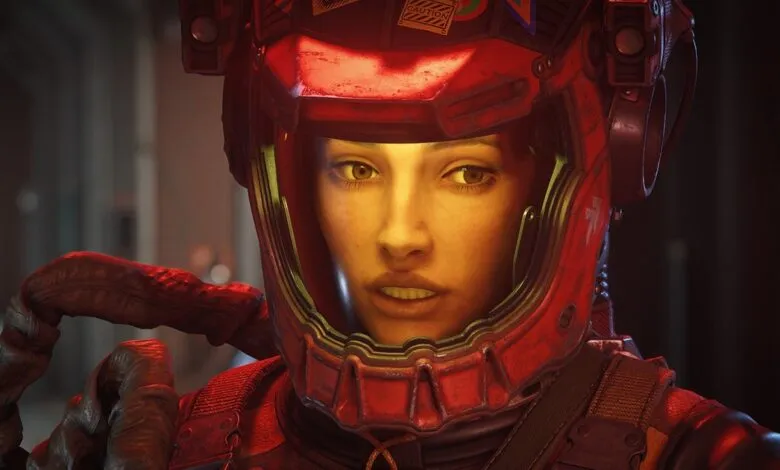
The opening conversation in the docking bay introduces a clean, tidy dialogue system. It occasionally offers skill-based choices tied to abilities like persuasion, which you can improve as you level up. The lip-syncing is notably impressive,so good that it stands out, which is rare. The close-up detail on character faces and equipment is strong. The female twins are particularly striking, with detailed armor that mixes tubes and space-faring odds and ends, fitting the setting perfectly.
As you move into Pinkwater 4 proper, the space station feels alive with bystanders and a vendor who can sell you guns or share her life story. It lacks the bustling, multicultural chaos of the TV series’ opening, but the vendor’s sass adds personality. The performances are believable overall, though I again preferred the female twins. The game’s performance is mostly smooth, but some dialogues start with inexplicable choppiness,something that should be fixed before release. Soon, you meet O’Connell, a blunt Irish station head, and crisis hits: the station is under attack.
Combat is over-the-shoulder and cover-based, much like Mass Effect. You press a button to duck behind crates or walls, aim from cover, or blind-fire. A button slows time nearly to a halt, letting you issue orders to your companion,your twin in this case, though the full game will have two per mission. You can direct them to attack a specific target or piece of scenery, triggering destructive attacks. I had my twin pull down air vents and explode pipes, which cleared clusters of enemies when timed right. Activating companion powers also buffs you, so being bossy is encouraged.
Destruction plays a big role in combat. Crates and thin walls can be blown away under heavy fire, forcing you to move. Enemies aggressively flank and close in, adding pressure. Even with a health regeneration system and health packs, I found myself in tense situations and was downed a couple of times before my twin revived me,on normal difficulty. There is a hard mode for those who want more.
Abilities are grounded in technology, not space magic. As an officer, I had grenades and incendiary ammo,effective if unexciting. As a hacker, I used a swarm of drones and something called Pandemic Algorithm, which hurt enemies. Abilities are on cooldown timers, so you must weigh weapon choice, companion orders, cover, and environment manipulation. The cover-shooter mechanics can be a bit clumsy,sometimes you interact with scenery when you don’t mean to,but the destruction left in the wake of fights makes them feel real.
The demo’s most spectacular moments happen outside, on the station’s exterior in the void of space. Your mag boots keep you magnetically attached, and since there is no gravity, whichever side you walk on becomes your ground. As you circle the station, your perspective shifts, creating incredible variation during gunfights. One section has you suit-boosting along the station’s side, dodging debris from a nearby explosion. It is thrilling, and it shows Owlcat’s instinct for varying the action and keeping the tension high. The level design is clever, looping back on itself for the final confrontation.
This demo is linear, so it does not reveal how wide the game will be or how much choice and consequence we will get. A second playthrough with a different class and background played out exactly the same. The demo does dip into crafting: you interact with a workbench to see if you have enough resources to upgrade equipment, which has multiple tiers with one-of-three choices per upgrade. The character leveling system offers four skill trees with roughly a dozen options each, plus smaller social and exploration trees. The components for an exciting Mass Effect-like adventure are clearly in place.
If this slice represents what Owlcat is aiming for, the full game looks strong. Public feedback from the closed beta should smooth rough edges, and with a year until release and a team of 200 people working on it, the signs are good.
Except for that nagging question. How much does it matter that the studio used generative AI during development? This is the defining question of our technological era, and transparency would help. Owlcat says it uses AI to iterate faster, for example to test a 2D image in 3D. “But we don’t use it to write, we don’t use AI voice actors, so everything that will be in the final version will definitely 100 percent be human made,” the studio told me.
But where is the line? I have used an AI transcription service for years to produce rough drafts, which I then verify. Is that okay? It saves time. Does the line stop at AI-created content in games, or does it stretch to any AI use at all? What model is Owlcat using? What data was it trained on? How much energy does it consume? We do not know. And that is why I cannot decide how to feel about The Expanse: Osiris Reborn,and perhaps that uncertainty itself is a sign.
(Source: Eurogamer.net)